
Business
PowerBank Launches Solar-Powered Satellite to Transform Computing

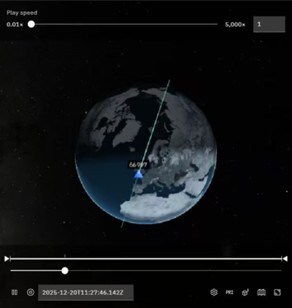
PowerBank Corporation has successfully launched its DeStarlink Genesis-1 satellite into low Earth orbit (LEO) as part of its collaboration with Smartlink AI. The launch, which took place on December 10, 2025, marks a significant milestone for PowerBank’s initiative to develop solar-powered digital infrastructure in space. As the satellite begins operations, it has been confirmed to produce solar energy while orbiting the Earth.
Dr. Richard Lu, CEO of PowerBank, emphasized the importance of this achievement, stating, “The successful deployment of Genesis-1 validates a vision we announced just weeks ago—that solar-powered infrastructure can extend beyond Earth’s surface to power the next generation of computing.” He highlighted that this initiative merges three vital trends: renewable energy, artificial intelligence, and decentralized computing.
Genesis-1: The First Step in a New Era
The DeStarlink Genesis-1 satellite is the inaugural launch of the Orbital Cloud network and introduces several groundbreaking capabilities. These include decentralized communication infrastructure for global connectivity, solar-powered AI data centers, and blockchain verification for secure transactions executed in orbit.
The successful deployment validates the foundational architecture of the Orbital Cloud. Genesis-1 is equipped with initial AI inference payloads and blockchain verification capabilities, setting the stage for future expansions. This launch not only proves the feasibility of autonomous, solar-powered computation but also moves beyond terrestrial limitations.
PowerBank’s collaboration with Smartlink AI was first announced on November 19, 2025. The rapid deployment of Genesis-1 within a month underscores both companies’ ability to execute their vision effectively. This initiative aims to incorporate advanced solar energy systems and thermal control technologies, which will be crucial as the satellite constellation grows.
Strategic Implications in Growing Markets
The Orbital Cloud initiative positions PowerBank at the crossroads of multiple high-growth markets. The global satellite market is projected to reach approximately USD $615 billion by 2032, driven by increasing demands for connectivity and data services. In-orbit data centers are expected to grow from USD $1.77 billion in 2029 to USD $39.1 billion by 2035, as computing needs migrate to space.
PowerBank aims to play a pivotal role in the “Execution Layer” of these orbital systems, focusing on solar power generation and thermal management technologies. This focus is essential for ensuring continuous operations in orbit, free from atmospheric interference.
The architecture of the Orbital Cloud is notable for its use of lightweight, space-grade solar panels. These panels enable constant energy availability, facilitating uninterrupted AI processing and blockchain operations. This capability is a significant differentiator in the evolving landscape of digital infrastructure.
With Genesis-1 now successfully deployed, Orbit AI plans to expand its constellation through a phased approach. The timeline includes the deployment of 5-8 additional orbital nodes in 2026, followed by the full rollout and commercialization of Orbital Cloud services by 2028-2030.
As PowerBank continues its partnership with Smartlink AI, its contributions in solar energy and thermal control are expected to be increasingly significant in supporting larger satellites and more advanced AI applications.
PowerBank Corporation is an independent developer of renewable energy projects in North America. With a focus on community solar initiatives, the company has developed projects with a combined capacity of over 100 megawatts. The establishment of the Orbital Cloud adds a new dimension to its strategic objectives, as it seeks to leverage its expertise in solar energy for innovative applications in space.
For more information about PowerBank, visit their official website at www.powerbankcorp.com.

Urgent Swatting Incident Ties Up Emergency Resources in Alabama

Urgent Tax Alert: Claim Your Deductions Before April 15!

Scientists Investigate Cosmic Defects: Where Are They Now?

Spring Bocce Leagues Open Registration in Rapid City

CALV Offers Essential Communication Class for Real Estate Pros

Samsung Galaxy Watch 9 Set for Larger 435mAh Battery Upgrade

Healthy Choice Wellness Reports Earnings, Stock Sees Uptick

Prince Harry Claims to Be ‘Antidote to Andrew’ Amid Royal Crisis

Pet Owners Weigh Kibble Against Fresh Dog Food Options

ALMA Discovers Companion Orbiting Giant Star π 1 Gruis

U.S. Visa Rescheduling Hits H‐1B Applicants as New Vetting Rules Take Effect

University of Hawaiʻi Joins $25.6M AI Project for Disaster Monitoring

F-22 Raptor vs. Su-57 Felon: A 2025 Fighter Jet Comparison

Recent Divorce Judgments from Iberia Parish Court Records

Ohio State Study Uncovers Brain Connectivity and Function Links

Prince Andrew Faces Fallout from Scandals and Allegations

Urgent: Flight Cancellations Loom at Texas Airports Amid Shutdown

Frank Dunn, Esteemed Builder and Community Leader, Passes Away at 89
-
 Science8 months ago
ALMA Discovers Companion Orbiting Giant Star π 1 Gruis
-
 Politics6 months ago
U.S. Visa Rescheduling Hits H‐1B Applicants as New Vetting Rules Take Effect
-
Science8 months ago
University of Hawaiʻi Joins $25.6M AI Project for Disaster Monitoring
-
 World8 months ago
F-22 Raptor vs. Su-57 Felon: A 2025 Fighter Jet Comparison
-
 Politics8 months ago
Recent Divorce Judgments from Iberia Parish Court Records
-
 Science9 months ago
Ohio State Study Uncovers Brain Connectivity and Function Links
-
 World8 months ago
Prince Andrew Faces Fallout from Scandals and Allegations
-
 Top Stories8 months ago
Urgent: Flight Cancellations Loom at Texas Airports Amid Shutdown
-
 Lifestyle8 months ago
Frank Dunn, Esteemed Builder and Community Leader, Passes Away at 89
-

 Business8 months ago
Appian Recognizes 2025 Partner Award Winners for Enterprise Innovation
-

 Entertainment7 months ago
Malachi Barton Tops Google Searches as Disney’s Rising Star of 2025
-

 Science9 months ago
Innovator Captures Light at 2 Billion Frames Per Second