
Business
Chelmsford’s Accessory Dwelling Units See Limited Adoption in 2025

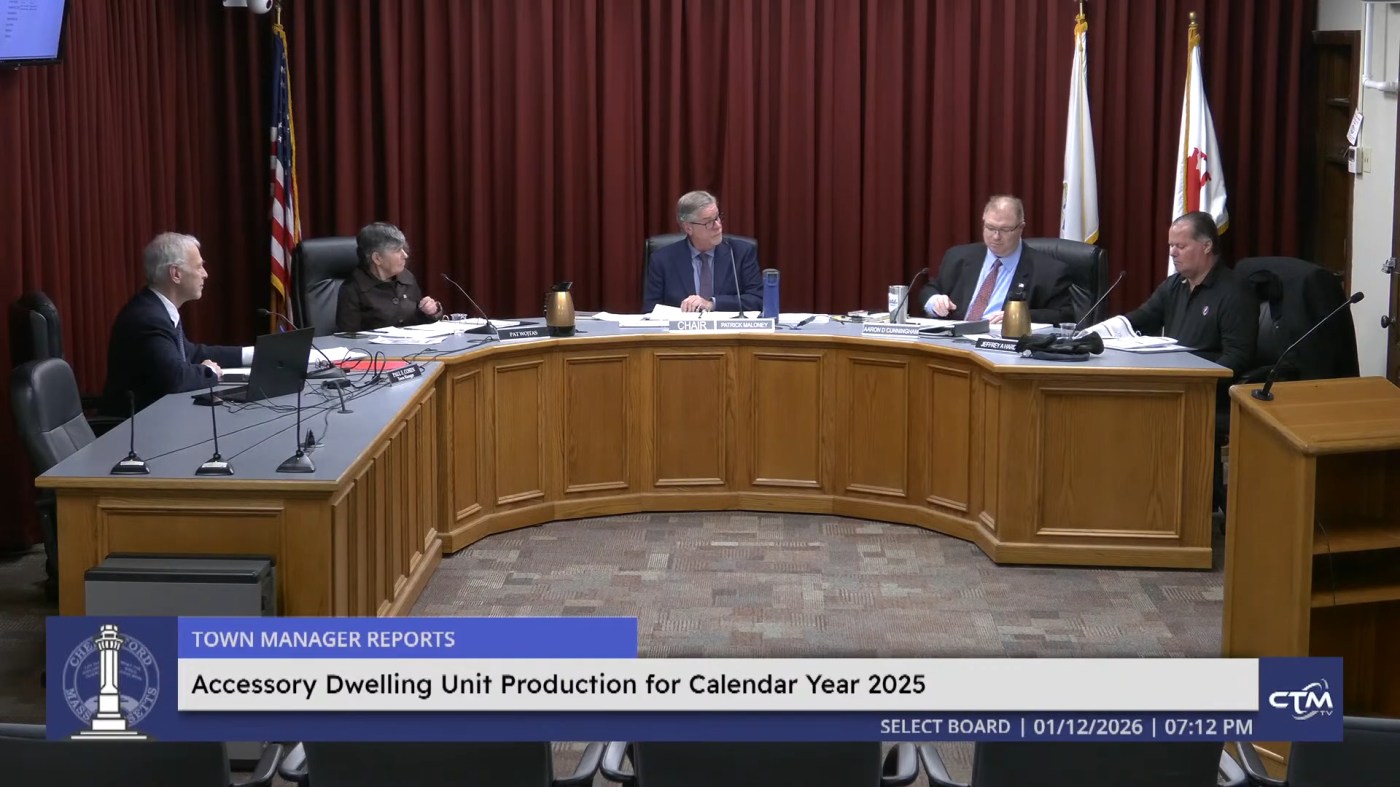
CHELMSFORD — In the nearly twelve months since Chelmsford’s Town Meeting approved an accessory dwelling unit (ADU) policy, the response has been tepid. As of now, only 18 applications for ADU permits have been submitted in 2025, according to data collected by the state. This slow uptake raises questions about the effectiveness of recent housing policies aimed at alleviating the housing crisis.
During a meeting on Monday, Town Manager Paul Cohen informed the Select Board that out of the 18 applications, 11 were for ADUs attached to existing homes, while seven were for unattached units. Notably, none of these applications have been rejected or withdrawn. Currently, four detached ADUs and nine attached ADUs have received approval, but only one completed unit has emerged from this initiative.
Cohen noted that the state government plans to introduce a “model ADU design” aimed at reducing construction costs for prospective builders. He expressed skepticism about the effectiveness of such initiatives, drawing parallels to the Model School Program from the early 2000s, which he deemed unsuccessful. He emphasized that the high costs associated with designing and constructing ADUs—often reaching several hundreds of thousands of dollars—are likely deterring interest.
“The idea was that it is very costly to design and construct,” Cohen said. “They are tracking this to see if it is a cost issue, a community issue, or a permitting issue.”
The Select Board’s Aaron Cunningham raised concerns about the potential strain on local infrastructure should ADU development increase. Cohen responded, stating, “At this level of development, 11 units is going to be nothing… We have 13,000 single-family and two-family homes, so that is why you are seeing the state quickly pivoting to the cost issue.”
The data reflects the broader context surrounding ADUs in Massachusetts. A state law aimed at facilitating the construction of these units was enacted shortly after Chelmsford’s Town Meeting voted overwhelmingly in favor of the local policy, with results showing a significantly low production rate. A report by the Pioneer Institute indicated that only 550 ADUs were permitted across the state in the first half of 2025, a figure deemed insufficient for addressing the estimated need for 222,000 housing units over the next decade.
“ADUs are a minimally destructive, incremental way of building new housing,” said Andrew Mikula, Senior Housing Fellow at the Pioneer Institute, in November. He emphasized the importance of local responses to housing needs, suggesting that community members are best positioned to identify and address these challenges.
In September, Massachusetts Governor Maura Healey and the Executive Office of Housing and Livable Communities reported that there had been a total of 844 applications for ADUs filed across 170 cities and towns within the same timeframe examined by the Pioneer Institute. The limited interest in Chelmsford’s ADU policy highlights the challenges facing local governments as they attempt to navigate the state’s housing crisis while balancing community concerns and infrastructure capacities.
As the situation evolves, local officials and residents alike will be watching closely to see if the anticipated changes to design guidelines will spur greater interest in ADUs or whether the financial barriers will continue to impede progress in Chelmsford and beyond.

Urgent Swatting Incident Ties Up Emergency Resources in Alabama

Urgent Tax Alert: Claim Your Deductions Before April 15!

Scientists Investigate Cosmic Defects: Where Are They Now?

Spring Bocce Leagues Open Registration in Rapid City

CALV Offers Essential Communication Class for Real Estate Pros

Samsung Galaxy Watch 9 Set for Larger 435mAh Battery Upgrade

Healthy Choice Wellness Reports Earnings, Stock Sees Uptick

Prince Harry Claims to Be ‘Antidote to Andrew’ Amid Royal Crisis

Pet Owners Weigh Kibble Against Fresh Dog Food Options

ALMA Discovers Companion Orbiting Giant Star π 1 Gruis

U.S. Visa Rescheduling Hits H‐1B Applicants as New Vetting Rules Take Effect

University of Hawaiʻi Joins $25.6M AI Project for Disaster Monitoring

F-22 Raptor vs. Su-57 Felon: A 2025 Fighter Jet Comparison

Recent Divorce Judgments from Iberia Parish Court Records

Ohio State Study Uncovers Brain Connectivity and Function Links

Prince Andrew Faces Fallout from Scandals and Allegations

Urgent: Flight Cancellations Loom at Texas Airports Amid Shutdown

Frank Dunn, Esteemed Builder and Community Leader, Passes Away at 89
-
 Science8 months ago
ALMA Discovers Companion Orbiting Giant Star π 1 Gruis
-
 Politics6 months ago
U.S. Visa Rescheduling Hits H‐1B Applicants as New Vetting Rules Take Effect
-
Science8 months ago
University of Hawaiʻi Joins $25.6M AI Project for Disaster Monitoring
-
 World8 months ago
F-22 Raptor vs. Su-57 Felon: A 2025 Fighter Jet Comparison
-
 Politics8 months ago
Recent Divorce Judgments from Iberia Parish Court Records
-
 Science9 months ago
Ohio State Study Uncovers Brain Connectivity and Function Links
-
 World8 months ago
Prince Andrew Faces Fallout from Scandals and Allegations
-
 Top Stories8 months ago
Urgent: Flight Cancellations Loom at Texas Airports Amid Shutdown
-
 Lifestyle8 months ago
Frank Dunn, Esteemed Builder and Community Leader, Passes Away at 89
-

 Business8 months ago
Appian Recognizes 2025 Partner Award Winners for Enterprise Innovation
-

 Entertainment7 months ago
Malachi Barton Tops Google Searches as Disney’s Rising Star of 2025
-

 Top Stories7 months ago
Republican Matt Van Epps Wins Tennessee Special Election