
Business
Canada Navigates Economic Challenges Amid US Relations Strain

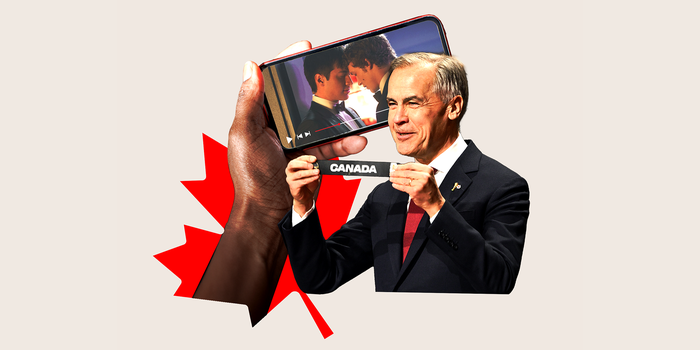
Canada is currently experiencing a pivotal moment on the global stage, marked by both challenges and opportunities. As relations with its most significant ally, the United States, become increasingly strained, Canadian leaders are taking steps to assert the nation’s independence economically and politically. Prime Minister Mark Carney has highlighted a notable “rupture” in North American integration, indicating a shift towards greater self-sufficiency.
Carney’s remarks came during a speech at the World Economic Forum in Davos in January. He expressed a clear understanding that the traditional assumptions of prosperity linked to geography and alliances no longer hold true. “Canadians know that our old comfortable assumptions that our geography and alliance memberships automatically conferred prosperity and security — that assumption is no longer valid,” he stated. This perspective reflects a broader recognition that Canada must adapt to the evolving geopolitical landscape.
Relations with the United States have been particularly tumultuous. The current U.S. administration has adopted a more confrontational stance, marked by renewed tariff threats and a focus on protectionism. As Tony Stillo, director of Canada Economics at Oxford Economics, noted, “Every country has to take care of itself, and Canada’s putting Canada first.” This sentiment resonates across various sectors as Canada seeks to navigate its economic future while maintaining vital trade ties.
Despite the challenges, Canada’s economic foundation remains robust. Exports constitute approximately one-third of Canada’s GDP, with over 75% directed toward the U.S. In contrast, U.S. exports to Canada account for only about 16% of its GDP. This interdependence complicates Canada’s efforts to reduce reliance on its southern neighbor.
A significant factor in the current situation is the upcoming review of the Canada-United States-Mexico Agreement (USMCA), which is set for mid-year. As Stillo pointed out, “The prime minister’s in an impossible situation.” Balancing the need to defend Canada’s economic interests while avoiding escalation in relations with the U.S. presents a considerable challenge.
In response to these pressures, Canada is implementing policies aimed at strengthening its domestic economy. The federal government has begun removing internal trade barriers that have historically hampered the flow of goods and labor between provinces. According to the International Monetary Fund (IMF), fully eliminating these barriers could potentially boost real Canadian GDP by 7%.
Canadian consumers are increasingly opting for domestic products, reflecting a growing trend toward self-sufficiency. Under Carney’s leadership, initiatives have been established to facilitate major projects in sectors such as mining, energy, and transportation. “The government isn’t trying to just invest; they’re trying to catalyze and incentivize private money to come in,” Stillo explained, emphasizing the importance of private sector involvement in driving growth.
While these measures are promising, the long-term nature of major infrastructure projects means that tangible benefits may take years to materialize. Matthew Holmes, chief of public policy at the Canadian Chamber of Commerce, highlighted Canada’s strengths in education, innovation, and natural resources. “We have all the preconditions to be an energy superpower and a major player economically,” he stated.
Amid these developments, a significant portion of small- and medium-sized businesses are beginning to explore international markets beyond the U.S. According to a recent survey from the Bank of Canada, there are signs of a slight improvement in business sentiment, although overall outlook remains subdued.
Canada’s attempts to diversify its trade relationships have not been without controversy. Recent negotiations with China, including the allowance of 49,000 Chinese electric vehicles into Canada at a 6.1% tariff rate, drew ire from U.S. officials. In response, President Donald Trump threatened to impose 100% tariffs on Canadian goods. Canada has sought to clarify its position, emphasizing that it is not pursuing a free trade agreement with China, but rather addressing existing trade disputes.
Looking forward, Canada aims to double its non-U.S. exports over the next decade, bolstered by a range of free trade agreements with various nations, including all other G7 members. The country is also eyeing opportunities in emerging markets such as India and MERCOSUR, a South American trade bloc.
Despite the complexities of its relationship with the U.S., Canada remains open to exploring global trade opportunities. Julian Karaguesian, a lecturer at McGill University, articulated this sentiment: “We’re not running into the arms of China; we’re just looking to take a couple of eggs out of this basket and spread them around the world.”
While Canada is navigating a challenging economic environment, the current landscape also presents unique opportunities for growth. Leaders are increasingly focused on ensuring that the economy is prioritized on the national agenda. As expressed by Peter Morrow, an economist at the University of Toronto, the anticipated economic decline has not materialized to the extent feared. The effective tariff rate on Canadian goods entering the U.S. remains under 10%, and the situation may not be as dire as initially projected.
As Canada looks toward the future, its leaders are aware of the ongoing uncertainties stemming from the U.S. This evolving dynamic has fostered a renewed sense of national identity and has elevated Carney’s profile both domestically and internationally. His recent approval rating reached 60%, indicating a growing support for his approach to governance.
Culturally, Canada is also experiencing a vibrant moment. The national men’s hockey team is favored to win gold at the upcoming Winter Olympics, following a successful run in the Four Nations tournament. Popular shows like “Heated Rivalry” are contributing to a positive image of Canada as a welcoming nation, particularly as the U.S. moves in a more exclusionary direction.
In summary, Canada is at a crossroads, striving to assert its independence while navigating complex geopolitical relationships. The nation’s leaders are focused on building a resilient economy and fostering a broader global presence, even as they confront challenges from powerful neighbors.

Urgent Swatting Incident Ties Up Emergency Resources in Alabama

Urgent Tax Alert: Claim Your Deductions Before April 15!

Scientists Investigate Cosmic Defects: Where Are They Now?

Spring Bocce Leagues Open Registration in Rapid City

CALV Offers Essential Communication Class for Real Estate Pros

Samsung Galaxy Watch 9 Set for Larger 435mAh Battery Upgrade

Healthy Choice Wellness Reports Earnings, Stock Sees Uptick

Prince Harry Claims to Be ‘Antidote to Andrew’ Amid Royal Crisis

Pet Owners Weigh Kibble Against Fresh Dog Food Options

ALMA Discovers Companion Orbiting Giant Star π 1 Gruis

U.S. Visa Rescheduling Hits H‐1B Applicants as New Vetting Rules Take Effect

University of Hawaiʻi Joins $25.6M AI Project for Disaster Monitoring

F-22 Raptor vs. Su-57 Felon: A 2025 Fighter Jet Comparison

Ohio State Study Uncovers Brain Connectivity and Function Links

Recent Divorce Judgments from Iberia Parish Court Records

Prince Andrew Faces Fallout from Scandals and Allegations

Urgent: Flight Cancellations Loom at Texas Airports Amid Shutdown

Frank Dunn, Esteemed Builder and Community Leader, Passes Away at 89
-
 Science8 months ago
ALMA Discovers Companion Orbiting Giant Star π 1 Gruis
-
 Politics6 months ago
U.S. Visa Rescheduling Hits H‐1B Applicants as New Vetting Rules Take Effect
-
Science8 months ago
University of Hawaiʻi Joins $25.6M AI Project for Disaster Monitoring
-
 World8 months ago
F-22 Raptor vs. Su-57 Felon: A 2025 Fighter Jet Comparison
-
 Science8 months ago
Ohio State Study Uncovers Brain Connectivity and Function Links
-
 Politics8 months ago
Recent Divorce Judgments from Iberia Parish Court Records
-
 World8 months ago
Prince Andrew Faces Fallout from Scandals and Allegations
-
 Top Stories8 months ago
Urgent: Flight Cancellations Loom at Texas Airports Amid Shutdown
-
 Lifestyle8 months ago
Frank Dunn, Esteemed Builder and Community Leader, Passes Away at 89
-

 Entertainment6 months ago
Malachi Barton Tops Google Searches as Disney’s Rising Star of 2025
-

 Business8 months ago
Appian Recognizes 2025 Partner Award Winners for Enterprise Innovation
-

 Science9 months ago
Innovator Captures Light at 2 Billion Frames Per Second