
Business
Brazil’s Tropical Forests Initiative Aims for Immediate Action at COP30

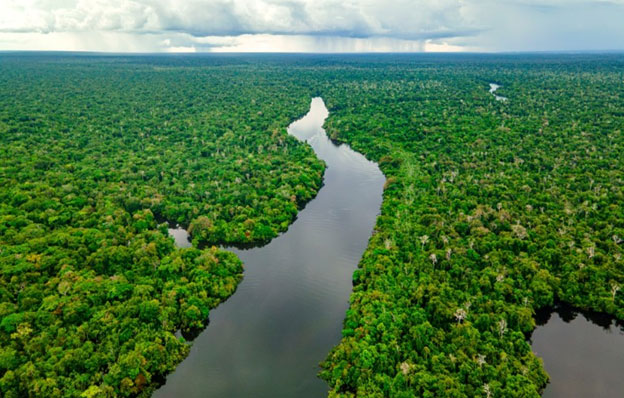
As the world gears up for COP30 in Belém, Brazil, attention is focused on the proposed Tropical Forests Forever Facility (TFFF). This initiative aims to incentivize countries for maintaining their forests, which is essential for long-term global forest protection. While TFFF sets the stage for future investments, a proven solution is already yielding results through large-scale forest protection initiatives known as jurisdictional REDD+ (JREDD+). These programs link public policy with community leadership and carbon finance, mobilizing resources where they are urgently needed.
Forests around the globe are vanishing at an alarming rate, approximately 10 million hectares annually. To remain on track for limiting global warming to 1.5°C, the United Nations Environment Programme (UNEP) estimates that tropical regions require an annual investment of $66.8 billion in forest initiatives by 2030. The good news is that the framework to attract this capital is already being implemented through the Forest Finance Roadmap, which incorporates various tools such as TFFF, JREDD+, and restoration finance.
Forest Finance Roadmap: A Collaborative Approach
Launched by 34 governments and partners as part of the Forest Climate Leaders Partnership, the Forest Finance Roadmap aims to align policy, investment, and accountability in forest finance. It acknowledges that no single approach can address the challenges. Instead, a comprehensive suite of solutions is necessary to reward both reduced deforestation and the sustainable management of forests.
In Brazil, the federal government’s commitment to introduce TFFF signifies a long-term vision. Concurrently, states like Tocantins, Pará, and Piauí are advancing JREDD+ programs that channel private investment directly to local communities, Indigenous peoples, and smallholder farmers. These initiatives incorporate independent monitoring, benefit-sharing, and verified outcomes under the ART-TREES standard. For instance, Tocantins encompasses 27 million hectares across the Amazon and Cerrado, a region noted for its biodiversity yet facing significant threats.
The Urgency of JREDD+
JREDD+ takes a state- or nation-wide approach to reward verified reductions in deforestation. It connects financial resources to government policies and land-use planning, enabling entire regions to transition from deforestation to sustainable agricultural production. This approach guarantees transparency, permanence, and equity; credits are distributed only after independent verification, and benefits are shared with local communities through Free, Prior and Informed Consent (FPIC) processes.
In practical terms, JREDD+ facilitates the flow of both public and private capital into credible, measurable results that investors and communities can trust. It serves as a link between policies such as the EU Deforestation Regulation and the voluntary carbon market, aiding companies in meeting emerging disclosure requirements while promoting tangible impacts on the ground.
The TFFF and JREDD+ initiatives should not be viewed as competitors but rather as complementary strategies. TFFF will reward nations for maintaining low deforestation rates, providing long-term incentives. In contrast, JREDD+ offers immediate, performance-based finance for verified emissions reductions. Together, they form the core of the Forest Finance Roadmap’s comprehensive approach: TFFF focuses on durability, while JREDD+ delivers immediate results.
Recent developments in Tocantins illustrate this synergy. Investments from Silvania, a nature finance platform supported by Mercuria, have established the state’s environmental intelligence center (CIGMA), enabling real-time deforestation tracking. These efforts have facilitated over 40 consultations with Indigenous and traditional communities, ultimately reducing deforestation pressures and laying the groundwork for sustainable forest protection.
As COP30 approaches, the discourse surrounding forests must transition from ambition to actionable initiatives. Brazil’s leadership, from national policy to state implementation, already provides a blueprint for other nations to follow. The roadmap is established, and proof of concept exists. What is needed now is decisive action to channel capital into JREDD+ initiatives while simultaneously supporting the long-term objectives of TFFF.
Together, these strategies could significantly bridge the forest finance gap by 2030 and initiate a new era of sustainable, high-integrity nature finance. As the global community gathers in Belém to discuss the future of the Amazon, the true measure of success will depend on the swift action taken on the solutions already available.

Urgent Swatting Incident Ties Up Emergency Resources in Alabama

Urgent Tax Alert: Claim Your Deductions Before April 15!

Scientists Investigate Cosmic Defects: Where Are They Now?

Spring Bocce Leagues Open Registration in Rapid City

CALV Offers Essential Communication Class for Real Estate Pros

Samsung Galaxy Watch 9 Set for Larger 435mAh Battery Upgrade

Healthy Choice Wellness Reports Earnings, Stock Sees Uptick

Prince Harry Claims to Be ‘Antidote to Andrew’ Amid Royal Crisis

Pet Owners Weigh Kibble Against Fresh Dog Food Options

ALMA Discovers Companion Orbiting Giant Star π 1 Gruis

U.S. Visa Rescheduling Hits H‐1B Applicants as New Vetting Rules Take Effect

University of Hawaiʻi Joins $25.6M AI Project for Disaster Monitoring

F-22 Raptor vs. Su-57 Felon: A 2025 Fighter Jet Comparison

Recent Divorce Judgments from Iberia Parish Court Records

Ohio State Study Uncovers Brain Connectivity and Function Links

Prince Andrew Faces Fallout from Scandals and Allegations

Urgent: Flight Cancellations Loom at Texas Airports Amid Shutdown

Frank Dunn, Esteemed Builder and Community Leader, Passes Away at 89
-
 Science8 months ago
ALMA Discovers Companion Orbiting Giant Star π 1 Gruis
-
 Politics6 months ago
U.S. Visa Rescheduling Hits H‐1B Applicants as New Vetting Rules Take Effect
-
Science8 months ago
University of Hawaiʻi Joins $25.6M AI Project for Disaster Monitoring
-
 World8 months ago
F-22 Raptor vs. Su-57 Felon: A 2025 Fighter Jet Comparison
-
 Politics8 months ago
Recent Divorce Judgments from Iberia Parish Court Records
-
 Science9 months ago
Ohio State Study Uncovers Brain Connectivity and Function Links
-
 World8 months ago
Prince Andrew Faces Fallout from Scandals and Allegations
-
 Top Stories8 months ago
Urgent: Flight Cancellations Loom at Texas Airports Amid Shutdown
-
 Lifestyle8 months ago
Frank Dunn, Esteemed Builder and Community Leader, Passes Away at 89
-

 Business8 months ago
Appian Recognizes 2025 Partner Award Winners for Enterprise Innovation
-

 Entertainment6 months ago
Malachi Barton Tops Google Searches as Disney’s Rising Star of 2025
-

 Science9 months ago
Innovator Captures Light at 2 Billion Frames Per Second