
Science
Researchers Uncover Arsenic’s Role in Enhancing Iodination in Vegetables

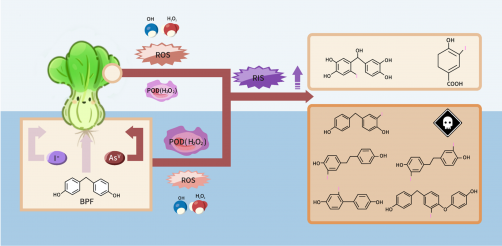
A recent study by researchers at Shandong University has revealed significant findings regarding arsenic contamination in vegetables and its effects on iodination processes. Titled “Risks and Mechanistic Insights Into Arsenic-Enhanced Iodination of Bisphenol F in Brassica chinensis L.,” the research was published in Frontiers of Environmental Science & Engineering, Volume 19, Issue 6.
Arsenic (As) contamination in agricultural products poses serious ecological and health risks, sparking public concern globally. While previous studies have examined arsenic accumulation and transformation in plants, the specific effects of arsenic on the iodination of phenolic pollutants, such as bisphenol F (BPF), remain largely unexplored. This study aims to fill that knowledge gap.
To conduct the research, the team exposed Brassica chinensis L. to hydroponic solutions comprising sodium hydrogen arsenate heptahydrate (As(V)) at concentrations ranging from 0 to 100 μmol/L, BPF at a concentration of 3 mg/L, and iodide ions at 40 μmol/L. These conditions were designed to mimic environmentally relevant scenarios.
The researchers found that As(V) significantly enhances the iodination of BPF. This enhancement occurs through the increased production of reactive oxygen species, including hydrogen peroxide (H2O2) and hydroxyl radicals (•OH). Additionally, the study noted an elevation in peroxidase (POD) activity, which was confirmed through transcriptomic analysis.
As the concentration of As(V) increased, the diversity and concentration of iodinated BPF products in the roots of the plants exhibited a clear dose-dependent increase. Correspondingly, the variety of iodinated products found in the leaves also rose, demonstrating a direct relationship between arsenic levels and iodination.
To identify the specific substitution sites of iodide atoms in the BPF molecules, the research employed Gaussian calculations and mass spectrometry. These methods revealed the number of iodide atoms incorporated into the BPF structure, further elucidating the chemical transformations occurring in the presence of arsenic.
The study also assessed the toxicity of the iodinated BPF products using the Toxicity Estimation Software Tool (T·E·S·T) and the Ecological Structure-Activity Relationships (ECOSAR) model. The findings indicated that the toxicity of iodinated BPF products increased in plants following the addition of As(V). This was corroborated by measurements of HepG2 cell viability and lactate dehydrogenase (LDH) activity in the cell culture medium.
Overall, the research highlights the compounded risks associated with arsenic and bisphenol contamination. It underscores arsenic’s role in enhancing the iodination process and the subsequent increase in toxicity of the resulting compounds in plants.
For more detailed information, the full study is available at https://journal.hep.com.cn/fese/EN/10.1007/s11783-025-2003-x. This research not only contributes to our understanding of environmental hazards but also raises awareness about the potential health implications of consuming contaminated vegetables.

Urgent Swatting Incident Ties Up Emergency Resources in Alabama

Urgent Tax Alert: Claim Your Deductions Before April 15!

Scientists Investigate Cosmic Defects: Where Are They Now?

Spring Bocce Leagues Open Registration in Rapid City

CALV Offers Essential Communication Class for Real Estate Pros

Samsung Galaxy Watch 9 Set for Larger 435mAh Battery Upgrade

Healthy Choice Wellness Reports Earnings, Stock Sees Uptick

Prince Harry Claims to Be ‘Antidote to Andrew’ Amid Royal Crisis

Pet Owners Weigh Kibble Against Fresh Dog Food Options

ALMA Discovers Companion Orbiting Giant Star π 1 Gruis

U.S. Visa Rescheduling Hits H‐1B Applicants as New Vetting Rules Take Effect

University of Hawaiʻi Joins $25.6M AI Project for Disaster Monitoring

F-22 Raptor vs. Su-57 Felon: A 2025 Fighter Jet Comparison

Ohio State Study Uncovers Brain Connectivity and Function Links

Recent Divorce Judgments from Iberia Parish Court Records

Prince Andrew Faces Fallout from Scandals and Allegations

Urgent: Flight Cancellations Loom at Texas Airports Amid Shutdown

Frank Dunn, Esteemed Builder and Community Leader, Passes Away at 89
-
 Science8 months ago
ALMA Discovers Companion Orbiting Giant Star π 1 Gruis
-
 Politics6 months ago
U.S. Visa Rescheduling Hits H‐1B Applicants as New Vetting Rules Take Effect
-
Science8 months ago
University of Hawaiʻi Joins $25.6M AI Project for Disaster Monitoring
-
 World8 months ago
F-22 Raptor vs. Su-57 Felon: A 2025 Fighter Jet Comparison
-
 Science8 months ago
Ohio State Study Uncovers Brain Connectivity and Function Links
-
 Politics8 months ago
Recent Divorce Judgments from Iberia Parish Court Records
-
 World8 months ago
Prince Andrew Faces Fallout from Scandals and Allegations
-
 Top Stories8 months ago
Urgent: Flight Cancellations Loom at Texas Airports Amid Shutdown
-
 Lifestyle8 months ago
Frank Dunn, Esteemed Builder and Community Leader, Passes Away at 89
-

 Business8 months ago
Appian Recognizes 2025 Partner Award Winners for Enterprise Innovation
-

 Entertainment6 months ago
Malachi Barton Tops Google Searches as Disney’s Rising Star of 2025
-

 Science9 months ago
Innovator Captures Light at 2 Billion Frames Per Second