
World
Nepal Votes Peacefully in First Election Since Youth Protests

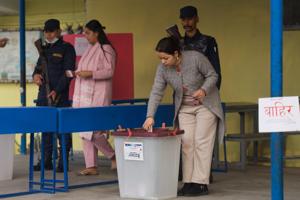
Voting proceeded peacefully across Nepal on Thursday in the nation’s first nationwide election following a youth-led uprising that forced the government to resign in September 2022. According to Ram Prasad Bhandari, Nepal’s acting Chief Election Commissioner, voter turnout was approximately 60%, with only a few minor incidents reported throughout the day.
As ballots were cast, the process of collecting and transporting ballot boxes to counting centers began, with the first results anticipated by the weekend. Bhandari indicated that helicopters would be deployed to transport boxes from remote polling stations in the northern mountainous regions by Friday morning.
Challenges Ahead for the New Administration
The incoming government faces significant challenges, including fulfilling the demands that arose from last year’s protests, addressing pervasive corruption, and managing diplomatic relations with neighboring powers India and China. Many voters expressed a strong desire for change, motivated by the sacrifices made during the protests, which resulted in dozens of deaths and hundreds of injuries.
“I came to vote mainly because of the protest and so many people gave their lives in the hope of a change,” said Luniva, a first-time voter. “Hopefully, I want to see my country become better by all the sacrifices that have been made.”
This election allows voters to directly elect 165 members to the House of Representatives, the lower chamber of Parliament. The remaining 110 seats in the 275-member body will be filled through a proportional representation system, where political parties nominate candidates based on their share of the vote.
Emergence of New Political Forces
The election is seen as a competitive three-way race shaped by widespread discontent over corruption and demands for greater governmental accountability. The National Independent Party, founded in 2022, has emerged as a frontrunner, challenging long-established parties like the Nepali Congress and the Communist Party of Nepal (Unified Marxist–Leninist).
Balendra Shah, the party’s prime ministerial candidate, gained prominence after winning the 2022 Kathmandu mayoral election and played a vital role in the protests that led to the ousting of former Prime Minister Khadga Prasad Oli. At just 35 years old, Shah has captured public attention with his focus on health and education reforms targeted at the underprivileged.
The protests that sparked last year’s political upheaval were ignited by a controversial social media ban, which escalated into widespread demonstrations against the government. While the established parties retain loyal voter bases, Shah’s party has attracted larger crowds during its campaign events, indicating a shift in voter sentiment, particularly among the youth.
According to the Election Commission of Nepal, there are approximately 19 million registered voters among the nation’s nearly 30 million residents. However, millions of Nepalis living abroad remain unable to participate in the election; around 3 million citizens work overseas—primarily in the Middle East, Southeast Asia, and neighboring India—due to the absence of a voting system that accommodates overseas ballots.
This election represents a critical moment for Nepal as the new administration prepares to address the pressing issues that have galvanized public sentiment and demanded change.

Urgent Swatting Incident Ties Up Emergency Resources in Alabama

Urgent Tax Alert: Claim Your Deductions Before April 15!

Scientists Investigate Cosmic Defects: Where Are They Now?

Spring Bocce Leagues Open Registration in Rapid City

CALV Offers Essential Communication Class for Real Estate Pros

Samsung Galaxy Watch 9 Set for Larger 435mAh Battery Upgrade

Healthy Choice Wellness Reports Earnings, Stock Sees Uptick

Prince Harry Claims to Be ‘Antidote to Andrew’ Amid Royal Crisis

Pet Owners Weigh Kibble Against Fresh Dog Food Options

ALMA Discovers Companion Orbiting Giant Star π 1 Gruis

U.S. Visa Rescheduling Hits H‐1B Applicants as New Vetting Rules Take Effect

University of Hawaiʻi Joins $25.6M AI Project for Disaster Monitoring

F-22 Raptor vs. Su-57 Felon: A 2025 Fighter Jet Comparison

Ohio State Study Uncovers Brain Connectivity and Function Links

Recent Divorce Judgments from Iberia Parish Court Records

Prince Andrew Faces Fallout from Scandals and Allegations

Urgent: Flight Cancellations Loom at Texas Airports Amid Shutdown

Frank Dunn, Esteemed Builder and Community Leader, Passes Away at 89
-
 Science8 months ago
ALMA Discovers Companion Orbiting Giant Star π 1 Gruis
-
 Politics6 months ago
U.S. Visa Rescheduling Hits H‐1B Applicants as New Vetting Rules Take Effect
-
Science8 months ago
University of Hawaiʻi Joins $25.6M AI Project for Disaster Monitoring
-
 World8 months ago
F-22 Raptor vs. Su-57 Felon: A 2025 Fighter Jet Comparison
-
 Science8 months ago
Ohio State Study Uncovers Brain Connectivity and Function Links
-
 Politics8 months ago
Recent Divorce Judgments from Iberia Parish Court Records
-
 World8 months ago
Prince Andrew Faces Fallout from Scandals and Allegations
-
 Top Stories8 months ago
Urgent: Flight Cancellations Loom at Texas Airports Amid Shutdown
-
 Lifestyle8 months ago
Frank Dunn, Esteemed Builder and Community Leader, Passes Away at 89
-

 Business8 months ago
Appian Recognizes 2025 Partner Award Winners for Enterprise Innovation
-

 Entertainment6 months ago
Malachi Barton Tops Google Searches as Disney’s Rising Star of 2025
-

 Science9 months ago
Innovator Captures Light at 2 Billion Frames Per Second