
Science
NASA Shifts Moon Rocket Launch to March After Fuel Leak Issues

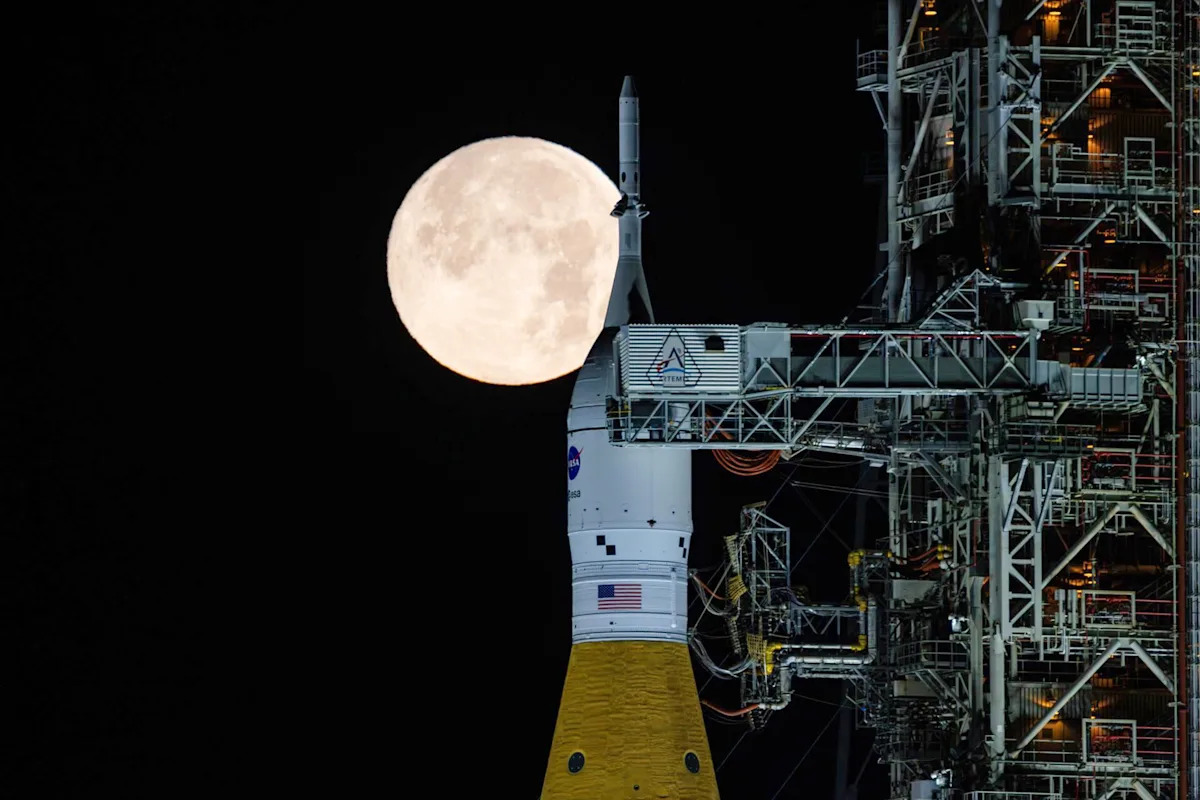
NASA has announced a target launch date of March 2024 for its new moon rocket following significant fuel leaks detected during a crucial test on March 4, 2024. The leaks occurred just hours into a daylong fueling operation at the Kennedy Space Center in Cape Canaveral, Florida, forcing the agency to delay the launch and reassess its plans.
In a statement, NASA emphasized that the additional time will allow engineers to thoroughly review data from the test and conduct a second wet dress rehearsal before the upcoming flight. The leaks, reminiscent of problems encountered during the rocket’s initial testing phase three years ago, have raised questions about the timeline for sending astronauts into space.
The agency has also confirmed that the four astronauts assigned to the mission, which includes three Americans and one Canadian, will exit their nearly two-week quarantine. They are expected to enter quarantine again approximately two weeks prior to the new launch window. NASA did not specify an exact launch date in March, highlighting that teams must first address the issues identified during the recent test and complete further evaluations.
The problematic test involved loading the 322-foot (98-meter) rocket with super-cooled hydrogen and oxygen, a process that requires more than 700,000 gallons (2.6 million liters) of fuel. During this operation, excessive hydrogen accumulated near the base of the rocket, prompting the launch team to halt fueling at least twice. This situation echoed earlier challenges faced during the inaugural test flight of the Space Launch System in 2022, which also dealt with hydrogen leaks.
NASA’s statement noted additional delays from close-out operations and ongoing audio communication issues among ground crew members. The astronauts, who monitored the critical rehearsal from nearly 1,000 miles (1,600 kilometers) away in Houston, Texas, represent a key part of the Artemis program, which aims to establish a sustained human presence on the Moon.
The Artemis mission is designed to send its crew around the Moon, including a journey to the far side, without attempting to land. This nearly 10-day mission aims to test the capsule’s life support systems and other essential technologies. NASA last sent astronauts to the Moon during the Apollo program in the 1960s and 1970s, making this upcoming launch a significant step toward future lunar exploration.
As NASA moves forward, the agency remains focused on ensuring the rocket’s readiness for launch. With a limited number of days available each month for launches, the upcoming months are critical for the Artemis program as it prepares for a new era of space exploration.
The Associated Press Health and Science Department receives support from the Howard Hughes Medical Institute’s Department of Science Education and the Robert Wood Johnson Foundation. The AP is solely responsible for all content.

Urgent Swatting Incident Ties Up Emergency Resources in Alabama

Urgent Tax Alert: Claim Your Deductions Before April 15!

Scientists Investigate Cosmic Defects: Where Are They Now?

Spring Bocce Leagues Open Registration in Rapid City

CALV Offers Essential Communication Class for Real Estate Pros

Samsung Galaxy Watch 9 Set for Larger 435mAh Battery Upgrade

Healthy Choice Wellness Reports Earnings, Stock Sees Uptick

Prince Harry Claims to Be ‘Antidote to Andrew’ Amid Royal Crisis

Pet Owners Weigh Kibble Against Fresh Dog Food Options

ALMA Discovers Companion Orbiting Giant Star π 1 Gruis

U.S. Visa Rescheduling Hits H‐1B Applicants as New Vetting Rules Take Effect

University of Hawaiʻi Joins $25.6M AI Project for Disaster Monitoring

F-22 Raptor vs. Su-57 Felon: A 2025 Fighter Jet Comparison

Ohio State Study Uncovers Brain Connectivity and Function Links

Recent Divorce Judgments from Iberia Parish Court Records

Prince Andrew Faces Fallout from Scandals and Allegations

Urgent: Flight Cancellations Loom at Texas Airports Amid Shutdown

Frank Dunn, Esteemed Builder and Community Leader, Passes Away at 89
-
 Science8 months ago
ALMA Discovers Companion Orbiting Giant Star π 1 Gruis
-
 Politics6 months ago
U.S. Visa Rescheduling Hits H‐1B Applicants as New Vetting Rules Take Effect
-
Science8 months ago
University of Hawaiʻi Joins $25.6M AI Project for Disaster Monitoring
-
 World8 months ago
F-22 Raptor vs. Su-57 Felon: A 2025 Fighter Jet Comparison
-
 Science8 months ago
Ohio State Study Uncovers Brain Connectivity and Function Links
-
 Politics8 months ago
Recent Divorce Judgments from Iberia Parish Court Records
-
 World8 months ago
Prince Andrew Faces Fallout from Scandals and Allegations
-
 Top Stories8 months ago
Urgent: Flight Cancellations Loom at Texas Airports Amid Shutdown
-
 Lifestyle8 months ago
Frank Dunn, Esteemed Builder and Community Leader, Passes Away at 89
-

 Business8 months ago
Appian Recognizes 2025 Partner Award Winners for Enterprise Innovation
-

 Entertainment6 months ago
Malachi Barton Tops Google Searches as Disney’s Rising Star of 2025
-

 Science9 months ago
Innovator Captures Light at 2 Billion Frames Per Second