
Science
Researchers Uncover Challenges in Tardigrade DNA Protein for Space Safety

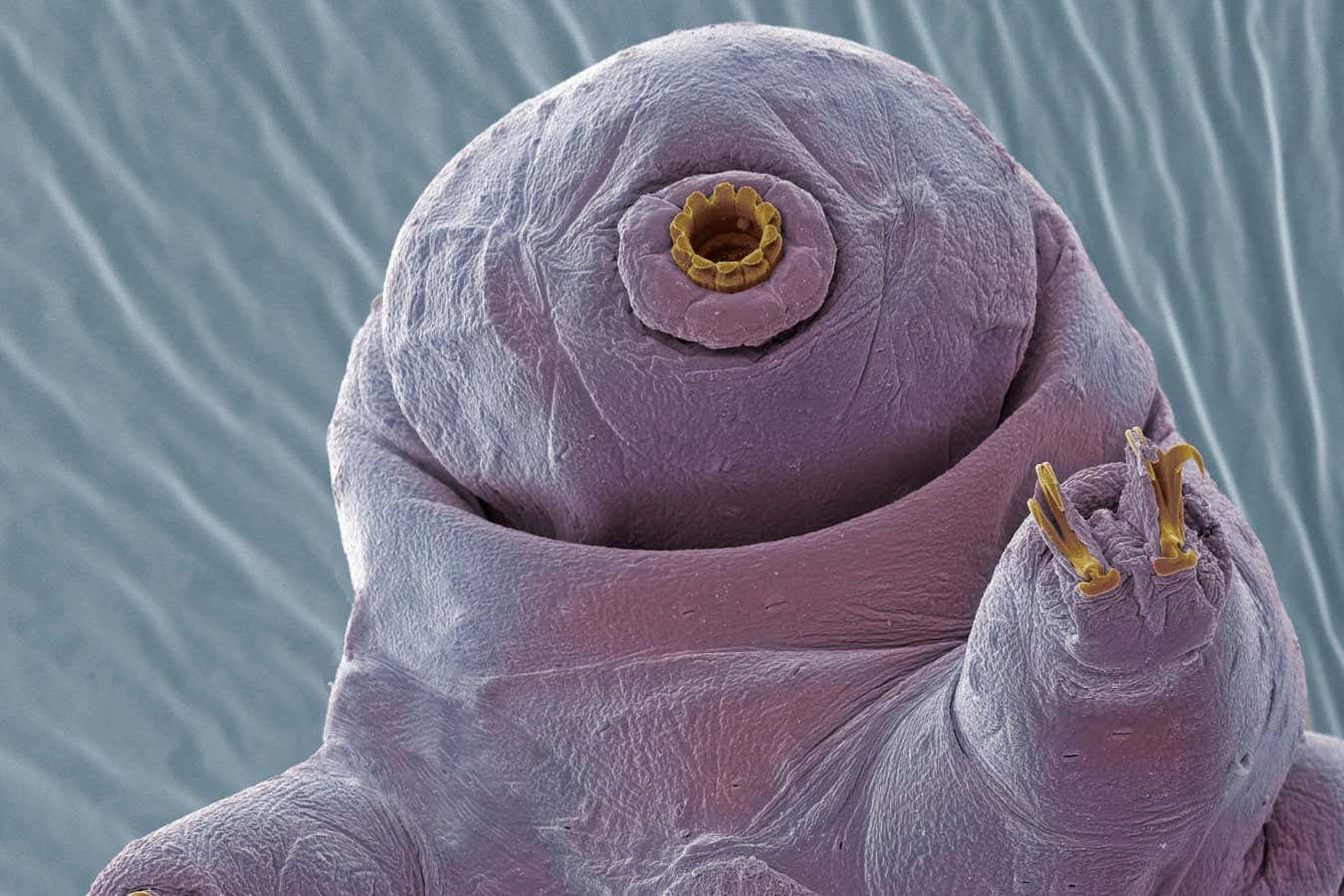
Exploring the cosmos poses unique challenges, particularly regarding cosmic radiation. Scientists have long sought ways to protect astronauts from this radiation without the impracticality of heavy shielding. Recent research led by Corey Nislow at the University of British Columbia has revealed the complexities behind using a protein derived from tardigrades, known as Dsup (damage suppressor), to enhance cellular resistance to radiation.
Tardigrades, tiny creatures renowned for their resilience, can endure extreme conditions such as high radiation, intense heat, and even the vacuum of space. In a pivotal study from 2016, Dsup was identified as a significant factor in their survival capabilities. Initial findings suggested that genetically engineering human cells to produce Dsup could bolster resistance to radiation without adverse effects. This sparked interest in using Dsup to shield astronauts during space missions.
Nislow had previously expressed optimism about delivering Dsup-encoding mRNAs encapsulated in lipid nanoparticles (LNPs), a method similar to that used in mRNA COVID-19 vaccines. He noted, “Two to three years ago, I was fully on board with the idea that, let’s deliver Dsup mRNA in an LNP to crew members on space missions.” However, recent investigations have unveiled critical limitations.
The research team conducted extensive studies involving yeast cells modified to produce Dsup. They discovered that while Dsup can protect DNA, excessive levels can be detrimental. High concentrations were found to be fatal, while even moderate levels impaired cell growth. Nislow explained that Dsup protects DNA by physically enveloping it, which, while offering protection, impedes access for essential cellular processes, including DNA replication and repair.
As the research progresses, questions arise about the feasibility of utilizing Dsup for human applications, particularly in space travel. Nislow emphasized the necessity of controlling the production of Dsup within cells, stating, “It will be crucial to ensure that Dsup is produced only in the cells where it is needed and at the right levels.”
Other researchers are also investigating Dsup’s potential. James Byrne from the University of Iowa is exploring whether Dsup can aid in protecting healthy cells during radiation therapy for cancer. Byrne cautioned that if Dsup were continuously produced throughout the body, it could negatively impact health. He suggested that transient production during critical times might yield benefits.
Similarly, Simon Galas from the University of Montpellier highlighted that while high doses of Dsup can be toxic, low levels have been shown to extend the lifespan of nematode worms by providing protection against oxidative stress. His team continues to investigate the mechanisms behind Dsup’s functionality.
Another researcher, Jessica Tyler from Weill Cornell Medicine, has also modified yeast to produce Dsup. She reported that at lower levels than those tested by Nislow, Dsup appeared to have beneficial effects without impacting growth negatively. Tyler acknowledged the importance of regulating Dsup production levels.
Despite the challenges, researchers remain hopeful about the future of Dsup and its applications. Nislow expressed confidence in the advancement of delivery systems, stating, “There’s so much money and attention on delivery systems. It’s a problem that so many people in pharma are motivated to solve.” The ongoing exploration of Dsup could pave the way for innovative solutions to protect astronauts and potentially even cancer patients, underscoring the intricate balance between benefit and risk in scientific advancement.

Urgent Swatting Incident Ties Up Emergency Resources in Alabama

Urgent Tax Alert: Claim Your Deductions Before April 15!

Scientists Investigate Cosmic Defects: Where Are They Now?

Spring Bocce Leagues Open Registration in Rapid City

CALV Offers Essential Communication Class for Real Estate Pros

Samsung Galaxy Watch 9 Set for Larger 435mAh Battery Upgrade

Healthy Choice Wellness Reports Earnings, Stock Sees Uptick

Prince Harry Claims to Be ‘Antidote to Andrew’ Amid Royal Crisis

Pet Owners Weigh Kibble Against Fresh Dog Food Options

ALMA Discovers Companion Orbiting Giant Star π 1 Gruis

U.S. Visa Rescheduling Hits H‐1B Applicants as New Vetting Rules Take Effect

University of Hawaiʻi Joins $25.6M AI Project for Disaster Monitoring

F-22 Raptor vs. Su-57 Felon: A 2025 Fighter Jet Comparison

Recent Divorce Judgments from Iberia Parish Court Records

Ohio State Study Uncovers Brain Connectivity and Function Links

Prince Andrew Faces Fallout from Scandals and Allegations

Urgent: Flight Cancellations Loom at Texas Airports Amid Shutdown

Frank Dunn, Esteemed Builder and Community Leader, Passes Away at 89
-
 Science8 months ago
ALMA Discovers Companion Orbiting Giant Star π 1 Gruis
-
 Politics6 months ago
U.S. Visa Rescheduling Hits H‐1B Applicants as New Vetting Rules Take Effect
-
Science8 months ago
University of Hawaiʻi Joins $25.6M AI Project for Disaster Monitoring
-
 World8 months ago
F-22 Raptor vs. Su-57 Felon: A 2025 Fighter Jet Comparison
-
 Politics8 months ago
Recent Divorce Judgments from Iberia Parish Court Records
-
 Science8 months ago
Ohio State Study Uncovers Brain Connectivity and Function Links
-
 World8 months ago
Prince Andrew Faces Fallout from Scandals and Allegations
-
 Top Stories8 months ago
Urgent: Flight Cancellations Loom at Texas Airports Amid Shutdown
-
 Lifestyle8 months ago
Frank Dunn, Esteemed Builder and Community Leader, Passes Away at 89
-

 Business8 months ago
Appian Recognizes 2025 Partner Award Winners for Enterprise Innovation
-

 Entertainment6 months ago
Malachi Barton Tops Google Searches as Disney’s Rising Star of 2025
-

 Science9 months ago
Innovator Captures Light at 2 Billion Frames Per Second