
Top Stories
Supreme Court May Change Midterms with Key Voting Rights Ruling

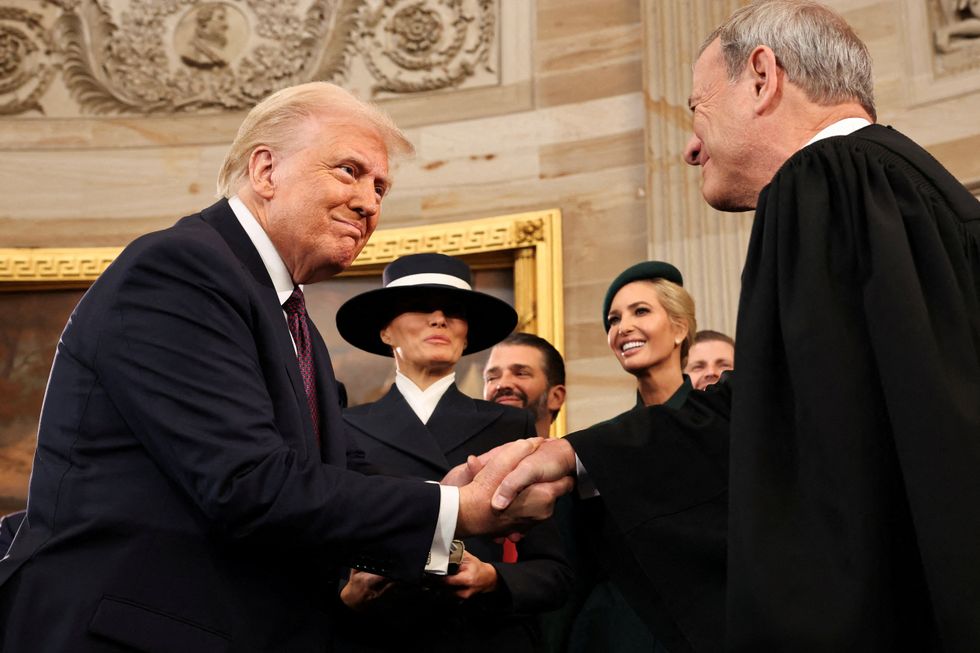
UPDATE: The U.S. Supreme Court is poised to potentially reshape the upcoming midterm elections by reconsidering a crucial provision of the 1965 Voting Rights Act. This decision could provide a much-needed boost for Republicans as they struggle to retain their slim House majority amid challenges posed by former President Donald Trump‘s declining approval ratings.
New reports from Bloomberg indicate that the conservative-leaning court may soon rule on a case involving a majority-Black congressional district in Louisiana. Experts suggest that a ruling against the Voting Rights Act could trigger immediate redistricting efforts in several GOP-led states, including Texas and Georgia, significantly impacting the electoral landscape.
The current political climate is dire for the GOP. Historically, no party has successfully maintained control of both Congress and the White House during a midterm election since 1978. According to Ronald Brownstein, a key analyst at Bloomberg, Trump’s attempts to influence congressional maps in red states have largely faltered, with only a few states actively attempting to redraw district lines.
However, the Supreme Court could deliver a lifeline to the Republicans. If the court’s conservative majority decides to overturn or limit the provision that prevents discriminatory changes to election laws against racial minorities, it could enable GOP-led states to redraw their congressional maps. This could potentially shift as many as seven to eight Congressional seats in favor of Republicans, bolstering their long-term chances of holding onto the House.
Brownstein emphasizes that the court typically waits until June to announce significant rulings, but there is growing speculation that it might expedite its decision to influence the upcoming 2026 elections. Such a ruling would give states ample time to adjust their congressional maps ahead of the midterms, potentially sidelining Democratic representation, particularly for Black and Latino candidates.
The implications of weakening the Voting Rights Act could echo historical injustices. Brownstein warns that a future where people of color contribute to population growth in Southern states but are denied fair representation in Congress mirrors the infamous three-fifths compromise, which counted enslaved individuals as less than a whole person in political representation.
As the court deliberates, attention remains focused on how states like Florida, Georgia, and Louisiana might respond if the Voting Rights Act provision is struck down. Observers expect rapid redistricting efforts that could further entrench Republican power while diminishing the political voice of minority communities.
The situation remains fluid, and all eyes are on the Supreme Court. A ruling could fundamentally alter the trajectory of the midterm elections and redefine political power dynamics in the United States. Stay tuned for updates as this story develops.

Urgent Swatting Incident Ties Up Emergency Resources in Alabama

Urgent Tax Alert: Claim Your Deductions Before April 15!

Scientists Investigate Cosmic Defects: Where Are They Now?

Spring Bocce Leagues Open Registration in Rapid City

CALV Offers Essential Communication Class for Real Estate Pros

Samsung Galaxy Watch 9 Set for Larger 435mAh Battery Upgrade

Healthy Choice Wellness Reports Earnings, Stock Sees Uptick

Prince Harry Claims to Be ‘Antidote to Andrew’ Amid Royal Crisis

Pet Owners Weigh Kibble Against Fresh Dog Food Options

ALMA Discovers Companion Orbiting Giant Star π 1 Gruis

U.S. Visa Rescheduling Hits H‐1B Applicants as New Vetting Rules Take Effect

University of Hawaiʻi Joins $25.6M AI Project for Disaster Monitoring

F-22 Raptor vs. Su-57 Felon: A 2025 Fighter Jet Comparison

Recent Divorce Judgments from Iberia Parish Court Records

Ohio State Study Uncovers Brain Connectivity and Function Links

Prince Andrew Faces Fallout from Scandals and Allegations

Urgent: Flight Cancellations Loom at Texas Airports Amid Shutdown

Frank Dunn, Esteemed Builder and Community Leader, Passes Away at 89
-
 Science8 months ago
ALMA Discovers Companion Orbiting Giant Star π 1 Gruis
-
 Politics6 months ago
U.S. Visa Rescheduling Hits H‐1B Applicants as New Vetting Rules Take Effect
-
Science8 months ago
University of Hawaiʻi Joins $25.6M AI Project for Disaster Monitoring
-
 World8 months ago
F-22 Raptor vs. Su-57 Felon: A 2025 Fighter Jet Comparison
-
 Politics8 months ago
Recent Divorce Judgments from Iberia Parish Court Records
-
 Science9 months ago
Ohio State Study Uncovers Brain Connectivity and Function Links
-
 World8 months ago
Prince Andrew Faces Fallout from Scandals and Allegations
-
 Top Stories8 months ago
Urgent: Flight Cancellations Loom at Texas Airports Amid Shutdown
-
 Lifestyle8 months ago
Frank Dunn, Esteemed Builder and Community Leader, Passes Away at 89
-

 Business8 months ago
Appian Recognizes 2025 Partner Award Winners for Enterprise Innovation
-

 Entertainment7 months ago
Malachi Barton Tops Google Searches as Disney’s Rising Star of 2025
-

 Top Stories7 months ago
Republican Matt Van Epps Wins Tennessee Special Election