
Science
President Trump Orders Marijuana Rescheduling, Opens Research Path

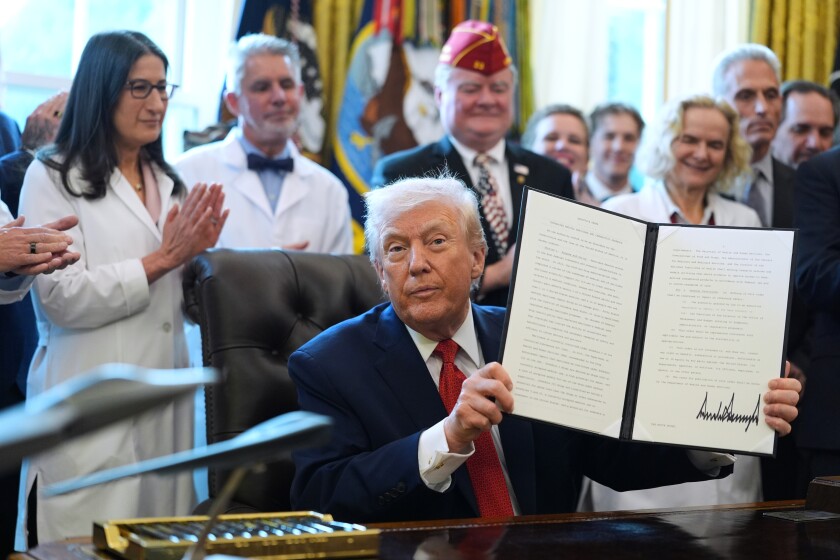
President Donald Trump has issued an executive order for the “expeditious” reclassification of marijuana, moving it from Schedule I to Schedule III of the Controlled Substances Act. This significant decision ends nearly five decades of marijuana being categorized alongside dangerous drugs like heroin and MDMA. The change is expected to facilitate medical research and acknowledges the potential therapeutic benefits of cannabis.
Nearly four decades ago, Francis Young, then chief administrative law judge at the Drug Enforcement Administration (DEA), argued that marijuana should not be classified as a Schedule I substance. Young concluded that marijuana has accepted medical uses, particularly for treating nausea associated with cancer chemotherapy and spasticity from multiple sclerosis. Despite his findings, the DEA upheld marijuana’s Schedule I status until recent developments prompted a reevaluation.
In a review completed by the Department of Health and Human Services (HHS) in 2023, ordered by President Joe Biden, officials found “credible scientific support” for marijuana’s use in treating various medical conditions, including pain and nausea. HHS’s assessment highlighted that the vast majority of marijuana users do not experience dangerous outcomes. Consequently, the review recommended that marijuana be classified in Schedule III, which includes certain prescription drugs like ketamine and anabolic steroids.
Accepting this recommendation, Attorney General Merrick Garland proposed the reclassification in May 2024. Trump’s order effectively acknowledges that the federal government has overstated the hazards of marijuana while neglecting its potential benefits.
While this reclassification does not legalize marijuana for medical use outright, it will ease the burden on researchers by removing the stringent regulatory requirements associated with Schedule I substances. Nevertheless, the Food and Drug Administration (FDA) must approve specific cannabis-based products as prescription medicines for them to be legally authorized for medical use. Furthermore, state-licensed marijuana businesses will still operate in a legal gray area, remaining criminal enterprises under federal law, though they may benefit from reduced penalties.
Despite these limitations, the reclassification presents advantages for state-legal marijuana businesses, particularly regarding tax liabilities. Currently, these businesses face significantly high effective tax rates due to the inability to claim standard deductions. The new status may allow them to navigate these financial burdens more effectively.
In the wake of Young’s initial ruling, 40 states have legalized marijuana for medical use, and 24 states, representing a majority of the U.S. population, have also permitted recreational use. This growing acceptance contrasts sharply with the federal prohibition that many Americans now oppose.
Trump emphasized that his order “doesn’t legalize marijuana in any way, shape or form,” a statement that some may find disappointing given the evolving landscape around cannabis legislation. The reclassification marks a pivotal moment in the ongoing debate over marijuana and its place in American society, as advocates continue to push for broader legalization and acceptance of its medical uses.
As the situation develops, the implications of this change will likely resonate throughout the medical research community and the cannabis industry.

Urgent Swatting Incident Ties Up Emergency Resources in Alabama

Urgent Tax Alert: Claim Your Deductions Before April 15!

Scientists Investigate Cosmic Defects: Where Are They Now?

Spring Bocce Leagues Open Registration in Rapid City

CALV Offers Essential Communication Class for Real Estate Pros

Samsung Galaxy Watch 9 Set for Larger 435mAh Battery Upgrade

Healthy Choice Wellness Reports Earnings, Stock Sees Uptick

Prince Harry Claims to Be ‘Antidote to Andrew’ Amid Royal Crisis

Pet Owners Weigh Kibble Against Fresh Dog Food Options

ALMA Discovers Companion Orbiting Giant Star π 1 Gruis

U.S. Visa Rescheduling Hits H‐1B Applicants as New Vetting Rules Take Effect

University of Hawaiʻi Joins $25.6M AI Project for Disaster Monitoring

F-22 Raptor vs. Su-57 Felon: A 2025 Fighter Jet Comparison

Recent Divorce Judgments from Iberia Parish Court Records

Urgent: Flight Cancellations Loom at Texas Airports Amid Shutdown

Ohio State Study Uncovers Brain Connectivity and Function Links

Frank Dunn, Esteemed Builder and Community Leader, Passes Away at 89

Appian Recognizes 2025 Partner Award Winners for Enterprise Innovation
-
 Science9 months ago
ALMA Discovers Companion Orbiting Giant Star π 1 Gruis
-
 Politics8 months ago
U.S. Visa Rescheduling Hits H‐1B Applicants as New Vetting Rules Take Effect
-
Science10 months ago
University of Hawaiʻi Joins $25.6M AI Project for Disaster Monitoring
-
 World10 months ago
F-22 Raptor vs. Su-57 Felon: A 2025 Fighter Jet Comparison
-
 Politics9 months ago
Recent Divorce Judgments from Iberia Parish Court Records
-
 Top Stories10 months ago
Urgent: Flight Cancellations Loom at Texas Airports Amid Shutdown
-
 Science10 months ago
Ohio State Study Uncovers Brain Connectivity and Function Links
-
 Lifestyle10 months ago
Frank Dunn, Esteemed Builder and Community Leader, Passes Away at 89
-
 Business10 months ago
Appian Recognizes 2025 Partner Award Winners for Enterprise Innovation
-

 World10 months ago
Prince Andrew Faces Fallout from Scandals and Allegations
-

 Entertainment8 months ago
Malachi Barton Tops Google Searches as Disney’s Rising Star of 2025
-

 Top Stories9 months ago
Republican Matt Van Epps Wins Tennessee Special Election