
Science
Understanding Neutron Stars: The Universe’s Densest Remnants

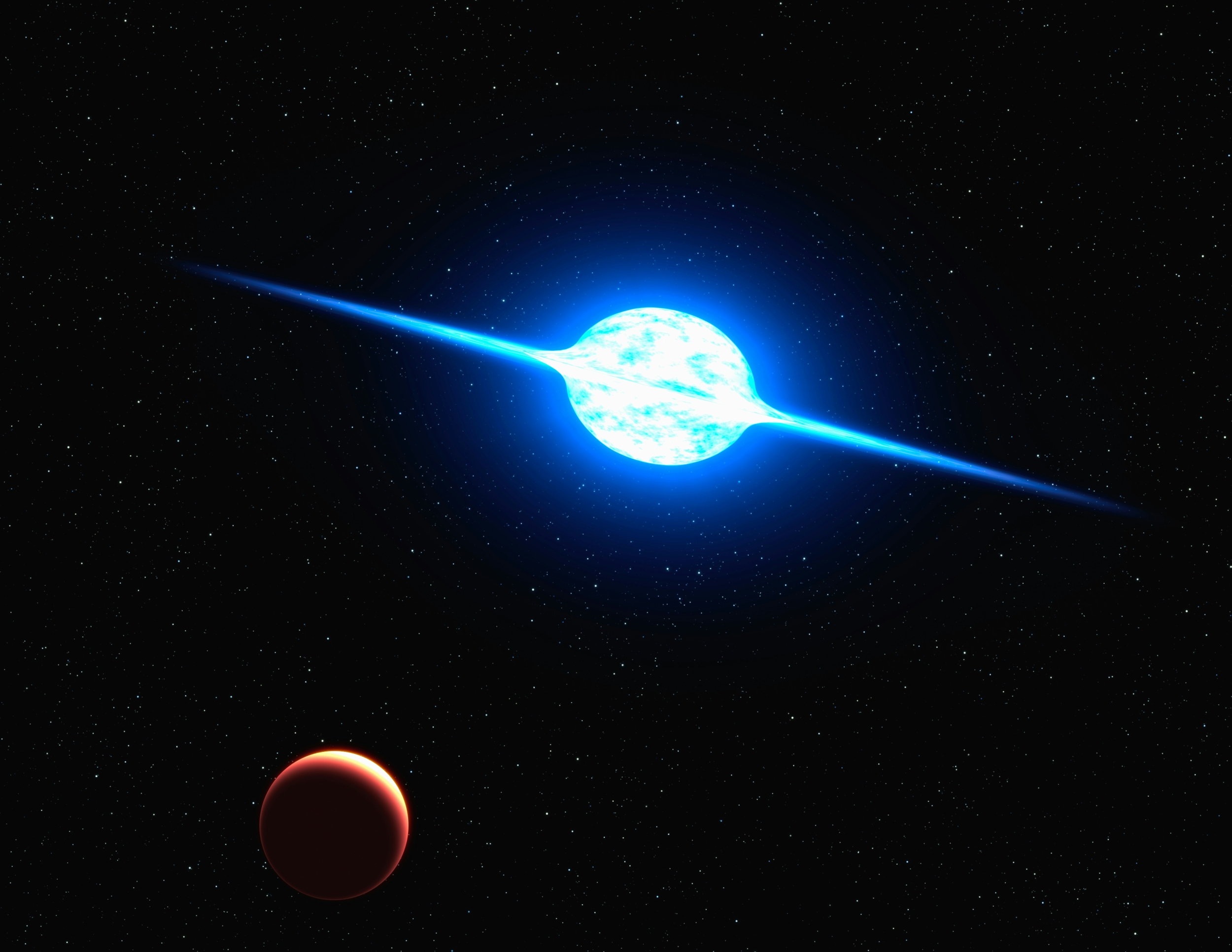
Neutron stars, the remnants of massive stars, represent some of the most extreme objects in the universe. When stars with a mass between eight and twenty times that of the Sun exhaust their nuclear fuel, gravity overwhelms the internal pressure. This leads to a supernova explosion, leaving behind a stellar remnant roughly the size of a city but possessing more mass than the Sun. The result is a compact object that achieves densities so high that atomic structures break down, forcing protons and electrons to merge into neutrons.
This transformation creates a phenomenon known as neutron degeneracy pressure, a quantum force that halts further collapse and prevents the formation of a black hole. Neutron stars are characterized by their intense gravitational pull, incredibly strong magnetic fields, and rapid rotation, making them unique laboratories for studying physics under extreme conditions.
Formation and Structure of Neutron Stars
The formation process of neutron stars occurs during the final stages of massive stars, particularly through core-collapse supernovae. As fusion in the star’s iron core ceases to produce energy, the internal pressure diminishes, allowing gravity to take over. This collapse compresses the core and triggers a violent rebound that ejects the outer layers of the star, resulting in the formation of a neutron star.
Structurally, neutron stars possess distinct internal layers shaped by extreme pressure. A thin outer crust contains tightly packed atomic nuclei. As one moves deeper, a region known as “neutron drip” is reached, where neutrons escape from atomic bonds. Below this layer lies a superfluid outer core dominated by free neutrons and exotic particles, possibly transitioning into quark matter in the inner core.
The maximum mass of a neutron star is limited by the Tolman–Oppenheimer–Volkoff mass boundary, estimated to be around 2.2 solar masses. Exceeding this limit results in the failure of neutron degeneracy pressure, leading to further collapse into a black hole.
The Extraordinary Characteristics of Neutron Stars
Neutron stars conserve angular momentum as they shrink, which dramatically increases their rotation speeds. A progenitor star that once completed a rotation every day can become a neutron star spinning at hundreds of times per second. Some millisecond pulsars, a type of neutron star, have been observed spinning at frequencies exceeding 700 hertz, emitting precisely timed radio pulses that can be detected across the Milky Way.
Another fascinating subclass of neutron stars is magnetars, which possess magnetic fields exceeding 10^15 gauss. These intense magnetic fields can stress the star’s crust, leading to fractures and resulting in starquakes that release bursts of gamma rays far stronger than typical supernova outputs. Magnetars exemplify how collapsed stars can store and release immense energy through magnetic processes.
Timing irregularities, known as “glitches,” reveal additional insights into the exotic interiors of neutron stars. These sudden changes in spin rate are thought to occur when superfluid vortices within the core unpin and redistribute angular momentum. This process alters the star’s rotation with extraordinary precision, providing valuable data for physicists.
The advent of gravitational-wave astronomy has also transformed our understanding of neutron stars. The detection of event GW170817 confirmed that merging neutron stars emit ripples in spacetime, detectable across vast distances. This event established a direct link between neutron star mergers and the creation of heavy elements, such as gold and platinum, further emphasizing their role in shaping cosmic structure.
Observations made by the Neutron Star Interior Composition Explorer (NICER), aboard the International Space Station, have refined our understanding of neutron stars. By tracking X-ray hotspots on rotating neutron stars, astronomers have been able to confirm mass-radius relationships that support dense yet stable cores.
Neutron stars undergo significant cooling during their early life, primarily through neutrino emission. In the first hundred thousand years, they shed heat rapidly, with surface cooling later dominated by photon radiation. This cooling process allows astronomers to estimate the ages of neutron stars through thermal measurements, revealing superfluidity within the core.
The impact of neutron stars extends beyond their immediate environment. Binary neutron star mergers eject neutron-rich material, seeding galaxies with heavy elements essential for the formation of planets and life. Without these stellar remnants, many elements found on the periodic table beyond iron would be exceedingly rare, highlighting their significance in the universe.
Neutron stars represent the culmination of matter pushed to its absolute limits. Combining extreme gravity, density, magnetism, and rotation, they serve as compact laboratories for exploring fundamental physics. As observational tools continue to improve, our understanding of these remarkable celestial objects will deepen, enhancing our knowledge of the universe’s most extreme environments. Through advances in gravitational waves, X-ray mapping, and precise timing arrays, scientists are uncovering the mysteries of neutron stars, their formation, evolution, and collisions across cosmic time. Each discovery brings us closer to understanding the nature of matter under conditions found nowhere else in the universe.

Urgent Swatting Incident Ties Up Emergency Resources in Alabama

Urgent Tax Alert: Claim Your Deductions Before April 15!

Scientists Investigate Cosmic Defects: Where Are They Now?

Spring Bocce Leagues Open Registration in Rapid City

CALV Offers Essential Communication Class for Real Estate Pros

Samsung Galaxy Watch 9 Set for Larger 435mAh Battery Upgrade

Healthy Choice Wellness Reports Earnings, Stock Sees Uptick

Prince Harry Claims to Be ‘Antidote to Andrew’ Amid Royal Crisis

Pet Owners Weigh Kibble Against Fresh Dog Food Options

ALMA Discovers Companion Orbiting Giant Star π 1 Gruis

U.S. Visa Rescheduling Hits H‐1B Applicants as New Vetting Rules Take Effect

University of Hawaiʻi Joins $25.6M AI Project for Disaster Monitoring

F-22 Raptor vs. Su-57 Felon: A 2025 Fighter Jet Comparison

Recent Divorce Judgments from Iberia Parish Court Records

Urgent: Flight Cancellations Loom at Texas Airports Amid Shutdown

Ohio State Study Uncovers Brain Connectivity and Function Links

Frank Dunn, Esteemed Builder and Community Leader, Passes Away at 89

Appian Recognizes 2025 Partner Award Winners for Enterprise Innovation
-
 Science9 months ago
ALMA Discovers Companion Orbiting Giant Star π 1 Gruis
-
 Politics8 months ago
U.S. Visa Rescheduling Hits H‐1B Applicants as New Vetting Rules Take Effect
-
Science10 months ago
University of Hawaiʻi Joins $25.6M AI Project for Disaster Monitoring
-
 World10 months ago
F-22 Raptor vs. Su-57 Felon: A 2025 Fighter Jet Comparison
-
 Politics9 months ago
Recent Divorce Judgments from Iberia Parish Court Records
-
 Top Stories10 months ago
Urgent: Flight Cancellations Loom at Texas Airports Amid Shutdown
-
 Science10 months ago
Ohio State Study Uncovers Brain Connectivity and Function Links
-
 Lifestyle10 months ago
Frank Dunn, Esteemed Builder and Community Leader, Passes Away at 89
-
 Business10 months ago
Appian Recognizes 2025 Partner Award Winners for Enterprise Innovation
-

 World10 months ago
Prince Andrew Faces Fallout from Scandals and Allegations
-

 Entertainment8 months ago
Malachi Barton Tops Google Searches as Disney’s Rising Star of 2025
-

 Top Stories9 months ago
Republican Matt Van Epps Wins Tennessee Special Election