
Science
Examining the Conflict Between Science and Religion


The ongoing debate between science and religion has gained renewed attention, with prominent voices presenting their perspectives. One such voice is Tom McKone, who argues that while science excels in gathering evidence and forming conclusions, it falls short of addressing existential questions such as the origins of life and the nature of the universe. His assertions challenge conventional religious narratives and highlight the complexities of understanding our existence.
In exploring these themes, McKone references Albert Einstein‘s theory of relativity, which posits that the universe began as a singularity—a point of infinite energy density. According to current scientific understanding, this singularity erupted in the Big Bang approximately 13.7 billion years ago, resulting in the creation of matter, light, space, and time. This scientific framework suggests that the universe can be explained through natural processes, without necessitating the existence of a deity.
Researchers continue to investigate the origins of life, proposing various chemical scenarios that could account for its emergence. McKone expresses optimism that scientists will eventually unravel this mystery. He also touches on the anthropic principle, which posits that the universe appears finely tuned for life. McKone argues that this perception is misleading; rather, humans are adapted to the conditions of the universe.
The vast majority of the universe comprises empty space, and only certain star systems, like our own sun, provide the stability necessary for life. This leads to the conclusion that the universe is largely inhospitable to life forms, raising questions about the implications of divine creation. McKone provocatively suggests that if a god exists, the extensive time frames required for the formation of celestial bodies and life—approximately 9 billion years for the sun and Earth, followed by another billion years for life on our planet—indicate a lack of urgency in divine action.
One of the most profound questions posed by McKone is about the nature of life after death. He references findings from neuroscientists that identify specific brain regions responsible for various functions, implying that once the brain ceases to function, the body begins to decompose irreversibly. This perspective challenges traditional religious beliefs regarding the immortality of the soul, particularly the Christian doctrine of resurrection.
The resurrection of Jesus is a cornerstone of Christian faith, but McKone points out that the earliest Gospel, written by Mark, does not mention this event. Mark’s account, composed around 40 years after Jesus’ death, ends abruptly, while later writers like Matthew and Luke incorporated resurrection narratives to address perceived gaps in Mark’s account. McKone questions the authenticity of these additions, suggesting they were attempts to reconcile the delay in Jesus’ promised return.
The author of 2 Peter also recognized the challenge presented by the absence of Jesus’ return, attempting to rationalize it by suggesting that time operates differently for God. McKone notes that this text is widely regarded as a second-century composition, casting further doubt on its reliability.
As McKone reflects on the inevitable cessation of existence, he expresses a personal commitment to living fully and contributing positively to the world. He contemplates his mortality with a pragmatic approach, stating that he will embrace life while acknowledging the limitations of human understanding.
In a world where science and religion often appear at odds, McKone’s insights encourage a deeper examination of both realms. His perspective invites readers to consider the implications of scientific discoveries while grappling with the enduring questions of existence that religion has sought to answer for centuries. Ultimately, the dialogue between science and faith continues to evolve, challenging individuals to navigate their beliefs in an increasingly complex universe.

Urgent Swatting Incident Ties Up Emergency Resources in Alabama

Urgent Tax Alert: Claim Your Deductions Before April 15!

Scientists Investigate Cosmic Defects: Where Are They Now?

Spring Bocce Leagues Open Registration in Rapid City

CALV Offers Essential Communication Class for Real Estate Pros

Samsung Galaxy Watch 9 Set for Larger 435mAh Battery Upgrade

Healthy Choice Wellness Reports Earnings, Stock Sees Uptick

Prince Harry Claims to Be ‘Antidote to Andrew’ Amid Royal Crisis

Pet Owners Weigh Kibble Against Fresh Dog Food Options

ALMA Discovers Companion Orbiting Giant Star π 1 Gruis

U.S. Visa Rescheduling Hits H‐1B Applicants as New Vetting Rules Take Effect

University of Hawaiʻi Joins $25.6M AI Project for Disaster Monitoring

F-22 Raptor vs. Su-57 Felon: A 2025 Fighter Jet Comparison

Recent Divorce Judgments from Iberia Parish Court Records

Ohio State Study Uncovers Brain Connectivity and Function Links

Prince Andrew Faces Fallout from Scandals and Allegations

Urgent: Flight Cancellations Loom at Texas Airports Amid Shutdown

Frank Dunn, Esteemed Builder and Community Leader, Passes Away at 89
-
 Science8 months ago
ALMA Discovers Companion Orbiting Giant Star π 1 Gruis
-
 Politics6 months ago
U.S. Visa Rescheduling Hits H‐1B Applicants as New Vetting Rules Take Effect
-
Science8 months ago
University of Hawaiʻi Joins $25.6M AI Project for Disaster Monitoring
-
 World8 months ago
F-22 Raptor vs. Su-57 Felon: A 2025 Fighter Jet Comparison
-
 Politics8 months ago
Recent Divorce Judgments from Iberia Parish Court Records
-
 Science9 months ago
Ohio State Study Uncovers Brain Connectivity and Function Links
-
 World8 months ago
Prince Andrew Faces Fallout from Scandals and Allegations
-
 Top Stories8 months ago
Urgent: Flight Cancellations Loom at Texas Airports Amid Shutdown
-
 Lifestyle8 months ago
Frank Dunn, Esteemed Builder and Community Leader, Passes Away at 89
-

 Business8 months ago
Appian Recognizes 2025 Partner Award Winners for Enterprise Innovation
-

 Entertainment6 months ago
Malachi Barton Tops Google Searches as Disney’s Rising Star of 2025
-
 Science9 months ago
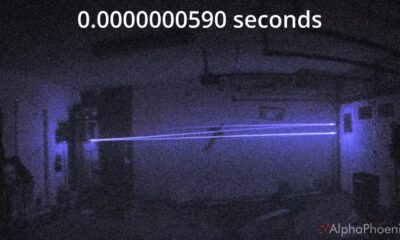
Innovator Captures Light at 2 Billion Frames Per Second