
Science
Ancient Shell Trumpets Revealed as Key Communication Tools

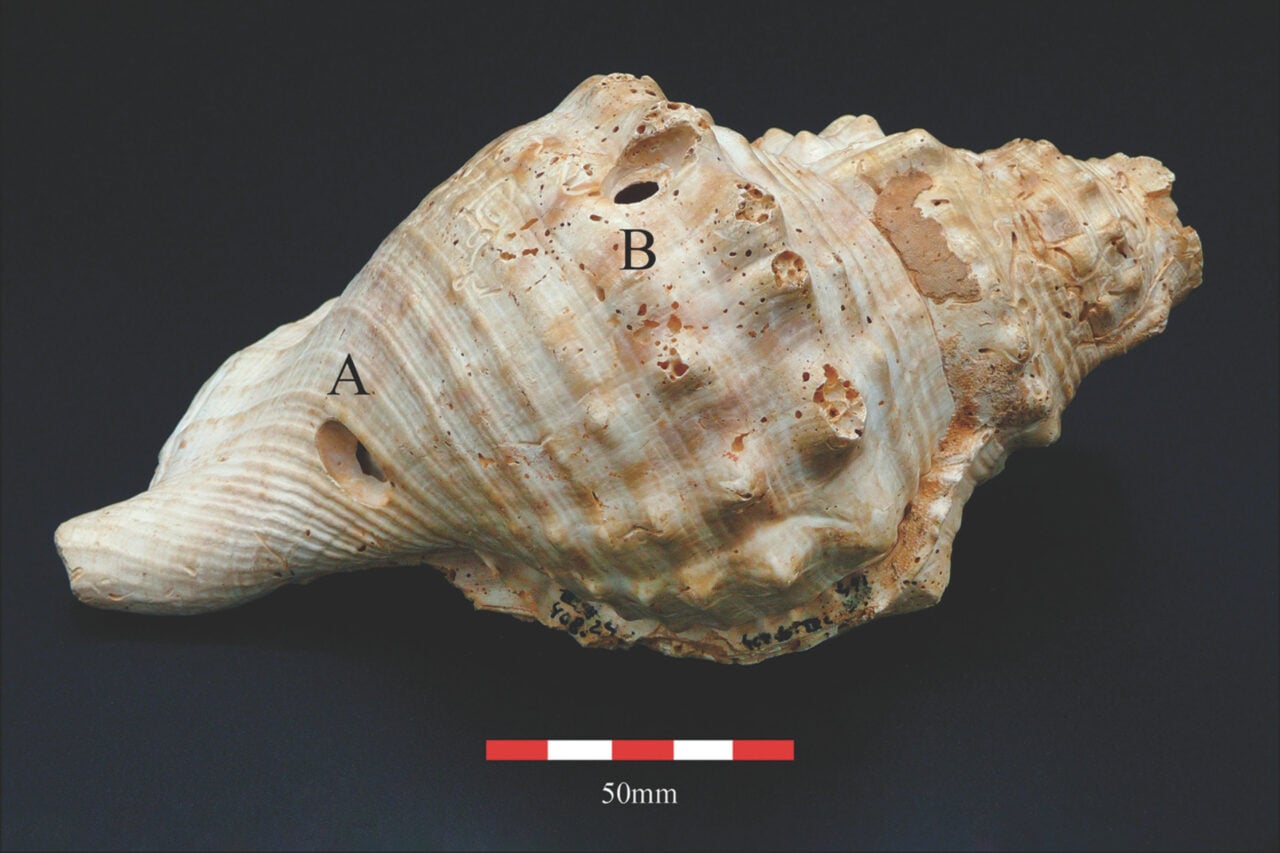
Prehistoric communities in what is now Catalonia, Spain, utilized large conch shells as both communication tools and musical instruments, according to a new study published in the journal Antiquity. Researchers from the University of Barcelona examined shell trumpets dating back approximately 5,000 to 7,000 years, revealing their potential for long-distance sound transmission.
The study involved direct experimentation with archaeological artifacts, allowing researchers to assess the acoustic properties of the conch shells, specifically those from the species Charonia lampas. Co-authors of the study, Margarita Díaz-Andreu and Miquel López-García, conducted tests that demonstrated the shells’ capabilities for producing both high-intensity sounds suitable for communication and melodies through pitch modulation.
Discovering the Role of Shell Trumpets
The conch shells, found predominantly in the lower course of the Llobregat River and the pre-coastal depression of the Penedès region, were previously overlooked in academic discussions. Díaz-Andreu noted that the apexes of these shells were removed, which led some researchers to theorize their use as musical instruments. Evidence suggests that these artifacts were not gathered for food but rather to create sound, indicating their significance in social interactions.
López-García, who is also a professional trumpet player, played the shell trumpets to better understand their acoustic capabilities. He concluded that “the shell trumpets are capable of producing high-intensity sounds and would have been highly effective for long-distance communication.” The study also posits that their ability to create melodies indicates a potential use for musical expression, enriching the cultural practices of Neolithic societies.
The Impact on Neolithic Communities
The findings highlight the dense population of the Catalonian region during the Neolithic period. The presence of shell trumpets across various settlement areas suggests they played a crucial role in facilitating communication both within and between groups. This sound-based communication likely supported the region’s agricultural and mining activities.
Díaz-Andreu emphasized the transformative nature of these artifacts, stating, “Our study reveals that Neolithic people used conch shells not only as musical instruments, but also as powerful tools for communication.” This research reshapes our understanding of sound, space, and social connections in early prehistoric communities.
The investigation into these ancient shell trumpets opens new avenues for understanding the complexities of human interaction in prehistoric times. As researchers continue to explore the role of sound in ancient societies, the legacy of these simple yet profound instruments underscores the importance of communication in shaping human civilization.

Urgent Swatting Incident Ties Up Emergency Resources in Alabama

Urgent Tax Alert: Claim Your Deductions Before April 15!

Scientists Investigate Cosmic Defects: Where Are They Now?

Spring Bocce Leagues Open Registration in Rapid City

CALV Offers Essential Communication Class for Real Estate Pros

Samsung Galaxy Watch 9 Set for Larger 435mAh Battery Upgrade

Healthy Choice Wellness Reports Earnings, Stock Sees Uptick

Prince Harry Claims to Be ‘Antidote to Andrew’ Amid Royal Crisis

Pet Owners Weigh Kibble Against Fresh Dog Food Options

ALMA Discovers Companion Orbiting Giant Star π 1 Gruis

U.S. Visa Rescheduling Hits H‐1B Applicants as New Vetting Rules Take Effect

University of Hawaiʻi Joins $25.6M AI Project for Disaster Monitoring

F-22 Raptor vs. Su-57 Felon: A 2025 Fighter Jet Comparison

Recent Divorce Judgments from Iberia Parish Court Records

Ohio State Study Uncovers Brain Connectivity and Function Links

Urgent: Flight Cancellations Loom at Texas Airports Amid Shutdown

Frank Dunn, Esteemed Builder and Community Leader, Passes Away at 89

Appian Recognizes 2025 Partner Award Winners for Enterprise Innovation
-
 Science10 months ago
ALMA Discovers Companion Orbiting Giant Star π 1 Gruis
-
 Politics8 months ago
U.S. Visa Rescheduling Hits H‐1B Applicants as New Vetting Rules Take Effect
-
Science10 months ago
University of Hawaiʻi Joins $25.6M AI Project for Disaster Monitoring
-
 World10 months ago
F-22 Raptor vs. Su-57 Felon: A 2025 Fighter Jet Comparison
-
 Politics9 months ago
Recent Divorce Judgments from Iberia Parish Court Records
-
 Science10 months ago
Ohio State Study Uncovers Brain Connectivity and Function Links
-
 Top Stories10 months ago
Urgent: Flight Cancellations Loom at Texas Airports Amid Shutdown
-
 Lifestyle10 months ago
Frank Dunn, Esteemed Builder and Community Leader, Passes Away at 89
-
 Business10 months ago
Appian Recognizes 2025 Partner Award Winners for Enterprise Innovation
-

 World10 months ago
Prince Andrew Faces Fallout from Scandals and Allegations
-

 Entertainment8 months ago
Malachi Barton Tops Google Searches as Disney’s Rising Star of 2025
-

 Top Stories9 months ago
Republican Matt Van Epps Wins Tennessee Special Election