
Science
Leicester Researchers Launch New Space Experiment for Lifeforms

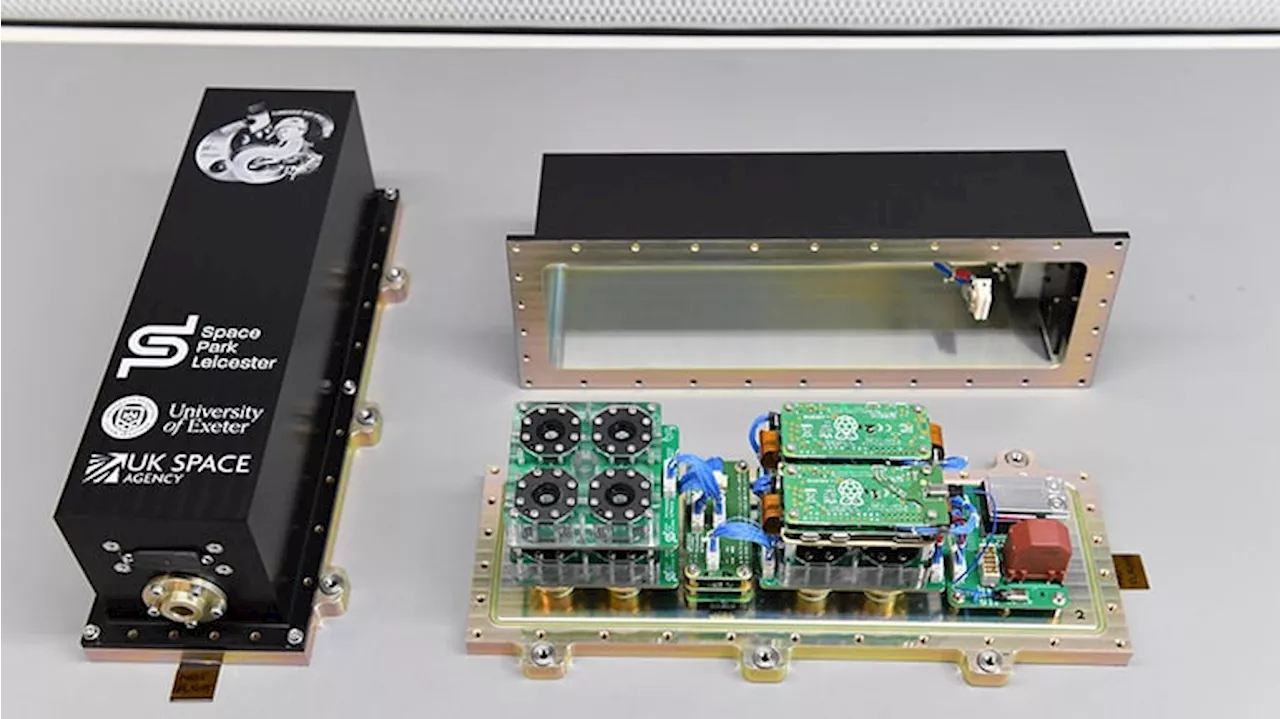
Researchers at Space Park Leicester have unveiled the Fluorescent Deep Space Petri-Pod (FDSPP), a compact device designed for biological experiments in space. Funded by the UK Space Agency and backed by Voyager Technologies, this innovative hardware aims to explore the effects of microgravity and radiation on living organisms, which is crucial for future long-duration human space missions.
As the pursuit of a permanent human presence in orbit, on the Moon, and beyond intensifies, significant challenges arise, particularly in understanding the biological impacts of extended space travel. Current research aboard the International Space Station (ISS) has revealed various physiological changes, including bone density loss and muscle atrophy. Nevertheless, the effects of prolonged exposure to microgravity and radiation on organism development remain inadequately understood.
Innovative Design for Space Biology Research
The FDSPP, measuring approximately 10x10x30 cm and weighing around 3 kg, contains 12 Petri-Pods that maintain a stable atmosphere and temperature, providing essential nutrients to the organisms while they are exposed to the vacuum of space. For this experiment, researchers will use C. elegans, a type of nematode worm, to help assess health impacts during spaceflight.
Each worm will have natural markers placed in their heads that respond to fluorescent stimulation, allowing scientists to monitor their health through imaging and time-lapse video while aboard the ISS. After initial monitoring, the FDSPP will be deployed outside the station for a 15-week period, subjecting the worms to the harsh conditions of space.
Professor Mark Sims, the project manager for the FDSPP, emphasized the significance of this mission. “The Fluorescent Deep Space Petri-Pod has been engineered using the expertise of the Space Park Leicester team, built upon our 65-year heritage of space experiments. This mission to the ISS will demonstrate the flight readiness of FDSPP, positioning the UK among global leaders in life sciences research for future missions to low Earth orbit, the Moon, and Mars,” he stated.
Future Implications for Human Space Travel
The experiment is scheduled for launch as part of a cargo flight to the ISS in April 2026. It will not only explore the implications of microgravity and radiation on living organisms but also collect critical data on environmental conditions during the experiment. The unit will monitor temperature, pressure, and radiation levels, relaying this information back to Earth.
Professor Tim Etheridge, principal investigator and science lead from the University of Exeter, highlighted the necessity of such research. “Performing biology research in space comes with many challenges but is vital for humans safely living in space. This hardware, made possible through collaboration between biologists and engineers, will provide scientists with new insights into preventing health changes in deep space,” he remarked.
Understanding the biological effects of space travel is crucial for developing medical treatments and mitigation strategies to address long-term health concerns. Beyond current exercise regimens for astronauts, research will also focus on organ function, circulation, and psychological health, addressing fundamental questions about the viability of life beyond Earth.
This experiment stands as a significant step towards answering critical questions surrounding human habitation in space, including whether children and animals can be safely born and raised in extraterrestrial environments. As space exploration continues to evolve, the insights gained from the FDSPP could shape the future of human life beyond our planet.

Urgent Swatting Incident Ties Up Emergency Resources in Alabama

Urgent Tax Alert: Claim Your Deductions Before April 15!

Scientists Investigate Cosmic Defects: Where Are They Now?

Spring Bocce Leagues Open Registration in Rapid City

CALV Offers Essential Communication Class for Real Estate Pros

Samsung Galaxy Watch 9 Set for Larger 435mAh Battery Upgrade

Healthy Choice Wellness Reports Earnings, Stock Sees Uptick

Prince Harry Claims to Be ‘Antidote to Andrew’ Amid Royal Crisis

Pet Owners Weigh Kibble Against Fresh Dog Food Options

ALMA Discovers Companion Orbiting Giant Star π 1 Gruis

U.S. Visa Rescheduling Hits H‐1B Applicants as New Vetting Rules Take Effect

University of Hawaiʻi Joins $25.6M AI Project for Disaster Monitoring

F-22 Raptor vs. Su-57 Felon: A 2025 Fighter Jet Comparison

Recent Divorce Judgments from Iberia Parish Court Records

Ohio State Study Uncovers Brain Connectivity and Function Links

Prince Andrew Faces Fallout from Scandals and Allegations

Urgent: Flight Cancellations Loom at Texas Airports Amid Shutdown

Frank Dunn, Esteemed Builder and Community Leader, Passes Away at 89
-
 Science8 months ago
ALMA Discovers Companion Orbiting Giant Star π 1 Gruis
-
 Politics6 months ago
U.S. Visa Rescheduling Hits H‐1B Applicants as New Vetting Rules Take Effect
-
Science8 months ago
University of Hawaiʻi Joins $25.6M AI Project for Disaster Monitoring
-
 World8 months ago
F-22 Raptor vs. Su-57 Felon: A 2025 Fighter Jet Comparison
-
 Politics8 months ago
Recent Divorce Judgments from Iberia Parish Court Records
-
 Science9 months ago
Ohio State Study Uncovers Brain Connectivity and Function Links
-
 World8 months ago
Prince Andrew Faces Fallout from Scandals and Allegations
-
 Top Stories8 months ago
Urgent: Flight Cancellations Loom at Texas Airports Amid Shutdown
-
 Lifestyle8 months ago
Frank Dunn, Esteemed Builder and Community Leader, Passes Away at 89
-

 Business8 months ago
Appian Recognizes 2025 Partner Award Winners for Enterprise Innovation
-

 Entertainment6 months ago
Malachi Barton Tops Google Searches as Disney’s Rising Star of 2025
-

 Science9 months ago
Innovator Captures Light at 2 Billion Frames Per Second