
World
Iranian Missile Threat Exposes Israel’s Shelter Shortage Crisis

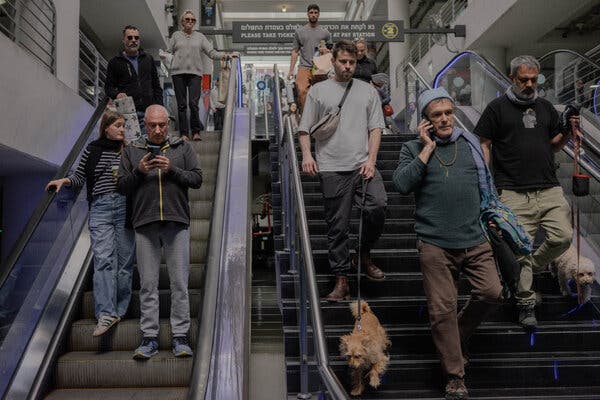
Sirens blaring across Israel have prompted citizens to seek refuge in bomb shelters and fortified rooms as Iranian missile strikes target the region. The recent attacks have drawn attention to a significant shortage of protected spaces in a country that has been preparing for potential conflict with Iran for decades. A report released in January by Israel’s state comptroller reveals that over three million people live in areas lacking “standard protection,” highlighting the vulnerability of nearly a third of the nation’s population.
The situation is particularly alarming in Arab communities, where the availability of public shelters is severely limited. According to the state comptroller’s report, only 37 out of 11,775 public shelters are located in Arab municipalities, and eight of those are deemed unfit for use. “People are facing real danger,” stated Atiya al-Asam, an activist leader in the Bedouin community in southern Israel. “They’re terrified.”
Many Bedouin communities have long suffered from inadequate infrastructure, including a lack of shelters, running water, sewage systems, electricity, and even basic road access. This systemic neglect has exacerbated their vulnerability during times of conflict.
The urgency of the situation became evident during the Israel-Iran war in June 2025, when 32 individuals were killed and thousands were injured, as reported by the Israeli government. Officials noted that the shelters and fortified rooms played a crucial role in saving lives during the conflict.
In response to the growing threats, the Israeli military’s Homefront Command has been engaging in discussions to increase the number of protected spaces available. Two Israeli security officials, speaking on condition of anonymity, confirmed that efforts are underway to work with municipalities to enhance existing facilities. Despite these initiatives, the state comptroller’s report indicates that more than six million people still have access to public and private shelters, as well as fortified rooms.
In Tel Aviv, one of Israel’s largest and most affluent cities, municipal officials express confidence in the adequacy of shelter provisions. “We can always have more,” said Eyal Kedar, an official involved in emergency response efforts. “But in terms of numbers, there’s enough for more than those living here.”
As tensions with Iran continue, the spotlight remains on Israel’s infrastructure and the urgent need for improved safety measures. The ongoing shortage of protected spaces raises concerns about the nation’s preparedness for future conflicts, particularly in underserved communities where access to basic services remains a critical issue.

Heart Health Starts Early: Expert Tips for Lifelong Wellness

Wayfair Offers 24% Discount on Latitude Run 7-Piece Patio Set

Death Toll Rises to 85 After Alleged Bombing of Iranian School

Rubin Observatory Launches Alert System with 800,000 Notifications

Mississippi Highway Patrol Investigates Fatal Crash in Jefferson County

UND Launches Second Year of Food Pantry Challenge to Combat Hunger

Over 250 Artists Ignite Tampa at Gasparilla Festival of the Arts

Heavier Hydrogen Enhances Silicon T Centers for Quantum Networks

USWNT Gears Up for SheBelieves Cup Ahead of World Cup Qualifiers

ALMA Discovers Companion Orbiting Giant Star π 1 Gruis

F-22 Raptor vs. Su-57 Felon: A 2025 Fighter Jet Comparison

University of Hawaiʻi Joins $25.6M AI Project for Disaster Monitoring

Innovator Captures Light at 2 Billion Frames Per Second

Ohio State Study Uncovers Brain Connectivity and Function Links

U.S. Visa Rescheduling Hits H‐1B Applicants as New Vetting Rules Take Effect

Hamas Chief Stresses Disarmament Tied to Occupation’s End

Megan Thee Stallion Exposes Alleged Online Attack by Bots

Paloma Elsesser Shines at LA Event with Iconic Slicked-Back Bun
-
 Science4 months ago
ALMA Discovers Companion Orbiting Giant Star π 1 Gruis
-
 World4 months ago
F-22 Raptor vs. Su-57 Felon: A 2025 Fighter Jet Comparison
-
Science4 months ago
University of Hawaiʻi Joins $25.6M AI Project for Disaster Monitoring
-
 Science4 months ago
Innovator Captures Light at 2 Billion Frames Per Second
-
 Science4 months ago
Ohio State Study Uncovers Brain Connectivity and Function Links
-
 Politics2 months ago
U.S. Visa Rescheduling Hits H‐1B Applicants as New Vetting Rules Take Effect
-
 Politics4 months ago
Hamas Chief Stresses Disarmament Tied to Occupation’s End
-
 Entertainment4 months ago
Megan Thee Stallion Exposes Alleged Online Attack by Bots
-
 Entertainment4 months ago
Paloma Elsesser Shines at LA Event with Iconic Slicked-Back Bun
-

 Science5 months ago
Researchers Challenge 200-Year-Old Physics Principle with Atomic Engines
-

 World4 months ago
FDA Unveils Plan to Cut Drug Prices and Boost Biosimilars
-

 Entertainment4 months ago
Beloved Artist and Community Leader Gloria Rosencrants Passes Away