
Science
Scientists Explore Mayonnaise in Space to Unravel Soft Matter Mysteries

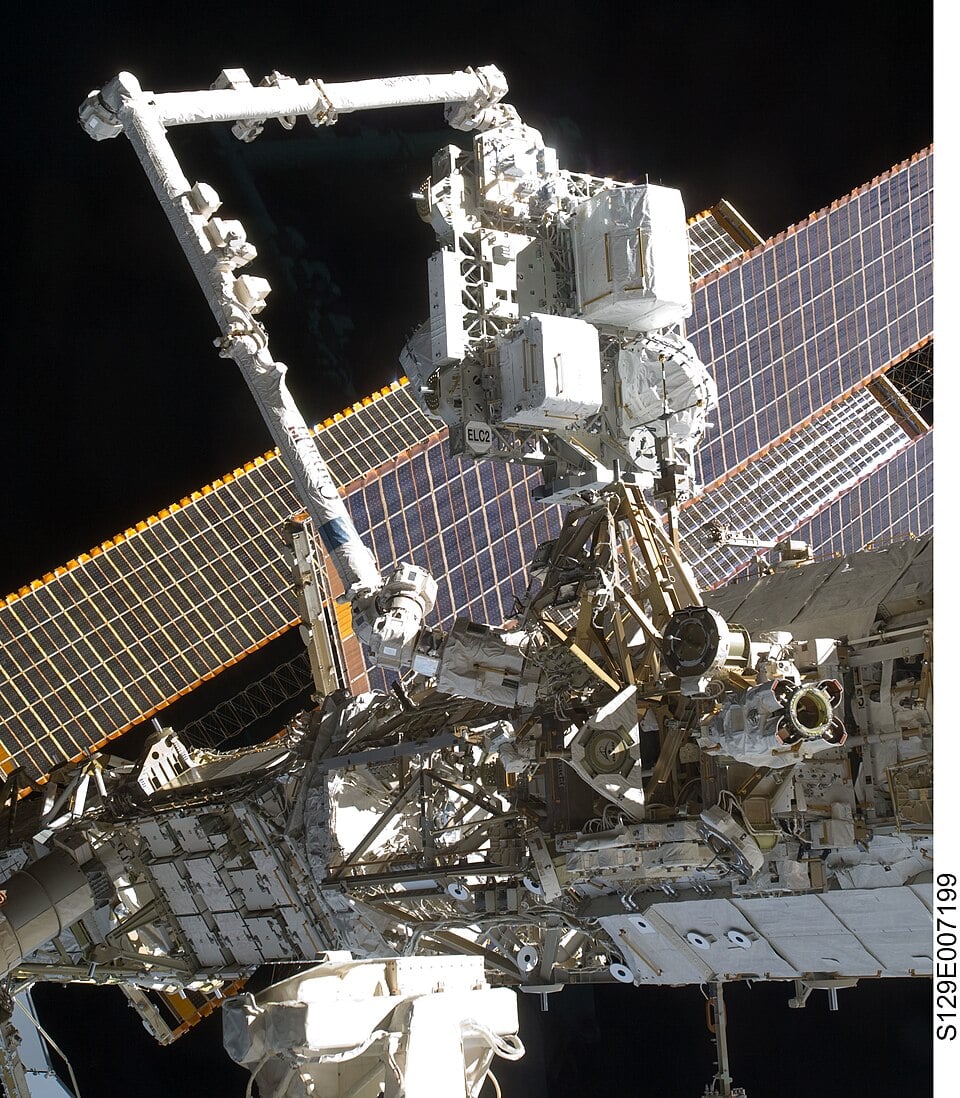
Research teams from the Politecnico di Milano and Université de Montpellier are pioneering a study of soft matter aboard the International Space Station (ISS). Their project, known as COLIS, aims to understand the behaviour of materials like mayonnaise, creams, and gels in a microgravity environment where the influence of gravity is negligible. This unique approach could transform how industries formulate and produce products that rely on the stability of soft materials.
Soft matter encompasses a range of substances, including gels, foams, and colloids, whose internal structures change over time. These changes are often subtle and complex, making them difficult to study on Earth due to the constant influence of gravity. Even when left undisturbed, gravitational forces can alter how particles within these materials settle and reorganize. By moving their research to space, scientists hope to gain insights into these processes free from gravitational interference.
The COLIS Facility: A New Frontier for Material Science
The COLIS facility represents over 25 years of collaborative research led by physicist Luca Cipelletti from the Laboratoire Charles Coulomb and Roberto Piazza, director of the Soft Matter laboratory at Politecnico di Milano. Utilizing advanced optical techniques, COLIS allows researchers to investigate materials without disrupting them. Through dynamic light scattering, scientists analyze how laser beams interact with samples, revealing intricate speckle patterns that indicate how soft materials evolve over time.
One of the key advantages of conducting experiments in space is the ability to heat samples in controlled ways to initiate aging processes. This method enables the research team to observe changes at the molecular level in a manner that mirrors real-world conditions yet is unclouded by the effects of gravity.
Implications for Industry and Future Research
Initial findings from the COLIS experiments have revealed that gravity significantly affects the structure of soft materials, influencing their properties even over extended timescales. This discovery holds substantial implications for various industries. For instance, pharmaceutical companies are keen to develop drugs that maintain stability over long periods, while cosmetics manufacturers seek creams that remain homogenous without separating. Food producers also require emulsions that retain consistency throughout their distribution and storage processes.
By examining how these materials behave in a microgravity environment, researchers aim to revolutionize formulation design. The project is part of the European Space Agency’s “Colloids in Space” programme, supported by both Italian and French space agencies. As COLIS continues its investigations, it is poised to uncover fundamental insights that could reshape the future of soft matter applications across multiple sectors.
With the potential to unlock a deeper understanding of material behaviour, the exploration of mayonnaise and other soft substances in space may just be the beginning of a new era in material science.

New Carrier Phreeli Launches Anonymity-First Phone Service

Financial Advisor Calls 401(k)s ‘Money Jail,’ Advocates New Strategies

New Study Links Tenascin-C Protein to Muscle Regeneration

Santa Mailbox Boosts Holiday Cheer in Fitchburg, Engaging Community

Outgoing Mayor Imposes Restrictions on Incoming Mayor Weiss

Scientists Explore Mayonnaise in Space to Unravel Soft Matter Mysteries

Cavs Face Spurs in Key Matchup Despite Injury Challenges

Legal Debate Emerges After 63-Year-Old Fired Post-Retirement Notice

Eurozone GDP Surges 0.3% in Q3, Household Spending Drives Growth

Ohio State Study Uncovers Brain Connectivity and Function Links

Hamas Chief Stresses Disarmament Tied to Occupation’s End

University of Hawaiʻi Joins $25.6M AI Project for Disaster Monitoring

Megan Thee Stallion Exposes Alleged Online Attack by Bots

Researchers Challenge 200-Year-Old Physics Principle with Atomic Engines

Paloma Elsesser Shines at LA Event with Iconic Slicked-Back Bun

ALMA Discovers Companion Orbiting Giant Star π 1 Gruis

FDA Unveils Plan to Cut Drug Prices and Boost Biosimilars

Federal Agents Detain Driver in Addison; Protests Erupt Immediately
-
 Science1 month ago
Ohio State Study Uncovers Brain Connectivity and Function Links
-
 Politics1 month ago
Hamas Chief Stresses Disarmament Tied to Occupation’s End
-
Science1 month ago
University of Hawaiʻi Joins $25.6M AI Project for Disaster Monitoring
-
 Entertainment1 month ago
Megan Thee Stallion Exposes Alleged Online Attack by Bots
-
 Science2 months ago
Researchers Challenge 200-Year-Old Physics Principle with Atomic Engines
-
 Entertainment1 month ago
Paloma Elsesser Shines at LA Event with Iconic Slicked-Back Bun
-
 Science3 weeks ago
ALMA Discovers Companion Orbiting Giant Star π 1 Gruis
-
 World1 month ago
FDA Unveils Plan to Cut Drug Prices and Boost Biosimilars
-
 Top Stories1 month ago
Federal Agents Detain Driver in Addison; Protests Erupt Immediately
-

 Business1 month ago
Motley Fool Wealth Management Reduces Medtronic Holdings by 14.7%
-

 Entertainment1 month ago
Beloved Artist and Community Leader Gloria Rosencrants Passes Away
-

 Politics2 months ago
NHP Foundation Secures Land for 158 Affordable Apartments in Denver