
Science
Celebrating 25 Years of Breakthroughs Aboard the ISS

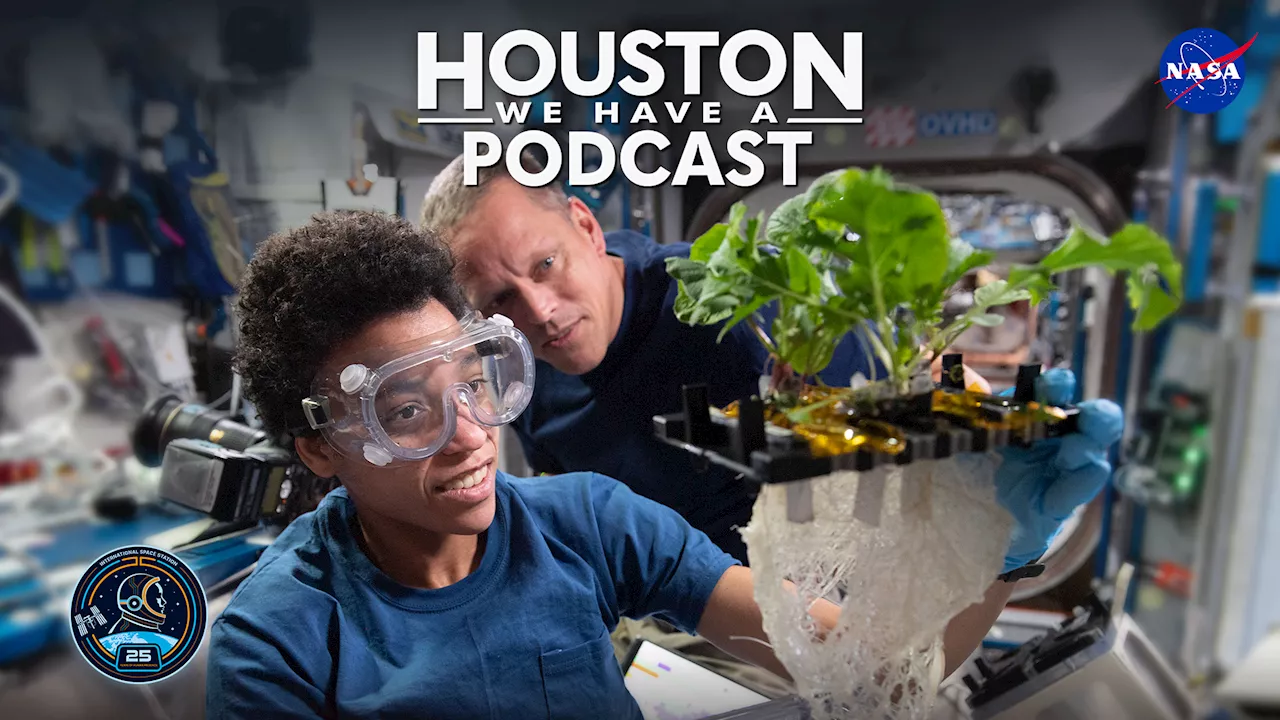
On November 2, 2025, the International Space Station (ISS) will mark a significant milestone—25 years of continuous human presence in low Earth orbit. Leaders from NASA’s Johnson Space Center, Laura Shaw and Jennifer Buchli, recently reflected on the remarkable scientific discoveries and technological advancements that have characterized this period during an episode of the podcast “Houston, We Have a Podcast.”
Reflecting on a Legacy of Innovation
Since the inception of Expedition 1 on November 2, 2000, the ISS has evolved into a vital hub for scientific research and international collaboration. Shaw, the deputy manager of the ISS vehicle office, and Buchli, the ISS program chief scientist, discussed their journeys to NASA and the pivotal roles they play in maintaining the station’s operations and scientific missions.
Shaw, who has been with NASA for over two decades, expressed her lifelong passion for space exploration. “I was born a space nerd,” she said, detailing her early fascination with human space flight. Buchli, who grew up in the space community as the daughter of a shuttle astronaut, shared similar sentiments about her commitment to advancing science through space research.
Science in Microgravity: Opportunities and Discoveries
Shaw and Buchli highlighted the unique scientific opportunities afforded by the ISS’s microgravity environment. Research conducted aboard the station has led to groundbreaking discoveries in various fields, from biology to material science. For instance, scientists have leveraged microgravity to study how organisms respond to stress, leading to insights into gene activation and plant behavior without the influence of gravity.
“Microgravity can be a game changer for scientists,” Buchli noted, explaining how certain phenomena behave differently in space, such as fluid dynamics and combustion.
The ISS serves as a national laboratory, with 50% of its allocation open to U.S. companies and the public. This designation allows for a wide range of scientific experiments, from pharmaceutical research to agricultural studies. The station has become a launching pad for innovations like improved drug formulations, including enhancements to the cancer treatment Keytruda.
With the addition of new modules and facilities over the years, the ISS has expanded its research capabilities significantly. Initially limited to basic experiments, scientists can now conduct complex investigations, leveraging advanced technologies like DNA sequencers and microgravity glove boxes.
Preparing for Future Missions to the Moon and Mars
The ISS’s contributions extend beyond Earth-bound science. As NASA prepares for future missions to the Moon and Mars, research conducted aboard the ISS plays a critical role in mitigating risks associated with long-duration space travel. This includes studying life support systems, exercise regimens, and crew health monitoring.
Shaw emphasized the importance of these experiments, stating, “We need to ensure that our astronauts remain healthy and safe during extended missions beyond low Earth orbit.” Current research focuses on developing medical devices and monitoring systems that will be essential for deep-space missions.
As the ISS continues to operate through 2030, both Shaw and Buchli anticipate a growing interest in commercial space research, paving the way for new partnerships and innovations. The evolution of the ISS exemplifies how international collaboration and scientific inquiry can yield transformative results, not only for space exploration but for life on Earth.
The significant achievements of the ISS over the past 25 years highlight the critical intersection of science, technology, and human ingenuity. As Shaw and Buchli conclude their reflections, they invite the public to engage more deeply with space research, reminding us that the frontiers of science are open to all.

Urgent Holiday Gifting Tips to Keep Your Romance Alive NOW

K-Pop Star IVY Reveals Truth Behind Living Rumors with Dog

Star RB Trequan Jones Plans Transfer, ODU Faces Major Shakeup

Tesla Unveils $350 Pickleball Paddle in Shocking Collaboration

Poughkeepsie McDonald’s Unveils Game-Changing Bathroom Device

Turning Point USA’s AmericaFest Sparks MAGA Debate on Night Two

Internet and Phone Outages Hit NEPA Customers, Businesses Urgently

US Sanctions Intensify Against Maduro’s Family Network, Urgent Update

White House Strikes Major Deals to Slash Prescription Drug Prices

Ohio State Study Uncovers Brain Connectivity and Function Links

University of Hawaiʻi Joins $25.6M AI Project for Disaster Monitoring

ALMA Discovers Companion Orbiting Giant Star π 1 Gruis

Hamas Chief Stresses Disarmament Tied to Occupation’s End

F-22 Raptor vs. Su-57 Felon: A 2025 Fighter Jet Comparison

Innovator Captures Light at 2 Billion Frames Per Second

Megan Thee Stallion Exposes Alleged Online Attack by Bots

Researchers Challenge 200-Year-Old Physics Principle with Atomic Engines

Paloma Elsesser Shines at LA Event with Iconic Slicked-Back Bun
-
 Science2 months ago
Ohio State Study Uncovers Brain Connectivity and Function Links
-
Science2 months ago
University of Hawaiʻi Joins $25.6M AI Project for Disaster Monitoring
-
 Science1 month ago
ALMA Discovers Companion Orbiting Giant Star π 1 Gruis
-
 Politics2 months ago
Hamas Chief Stresses Disarmament Tied to Occupation’s End
-
 World2 months ago
F-22 Raptor vs. Su-57 Felon: A 2025 Fighter Jet Comparison
-
 Science2 months ago
Innovator Captures Light at 2 Billion Frames Per Second
-
 Entertainment2 months ago
Megan Thee Stallion Exposes Alleged Online Attack by Bots
-
 Science2 months ago
Researchers Challenge 200-Year-Old Physics Principle with Atomic Engines
-
 Entertainment2 months ago
Paloma Elsesser Shines at LA Event with Iconic Slicked-Back Bun
-

 World2 months ago
FDA Unveils Plan to Cut Drug Prices and Boost Biosimilars
-

 Business2 months ago
Motley Fool Wealth Management Reduces Medtronic Holdings by 14.7%
-

 Top Stories2 months ago
Federal Agents Detain Driver in Addison; Protests Erupt Immediately