
World
US Military Presence in Syria: A Step Towards Countering ISIS and Iran

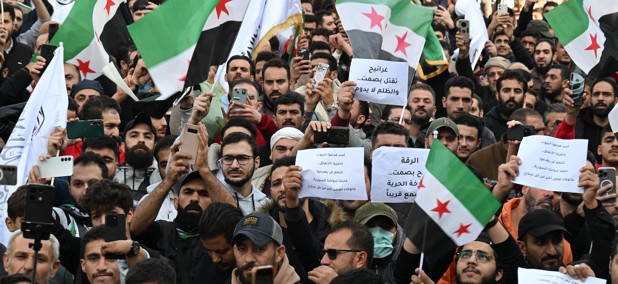
The United States has proposed establishing a military presence at an airbase near Damascus to bolster its efforts against the Islamic State (ISIS) and Iranian influence in the region. While this initiative signals a strengthening relationship with Syria’s government, experts warn that it may not be enough to effectively secure U.S. interests in the area. A presence in Damascus should enhance—rather than replace—the existing partnership with the Syrian Democratic Forces (SDF), which has been crucial in preventing the resurgence of ISIS.
The challenge posed by ISIS is most acute in northeastern Syria, where approximately 9,000 ISIS fighters and their family members are held in detention facilities. Notably, nearly 85 percent of these detainees are concentrated in two prisons located near Hasakah and Shaddadi. These facilities have proven to be vulnerable, as demonstrated by the 2022 Hasakah prison break, which took two weeks to contain despite U.S. air and intelligence support. The SDF has shouldered the responsibility of securing these sites for over a decade, receiving U.S. funding and training to do so.
The threat from ISIS extends beyond the northeast. In March, an ISIS suicide bomber targeted a church in Damascus, resulting in 25 deaths and 63 injuries. Recently, Syrian authorities disrupted two plots by ISIS targeting President Bashar al-Assad and conducted nationwide raids that led to the arrest of more than 70 ISIS suspects. Additionally, an ISIS-inspired attack in January 2023 in New Orleans highlights the group’s ongoing capacity to radicalize individuals globally. These incidents underscore the necessity of maintaining pressure on ISIS and supporting local partners.
The U.S. should continue to leverage the “by, with, and through” strategy that has made the SDF the most effective counter-ISIS force in Syria. Sustaining this partnership, which includes training, intelligence sharing, and support for detention operations, is vital to preventing ISIS from regaining strength. It also conveys to regional allies that the United States is committed to a stable transition in Syria, rather than withdrawing prematurely.
Simultaneously, the U.S. should advocate for greater international cooperation in managing detained ISIS fighters. Only 36 countries have repatriated any nationals from northeastern Syria, while 21 countries have not yet initiated repatriation efforts. Prolonged detention raises the risk of radicalization and poses long-term humanitarian and security challenges for the region. Iraq’s repatriation of roughly 25,000 citizens—about 80 percent of the Iraqis held in Syria—demonstrates the positive outcomes of committed diplomatic action. The United States should apply similar urgency in negotiating agreements to ensure fiscal contributions and facilitate repatriation efforts, thereby alleviating pressure on the SDF and mitigating long-term threats.
Counterterrorism objectives also hinge on preventing Iranian rearmament of Hezbollah, which could further destabilize the region. Israeli intelligence reports indicate that Hezbollah has begun restoring supply lines through Syrian territory. While both Iran and Hezbollah have faced setbacks, and Russia’s reduced role has constrained their operations, Tehran continues to seek opportunities to rebuild its networks.
This situation underscores the importance of sustaining the partnership with the SDF. According to the Lead Inspector General for Operation Iraqi Freedom, the SDF currently controls most Iraqi border crossings in eastern Syria, positioning it as a frontline defense against the flow of Iranian weapons into Lebanon. The United States should also collaborate with the Syrian government and Israel to disrupt these supply flows. By providing intelligence, deconfliction, and diplomatic coordination, Washington can complicate Iran’s efforts to rearm Hezbollah. Strengthening these channels of cooperation with the new Syrian government is particularly critical as Syria attempts to consolidate control and assert its independence from Tehran.
Syria’s pivot away from Iran and Russia towards greater collaboration with Western partners presents a strategic opportunity. The Syrian government has a vested interest in limiting extremist groups, restoring security, and preventing its territory from becoming a conduit for Iranian influence. Its recent decision to join the Global Coalition to Defeat ISIS reflects a willingness to engage with international partners, and the Interior Ministry has already conducted joint counter-ISIS operations with U.S. troops. Although this alignment of interests is still in its early stages, it offers a genuine opportunity for the United States to advance both counterterrorism objectives and regional stability.
Preventing ISIS prison breaks and Iranian rearmament is achievable, but it requires continued support for the SDF, enhanced international collaboration, and measures to counter Iranian weapon flows. A premature U.S. withdrawal from Syria would not bring an end to America’s involvement; instead, it would likely set the stage for a more costly return in the future.

Hydesville Man, 65, Arrested for Domestic Violence, Attempted Homicide

Greystar Settles $7 Million Antitrust Lawsuit Over Rent Hikes

Coastal Flood Risks Rise as Shanghai Study Reveals Alarming Trends

US Military Presence in Syria: A Step Towards Countering ISIS and Iran

Teleworking Satisfaction and Productivity Shift Post-COVID

Leslie Odom Jr. Adapts Sammy Davis Jr. Article Into Horror Film

5 Guns Seized, 4 Arrested in Urgent I-95 Traffic Busts

Hy-Vee Donates 300 Hams to Rochester Families in Urgent Giveaway

Urgent: Dramatic Video Shocks Jury in Hillsborough County Murder Trial

Ohio State Study Uncovers Brain Connectivity and Function Links

Hamas Chief Stresses Disarmament Tied to Occupation’s End

Megan Thee Stallion Exposes Alleged Online Attack by Bots

University of Hawaiʻi Joins $25.6M AI Project for Disaster Monitoring

Researchers Challenge 200-Year-Old Physics Principle with Atomic Engines

Paloma Elsesser Shines at LA Event with Iconic Slicked-Back Bun

FDA Unveils Plan to Cut Drug Prices and Boost Biosimilars

Motley Fool Wealth Management Reduces Medtronic Holdings by 14.7%

Federal Agents Detain Driver in Addison; Protests Erupt Immediately
-
 Science1 month ago
Ohio State Study Uncovers Brain Connectivity and Function Links
-
 Politics1 month ago
Hamas Chief Stresses Disarmament Tied to Occupation’s End
-
 Entertainment1 month ago
Megan Thee Stallion Exposes Alleged Online Attack by Bots
-
Science1 month ago
University of Hawaiʻi Joins $25.6M AI Project for Disaster Monitoring
-
 Science2 months ago
Researchers Challenge 200-Year-Old Physics Principle with Atomic Engines
-
 Entertainment1 month ago
Paloma Elsesser Shines at LA Event with Iconic Slicked-Back Bun
-
 World1 month ago
FDA Unveils Plan to Cut Drug Prices and Boost Biosimilars
-
 Business1 month ago
Motley Fool Wealth Management Reduces Medtronic Holdings by 14.7%
-
 Top Stories1 month ago
Federal Agents Detain Driver in Addison; Protests Erupt Immediately
-

 Entertainment1 month ago
Beloved Artist and Community Leader Gloria Rosencrants Passes Away
-

 Science3 weeks ago
ALMA Discovers Companion Orbiting Giant Star π 1 Gruis
-

 Politics2 months ago
NHP Foundation Secures Land for 158 Affordable Apartments in Denver