
Science
New Study Reveals How Environment Shapes Galaxy Growth

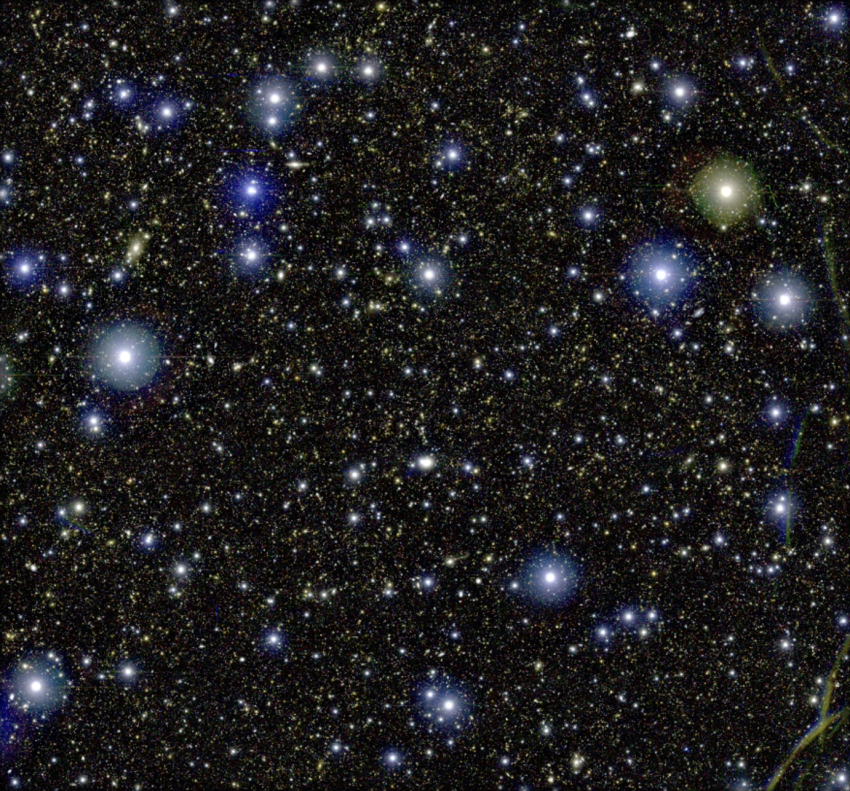
New research has unveiled how the growth of galaxies is intricately linked to their surrounding environments. The findings, released by the Deep Extragalactic Visible Legacy Survey (DEVILS), a collaboration between the International Centre for Radio Astronomy Research (ICRAR) and the University of Western Australia, provide an extensive dataset that offers insights into galaxy evolution over the past five billion years.
The first data release from DEVILS, published in the Monthly Notices of the Royal Astronomical Society, includes comprehensive catalogues featuring morphological, redshift, photometric, and spectroscopic data. It encompasses thousands of galaxies, detailing their group environments and halo data. The study, led by Luke Davies, an Associate Professor at the University of Western Australia, is the culmination of a decade of dedicated observations and analysis.
Understanding Galaxy Development Through New Data
Unlike other astronomical surveys, DEVILS specifically targets galaxies that existed during a critical period in cosmic history, allowing researchers to compare these older galaxies with their modern counterparts. This unprecedented perspective aids astronomers in understanding how galaxies have transformed over time.
Davies remarked, “While previous surveys during this period of universal history have explored the broad evolution of galaxy properties, they have inherently lacked the capacity to determine the finer details of the cosmic landscape.” The DEVILS survey refines this approach by mapping out the small-scale environments of galaxies, identifying features akin to mountains, hills, and valleys, in contrast to larger-scale environments like oceans or continents.
A significant finding from the study indicates that galaxies in crowded environments tend to develop more slowly than their isolated counterparts. The researchers categorize galaxies into two main groups: blue, gas-rich, star-forming systems, and red, gas-poor, quiescent systems with minimal ongoing star formation. As the universe evolves, the proportion of quiescent systems increases.
In densely populated environments, such as galaxy clusters or pairs, the supply of cold gas essential for star formation can be disrupted or removed. The researchers identify several mechanisms, including ram-pressure stripping and tidal interactions, that contribute to this phenomenon, ultimately inhibiting star formation in certain galaxies.
Galaxies as Reflections of Their Environments
Davies draws an analogy between galaxies and human beings, stating, “Our upbringing and environment influence who we are. Someone who has lived their whole life in the city may have a very different personality compared to someone who lives remotely or in an isolated community. Galaxies are no different.” This perspective underscores the profound impact of environmental factors on galaxy structure and growth.
The DEVILS dataset will not only advance the current understanding of galaxy formation but also serve as a resource for other researchers in the field. Future expansions of the survey are already in the works, with plans to initiate the Wide Area VISTA Extragalactic Survey (WAVES) next year. This new project aims to broaden the scope of research by investigating a greater number of galaxies and environments, contributing to a clearer picture of the universe’s evolution.
Davies states, “DEVILS forms the basis of our future plans in exploring this key area of astrophysics research. It has given us a detailed picture of galaxy evolution.” As scientists continue to delve into the complexities of galaxy formation, studies like DEVILS play a crucial role in unraveling the mysteries of the cosmos.

Urgent: Vehicle Fire Closes Lanes on I-215 in Salt Lake City

Boise State Battles UNLV Tonight for MWC Championship Glory

Millville Woman Arrested for Threatening U-Haul Worker with Baton

Japan’s PM Takaichi Commits to Fiscal Management Amid Rising Rates

Bitcoin Plummets to $87K Amid Tether Concerns – Urgent Update

Tottenville Falls to Erasmus Hall in PSAL 4A Championship, 34-27

Stanford Study Reveals Shark Teeth Clues to Prevent Extinction

Englewood Church Members Unite After Thanksgiving Fire Devastation

Researchers Urge Label Changes for Low-Alcohol Drinks to Protect Pregnant Women

Ohio State Study Uncovers Brain Connectivity and Function Links

Hamas Chief Stresses Disarmament Tied to Occupation’s End

Megan Thee Stallion Exposes Alleged Online Attack by Bots

University of Hawaiʻi Joins $25.6M AI Project for Disaster Monitoring

Researchers Challenge 200-Year-Old Physics Principle with Atomic Engines

Paloma Elsesser Shines at LA Event with Iconic Slicked-Back Bun

FDA Unveils Plan to Cut Drug Prices and Boost Biosimilars

Federal Agents Detain Driver in Addison; Protests Erupt Immediately

Motley Fool Wealth Management Reduces Medtronic Holdings by 14.7%
-
 Science1 month ago
Ohio State Study Uncovers Brain Connectivity and Function Links
-
 Politics1 month ago
Hamas Chief Stresses Disarmament Tied to Occupation’s End
-
 Entertainment1 month ago
Megan Thee Stallion Exposes Alleged Online Attack by Bots
-
Science4 weeks ago
University of Hawaiʻi Joins $25.6M AI Project for Disaster Monitoring
-
 Science2 months ago
Researchers Challenge 200-Year-Old Physics Principle with Atomic Engines
-
 Entertainment1 month ago
Paloma Elsesser Shines at LA Event with Iconic Slicked-Back Bun
-
 World1 month ago
FDA Unveils Plan to Cut Drug Prices and Boost Biosimilars
-
 Top Stories1 month ago
Federal Agents Detain Driver in Addison; Protests Erupt Immediately
-
 Business1 month ago
Motley Fool Wealth Management Reduces Medtronic Holdings by 14.7%
-

 Entertainment1 month ago
Beloved Artist and Community Leader Gloria Rosencrants Passes Away
-

 Politics1 month ago
NHP Foundation Secures Land for 158 Affordable Apartments in Denver
-

 Science2 weeks ago
ALMA Discovers Companion Orbiting Giant Star π 1 Gruis