
World
Pope Leo XIV Advocates for Unity at Historic Nicaea Site

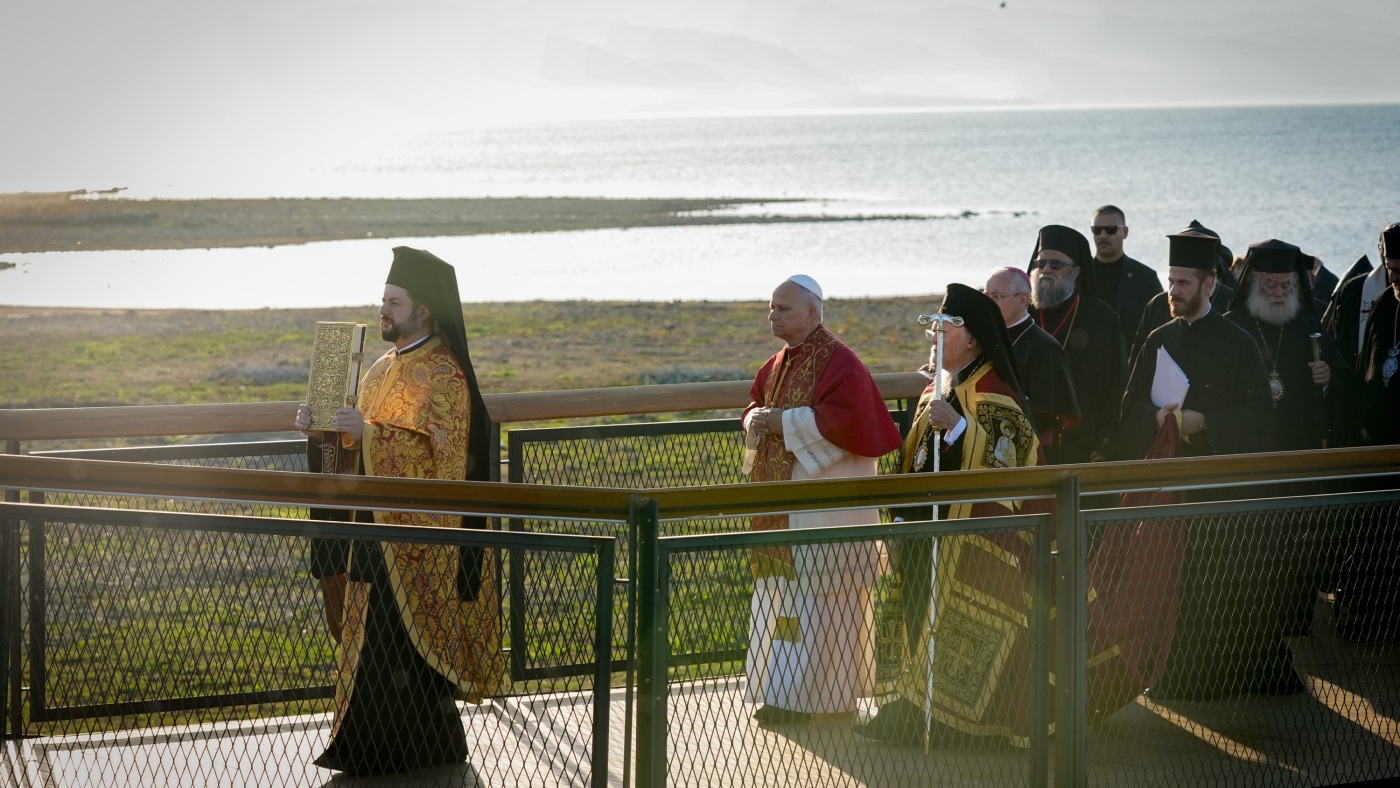
Pope Leo XIV embarked on his inaugural foreign trip, visiting the historic site of the First Council of Nicaea, where early Christian leaders convened approximately 1,700 years ago. This significant gathering, held in 325, produced the creed still recited in Christian churches today. During the visit, the Pope prayed alongside Ecumenical Patriarch Bartholomew, the spiritual leader of the world’s Eastern Orthodox Christians, at the shores of Lake Iznik.
In his address, Pope Leo emphasized the need to reject the use of religion as a justification for violence and extremism. “We must strongly reject the use of religion for justifying war, violence, or any form of fundamentalism or fanaticism,” he stated. He called for paths of “fraternal encounter, dialogue and cooperation,” highlighting his intent to promote unity not only among Christian denominations but also across different religions and communities.
The Pope’s visit coincided with a broader message on the urgency for unity in the face of global divisions. In a speech alongside Turkish President Recep Tayyip Erdogan, he warned that the polarization evident in today’s world could jeopardize the future of humanity.
The First Council of Nicaea, convened by Emperor Constantine, aimed to resolve a doctrinal crisis regarding the nature of Jesus’ relationship with God. Following approximately 250 years of Christian persecution, Constantine’s decision to allow freedom of worship marked a turning point for the faith within the Roman Empire. The council faced significant theological disputes, particularly from Arius, an Alexandrian priest who argued that Jesus, while exalted, was not equal to God. Ultimately, the council affirmed the belief that Jesus is “of one substance” with the Father, a doctrine that remains foundational to Christian belief.
Remarkably, the exact location of this historic council was uncovered only about eleven years ago. Turkish archaeologist Mustafa Sahin revealed that the site had been submerged under approximately eight feet of water until recent archaeological efforts brought it to light. Locals are familiar with the ruins; during periods of low water, swimmers often rest on the stones, now fully exposed as the shoreline has receded.
The unity of the Christian Church persisted until the Great Schism of 1054, which divided Catholicism and Eastern Orthodoxy due to theological and political disputes between Rome and what is now Istanbul, formerly known as Constantinople. On the historic site, Pope Leo XIV and Patriarch Bartholomew participated in a joint silent prayer over the ruins, acknowledging the significance of their gathering in light of the upcoming anniversary of the council.
In anticipation of this milestone, Pope Leo released an apostolic letter underscoring the creed as a “common heritage of Christians,” reflecting on the context in which it was written when the wounds of persecution were still fresh. On the following day, the Pope and the Patriarch are set to sign a joint declaration, symbolizing a modern expression of unity that resonates with the themes of reconciliation and cooperation highlighted throughout their visit.

Millville Woman Arrested for Threatening U-Haul Worker with Baton

Japan’s PM Takaichi Commits to Fiscal Management Amid Rising Rates

Bitcoin Plummets to $87K Amid Tether Concerns – Urgent Update

Tottenville Falls to Erasmus Hall in PSAL 4A Championship, 34-27

Stanford Study Reveals Shark Teeth Clues to Prevent Extinction

Englewood Church Members Unite After Thanksgiving Fire Devastation

Researchers Urge Label Changes for Low-Alcohol Drinks to Protect Pregnant Women

Community Unites to Attempt World Record in Christmas Cookie Exchange

Agree Realty and American Assets Trust: A Comprehensive Investment Comparison

Ohio State Study Uncovers Brain Connectivity and Function Links

Hamas Chief Stresses Disarmament Tied to Occupation’s End

Megan Thee Stallion Exposes Alleged Online Attack by Bots

University of Hawaiʻi Joins $25.6M AI Project for Disaster Monitoring

Researchers Challenge 200-Year-Old Physics Principle with Atomic Engines

Paloma Elsesser Shines at LA Event with Iconic Slicked-Back Bun

FDA Unveils Plan to Cut Drug Prices and Boost Biosimilars

Federal Agents Detain Driver in Addison; Protests Erupt Immediately

Beloved Artist and Community Leader Gloria Rosencrants Passes Away
-
 Science1 month ago
Ohio State Study Uncovers Brain Connectivity and Function Links
-
 Politics1 month ago
Hamas Chief Stresses Disarmament Tied to Occupation’s End
-
 Entertainment1 month ago
Megan Thee Stallion Exposes Alleged Online Attack by Bots
-
Science4 weeks ago
University of Hawaiʻi Joins $25.6M AI Project for Disaster Monitoring
-
 Science2 months ago
Researchers Challenge 200-Year-Old Physics Principle with Atomic Engines
-
 Entertainment1 month ago
Paloma Elsesser Shines at LA Event with Iconic Slicked-Back Bun
-
 World1 month ago
FDA Unveils Plan to Cut Drug Prices and Boost Biosimilars
-
 Top Stories1 month ago
Federal Agents Detain Driver in Addison; Protests Erupt Immediately
-
 Entertainment1 month ago
Beloved Artist and Community Leader Gloria Rosencrants Passes Away
-

 Business1 month ago
Motley Fool Wealth Management Reduces Medtronic Holdings by 14.7%
-

 Politics1 month ago
NHP Foundation Secures Land for 158 Affordable Apartments in Denver
-

 Science2 weeks ago
ALMA Discovers Companion Orbiting Giant Star π 1 Gruis