
World
Archaeologists Uncover Medieval City Beneath Lake Issyk-Kul

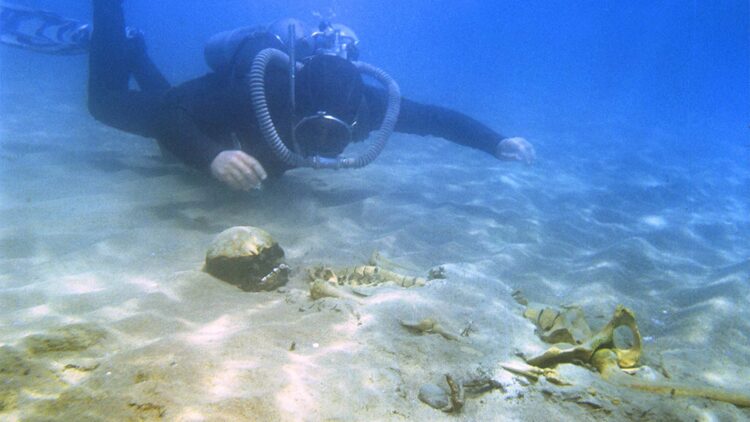
Archaeologists have confirmed the existence of a medieval city submerged beneath the waters of Lake Issyk-Kul in Kyrgyzstan. This discovery, which aligns with long-held local legends, has the potential to significantly alter the historical understanding of the Silk Road and its role in Central Asian trade and culture.
The underwater site, located at Toru-Aygyr on the northwest shore of Lake Issyk-Kul, is surrounded by the snow-capped peaks of the Tien Shan mountains. Researchers from various institutions have uncovered a planned urban center, revealing evidence of a once-thriving community that likely experienced its peak between the 10th and 15th centuries, during the reign of the Kara-Khanid dynasty. This Turkic ruling house is credited with bringing Islam to the region.
Exploration Uncovers Urban Infrastructure
Diving at depths ranging from one to four meters, researchers documented various structures and artifacts, including large ceramic vessels, baked brick formations, and components of grain mills. These findings suggest the presence of public buildings, such as madrasas, mosques, and possibly ritual baths, indicating that this city served as a hub for traders, tourists, and pilgrims traveling between China and the Islamic world.
The team also identified wooden remains and crumbling stone walls, which point to a sophisticated urban design and stable local governance. To accurately date the submerged materials, scientists employed Accelerator Mass Spectrometry (AMS) and dendrochronology, enabling them to establish a timeline for the city’s development and decline.
Natural Disasters and Cultural Legacy
Evidence suggests that a devastating earthquake in the 15th century led to the city’s partial collapse, causing most of it to submerge in Lake Issyk-Kul. Interestingly, the absence of human remains in several residential areas indicates that parts of the city may have been abandoned prior to this final catastrophe. This phenomenon resembles the preservation of Pompeii, which was buried under volcanic ash.
Researchers have also discovered a large Muslim cemetery dating back to the 13th and 14th centuries, covering approximately 60,000 square meters. The burial practices observed, with bodies oriented towards Mecca, provide insights into the religious customs of the time. So far, the remains of two individuals—one male and one female—have been unearthed, offering a potential wealth of information regarding their diets, health, and origins.
The influence of the Golden Horde in Central Asia further facilitated the spread of Islam, enhancing trade relations along the Silk Road. Alongside the cemetery, archaeologists have found medieval ceramics and a significant khum—an ancient storage vessel—partially buried in sediment, indicating that the area was occupied for an extended period.
Future Research and Preservation Efforts
The use of underwater drones and advanced navigation technology allows archaeologists to map the submerged ruins in detail and ensure their preservation for future generations. The research team aims to develop a comprehensive interdisciplinary project that combines urban archaeology, funerary studies, and the geological and climatic history of Lake Issyk-Kul.
Researchers believe that a substantial portion of the city remains unexamined, and ongoing exploration could lead to new understandings of Central Asia’s historical significance. As investigations progress, this remarkable discovery promises to reshape perceptions of the region’s role in global history and cultural exchange during the Middle Ages.

Boise State Battles UNLV Tonight for MWC Championship Glory

Millville Woman Arrested for Threatening U-Haul Worker with Baton

Japan’s PM Takaichi Commits to Fiscal Management Amid Rising Rates

Bitcoin Plummets to $87K Amid Tether Concerns – Urgent Update

Tottenville Falls to Erasmus Hall in PSAL 4A Championship, 34-27

Stanford Study Reveals Shark Teeth Clues to Prevent Extinction

Englewood Church Members Unite After Thanksgiving Fire Devastation

Researchers Urge Label Changes for Low-Alcohol Drinks to Protect Pregnant Women

Community Unites to Attempt World Record in Christmas Cookie Exchange

Ohio State Study Uncovers Brain Connectivity and Function Links

Hamas Chief Stresses Disarmament Tied to Occupation’s End

Megan Thee Stallion Exposes Alleged Online Attack by Bots

University of Hawaiʻi Joins $25.6M AI Project for Disaster Monitoring

Researchers Challenge 200-Year-Old Physics Principle with Atomic Engines

Paloma Elsesser Shines at LA Event with Iconic Slicked-Back Bun

FDA Unveils Plan to Cut Drug Prices and Boost Biosimilars

Federal Agents Detain Driver in Addison; Protests Erupt Immediately

Motley Fool Wealth Management Reduces Medtronic Holdings by 14.7%
-
 Science1 month ago
Ohio State Study Uncovers Brain Connectivity and Function Links
-
 Politics1 month ago
Hamas Chief Stresses Disarmament Tied to Occupation’s End
-
 Entertainment1 month ago
Megan Thee Stallion Exposes Alleged Online Attack by Bots
-
Science4 weeks ago
University of Hawaiʻi Joins $25.6M AI Project for Disaster Monitoring
-
 Science2 months ago
Researchers Challenge 200-Year-Old Physics Principle with Atomic Engines
-
 Entertainment1 month ago
Paloma Elsesser Shines at LA Event with Iconic Slicked-Back Bun
-
 World1 month ago
FDA Unveils Plan to Cut Drug Prices and Boost Biosimilars
-
 Top Stories1 month ago
Federal Agents Detain Driver in Addison; Protests Erupt Immediately
-
 Business1 month ago
Motley Fool Wealth Management Reduces Medtronic Holdings by 14.7%
-

 Entertainment1 month ago
Beloved Artist and Community Leader Gloria Rosencrants Passes Away
-

 Politics1 month ago
NHP Foundation Secures Land for 158 Affordable Apartments in Denver
-

 Science2 weeks ago
ALMA Discovers Companion Orbiting Giant Star π 1 Gruis