
Top Stories
Volunteers Launch Bay Area’s First ‘Living Levee’ to Combat Flooding

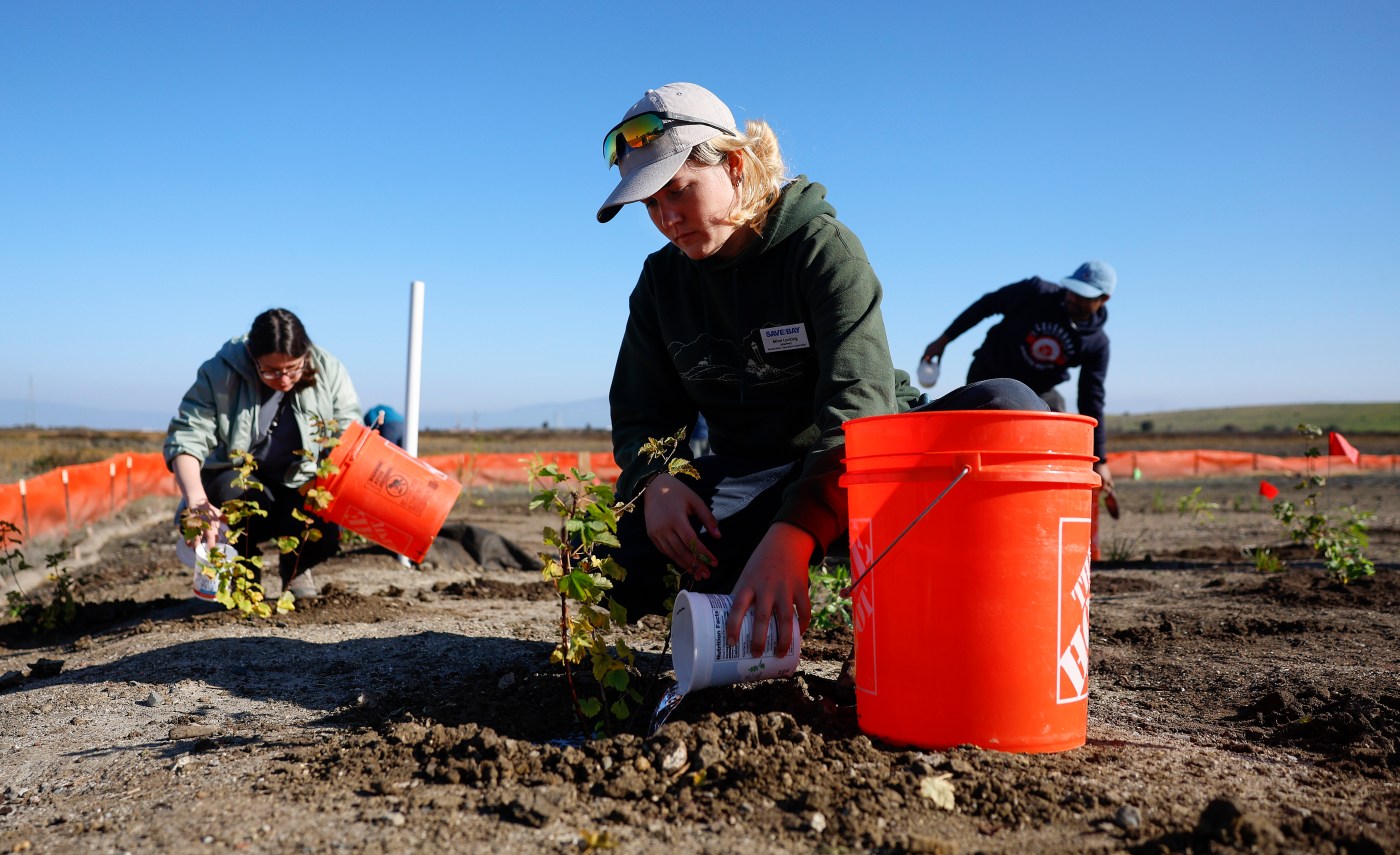
UPDATE: Volunteers are making a significant impact today as they plant the Bay Area’s first-ever **“living levee”** along the Harbor Marsh coastline in **Palo Alto**. This innovative project, utilizing **treated wastewater**, aims to absorb storm surges and mitigate flooding risks posed by climate change and rising sea levels.
Just this morning, approximately **35 volunteers** gathered to plant native species such as **black elderberry**, **ninebark**, and **marsh baccharis**. This pioneering initiative is part of a larger effort to protect vulnerable shoreline communities facing increased flooding threats. A follow-up volunteer day is scheduled for **Saturday morning**.
Jessie Olsen from **Save The Bay**, which is leading the planting efforts, emphasized the project’s long-term significance, stating that the plants are expected to reach full maturity by **2026**. “These in-person shoreline experiences are crucial for introducing nature-based solutions,” Olsen remarked to reporters.
Officials characterize this project as a groundbreaking collaboration to merge wastewater reuse with habitat restoration. **Karin North**, assistant director of Public Works in Palo Alto, stated, “This project is unique on the San Francisco Bay shoreline. It uses treated wastewater from the plant to irrigate native plants, creating a buffer between freshwater and salt marshes.”
Last year, the Palo Alto treatment facility invested **$369 million** in upgrades to enhance water quality, allowing for safe release into the Bay and preventing harmful algal blooms. The facility, critical for the city’s infrastructure, treats **20 million gallons** of wastewater daily for over **230,000 residents** and businesses.
Unlike traditional concrete levees, the “living levee” employs native vegetation to provide natural storm protection, effectively absorbing the impacts of storm surges and reducing local flood risks. The total cost of this **$7 million** project includes **$2 million** for design and **$4.8 million** for construction, initiated in September and developed in partnership with the city of Palo Alto, **Environmental Science Associates**, and several universities.
Samantha Engelage, a senior engineer with the city, highlighted additional benefits, stating, “This project not only protects against flooding but also enhances wildlife habitat and accumulates sediment to help marshes adapt to sea-level rise.”
Local wildlife, including birds like **clapper rails** and various fish species, will benefit from the enhanced habitat. The city’s climate assessment warns of potential sea-level rises ranging from **3 to 10 feet** by **2100**, threatening crucial infrastructure and public health services.
Engelage expressed hopes that this project will serve as a model for broader shoreline protection efforts in the future. “We know a larger project will be needed to address all the levees in this area, but this initiative will provide valuable lessons,” she said.
Other similar projects are underway in the Bay Area, including the **Oro Loma horizontal levee** in Hayward, which also utilizes treated wastewater but lacks direct Bay connection.
Heidi Nutters from the **San Francisco Estuary Partnership** hopes this project will inspire cities to rethink wastewater management. “This project showcases wastewater as a resource rather than a waste product,” Nutters pointed out. “When designed thoughtfully, our natural systems can enhance community resilience while delivering multiple benefits.”
As communities rally around this initiative, the urgency for innovative solutions to combat climate change becomes ever more critical. Stay tuned for updates on this transformative project that is set to redefine coastal protection in the Bay Area.

Electric Avenue Brings 1980s Energy to Valencia This February

Urgent Update: Rob Reiner and Wife Found Dead in Stabbing

Registration for LA28 Olympic Ticket Draw Opens January 14

Urgent Trial for ‘Party Mom’ Shannon O’Connor Begins Today

Urgent: Sony’s Wonderverse at Oakbrook Center to Close Dec. 22

Supergirl’s Heartbreaking Error Mirrors Superman’s Past Mistake

California Hires Former CDC Leaders to Boost Public Health NOW

Alaska’s Contango Ore Merges with Dolly Varden Silver Corp

Rob Reiner: A Legacy in Comedy and Film Remembered

Ohio State Study Uncovers Brain Connectivity and Function Links

Hamas Chief Stresses Disarmament Tied to Occupation’s End

University of Hawaiʻi Joins $25.6M AI Project for Disaster Monitoring

ALMA Discovers Companion Orbiting Giant Star π 1 Gruis

Megan Thee Stallion Exposes Alleged Online Attack by Bots

Researchers Challenge 200-Year-Old Physics Principle with Atomic Engines

Paloma Elsesser Shines at LA Event with Iconic Slicked-Back Bun

FDA Unveils Plan to Cut Drug Prices and Boost Biosimilars

Innovator Captures Light at 2 Billion Frames Per Second
-
 Science2 months ago
Ohio State Study Uncovers Brain Connectivity and Function Links
-
 Politics2 months ago
Hamas Chief Stresses Disarmament Tied to Occupation’s End
-
Science1 month ago
University of Hawaiʻi Joins $25.6M AI Project for Disaster Monitoring
-
 Science1 month ago
ALMA Discovers Companion Orbiting Giant Star π 1 Gruis
-
 Entertainment2 months ago
Megan Thee Stallion Exposes Alleged Online Attack by Bots
-
 Science2 months ago
Researchers Challenge 200-Year-Old Physics Principle with Atomic Engines
-
 Entertainment2 months ago
Paloma Elsesser Shines at LA Event with Iconic Slicked-Back Bun
-
 World2 months ago
FDA Unveils Plan to Cut Drug Prices and Boost Biosimilars
-
 Science2 months ago
Innovator Captures Light at 2 Billion Frames Per Second
-

 Business2 months ago
Motley Fool Wealth Management Reduces Medtronic Holdings by 14.7%
-

 Top Stories2 months ago
Federal Agents Detain Driver in Addison; Protests Erupt Immediately
-

 Entertainment2 months ago
Beloved Artist and Community Leader Gloria Rosencrants Passes Away