
Top Stories
Nixon Officials Resign in Historic ‘Saturday Night Massacre’

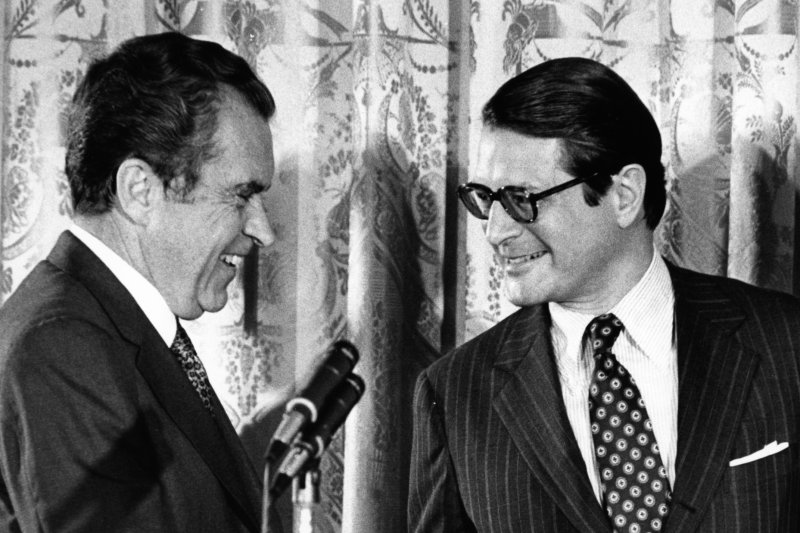
UPDATE: October 20, 1973 marked a pivotal moment in U.S. history as two top officials in President Richard Nixon‘s administration resigned in what is now infamously known as the “Saturday Night Massacre.”
In a shocking turn of events, Attorney General Elliot Richardson and Deputy Attorney General William Ruckelshaus stepped down after Nixon ordered them to dismiss special prosecutor Archibald Cox, who was investigating the Watergate scandal. This unprecedented move escalated the national crisis, raising alarms about presidential overreach and the rule of law.
The resignations have fueled outrage among lawmakers and citizens alike, with many viewing this incident as a blatant attempt to obstruct justice. The fallout from this decision has significant implications for American democracy, as it highlights the ongoing struggle between executive power and accountability.
The term “Saturday Night Massacre” has since become synonymous with governmental abuse of power, as it galvanized public opinion against Nixon, leading to further investigations and ultimately his resignation in August 1974.
In addition to this crucial moment in political history, October 20 has witnessed several other significant events. In 1818, the U.S. and Britain established the 49th parallel as the official boundary between the U.S. and Canada. In 1944, General Douglas MacArthur famously declared, “I have returned,” as American troops landed on Leyte Island in the Philippines during World War II.
The day also marks the tragic loss of rock band members in a plane crash in 1977, and the deaths of Hollywood star Burt Lancaster in 1994 and former Libyan dictator Moammar Gadhafi in 2011.
As the nation reflects on these events, today’s anniversary serves as a reminder of the importance of accountability in government and the ongoing struggle for justice.
What happens next? Observers are closely watching how this historical context feeds into current political debates. The implications of the “Saturday Night Massacre” continue to resonate as discussions about executive power and checks and balances remain relevant in today’s political landscape.
Stay tuned for more updates as we continue to monitor how these historical moments influence present-day governance and public sentiment.

Rob Reiner’s Son Nick Arrested After Parents Found Dead in Brentwood

Urgent Debate Erupts Over American Friends Service Committee

Russia Open to Ukraine EU Membership in Urgent Peace Deal Talks

Two Heroes Rescue Woman from Burning Car in LA Crash

Negotiations Stalled as U.S. Diplomatic Efforts Meet Resistance

Researchers Develop Microscopic Robots Capable of Autonomous Action

Curry Breaks Jordan’s Record, But Warriors Fall to Blazers

EU Imposes Sanctions on Major Players in Russian Oil Trade

Instacart’s AI Pricing Strategy Raises Grocery Costs for Texans

Ohio State Study Uncovers Brain Connectivity and Function Links

Hamas Chief Stresses Disarmament Tied to Occupation’s End

University of Hawaiʻi Joins $25.6M AI Project for Disaster Monitoring

ALMA Discovers Companion Orbiting Giant Star π 1 Gruis

Megan Thee Stallion Exposes Alleged Online Attack by Bots

Researchers Challenge 200-Year-Old Physics Principle with Atomic Engines

Paloma Elsesser Shines at LA Event with Iconic Slicked-Back Bun

FDA Unveils Plan to Cut Drug Prices and Boost Biosimilars

Innovator Captures Light at 2 Billion Frames Per Second
-
 Science2 months ago
Ohio State Study Uncovers Brain Connectivity and Function Links
-
 Politics2 months ago
Hamas Chief Stresses Disarmament Tied to Occupation’s End
-
Science1 month ago
University of Hawaiʻi Joins $25.6M AI Project for Disaster Monitoring
-
 Science1 month ago
ALMA Discovers Companion Orbiting Giant Star π 1 Gruis
-
 Entertainment2 months ago
Megan Thee Stallion Exposes Alleged Online Attack by Bots
-
 Science2 months ago
Researchers Challenge 200-Year-Old Physics Principle with Atomic Engines
-
 Entertainment2 months ago
Paloma Elsesser Shines at LA Event with Iconic Slicked-Back Bun
-
 World2 months ago
FDA Unveils Plan to Cut Drug Prices and Boost Biosimilars
-
 Science2 months ago
Innovator Captures Light at 2 Billion Frames Per Second
-

 Business2 months ago
Motley Fool Wealth Management Reduces Medtronic Holdings by 14.7%
-

 Top Stories2 months ago
Federal Agents Detain Driver in Addison; Protests Erupt Immediately
-

 Entertainment2 months ago
Beloved Artist and Community Leader Gloria Rosencrants Passes Away