
Top Stories
Kissing Dates Back 21 Million Years, Study Reveals Urgent Findings

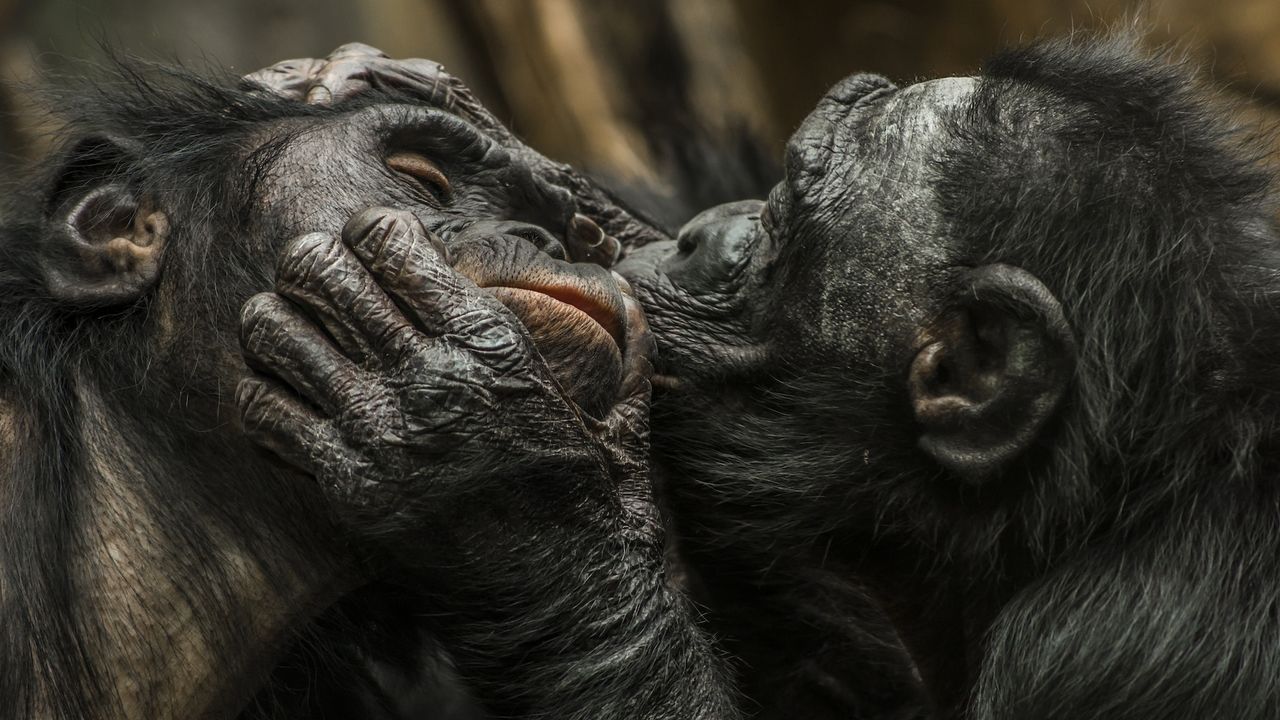
UPDATE: A groundbreaking study has revealed that the act of kissing likely originated 21 million years ago, predating modern humans by millions of years. This urgent discovery, published on November 19, 2023, in the journal Evolution and Human Behavior, suggests that kissing traces back to the shared ancestor of humans and other large apes.
Researchers from the University of Oxford, led by evolutionary biologist Matilda Brindle, utilized advanced modeling techniques to trace the evolutionary roots of kissing. Their findings indicate that this intimate behavior likely existed among Neanderthals, our closest extinct relatives, who may have even engaged in kissing with early Homo sapiens.
Why does this matter? The implications are profound, shedding light on the social and evolutionary significance of kissing across species. Kissing is not only a romantic gesture; it may play a critical role in strengthening social bonds and boosting reproductive success. It offers insights into the behaviors of our ancestors, highlighting the remarkable diversity of sexual behaviors exhibited by primates.
The research team defined kissing as “non-aggressive, mouth-to-mouth contact that did not involve food transfer,” distinguishing it from other similar behaviors observed in modern primates like chimpanzees and orangutans. This definition was crucial for accurately modeling the history of kissing. The study applied a statistical method called Bayesian modeling, running simulations up to 10 million times to ensure robust results.
The findings suggest that kissing evolved once in the common ancestor of large apes (Hominidae) between 21.5 million and 16.9 million years ago. However, kissing is absent in certain primate groups, indicating that it may have developed independently among modern species like macaques and baboons.
The study also posits that kissing may have evolved from the practice of mothers pre-chewing food for their infants, repurposing a practical behavior into a social one. This adds a fascinating layer to our understanding of both kissing and the evolutionary strategies of early primates.
While the idea that Neanderthals might have kissed modern humans isn’t entirely new, as noted by experts, the study aligns with previous research suggesting interactions between the two species. In 2017, scientists discovered microbial similarities in dental plaque from Neanderthals and modern humans, hinting at potential kissing or shared food and water sources.
Experts like April Nowell, a Paleolithic archaeologist, acknowledge that while the current study may not drastically change our understanding of Neanderthal behavior, it reinforces the concept that kissing could have been practiced, albeit variably, among ancient communities.
Despite its prevalence across many species, scientists continue to explore why kissing endures, especially given its risks, such as disease transmission. One theory suggests that kissing helps individuals assess a mate’s quality through chemical cues related to health and genetic compatibility.
As researchers delve deeper into the significance of kissing, this study opens new avenues for understanding human behaviors and their evolutionary origins. The implications are not only fascinating but also encourage a broader discussion about the roles of intimacy and social interaction in our evolutionary past.
Stay tuned for more updates as this research develops and as scientists continue to uncover the mysteries of human behavior.

Millville Woman Arrested for Threatening U-Haul Worker with Baton

Japan’s PM Takaichi Commits to Fiscal Management Amid Rising Rates

Bitcoin Plummets to $87K Amid Tether Concerns – Urgent Update

Tottenville Falls to Erasmus Hall in PSAL 4A Championship, 34-27

Stanford Study Reveals Shark Teeth Clues to Prevent Extinction

Englewood Church Members Unite After Thanksgiving Fire Devastation

Researchers Urge Label Changes for Low-Alcohol Drinks to Protect Pregnant Women

Community Unites to Attempt World Record in Christmas Cookie Exchange

Agree Realty and American Assets Trust: A Comprehensive Investment Comparison

Ohio State Study Uncovers Brain Connectivity and Function Links

Hamas Chief Stresses Disarmament Tied to Occupation’s End

Megan Thee Stallion Exposes Alleged Online Attack by Bots

University of Hawaiʻi Joins $25.6M AI Project for Disaster Monitoring

Researchers Challenge 200-Year-Old Physics Principle with Atomic Engines

Paloma Elsesser Shines at LA Event with Iconic Slicked-Back Bun

FDA Unveils Plan to Cut Drug Prices and Boost Biosimilars

Federal Agents Detain Driver in Addison; Protests Erupt Immediately

Motley Fool Wealth Management Reduces Medtronic Holdings by 14.7%
-
 Science1 month ago
Ohio State Study Uncovers Brain Connectivity and Function Links
-
 Politics1 month ago
Hamas Chief Stresses Disarmament Tied to Occupation’s End
-
 Entertainment1 month ago
Megan Thee Stallion Exposes Alleged Online Attack by Bots
-
Science4 weeks ago
University of Hawaiʻi Joins $25.6M AI Project for Disaster Monitoring
-
 Science2 months ago
Researchers Challenge 200-Year-Old Physics Principle with Atomic Engines
-
 Entertainment1 month ago
Paloma Elsesser Shines at LA Event with Iconic Slicked-Back Bun
-
 World1 month ago
FDA Unveils Plan to Cut Drug Prices and Boost Biosimilars
-
 Top Stories1 month ago
Federal Agents Detain Driver in Addison; Protests Erupt Immediately
-
 Business1 month ago
Motley Fool Wealth Management Reduces Medtronic Holdings by 14.7%
-

 Entertainment1 month ago
Beloved Artist and Community Leader Gloria Rosencrants Passes Away
-

 Politics1 month ago
NHP Foundation Secures Land for 158 Affordable Apartments in Denver
-

 Science2 weeks ago
ALMA Discovers Companion Orbiting Giant Star π 1 Gruis