
Top Stories
CEOs Embrace AI: Transformative Impact on Daily Operations

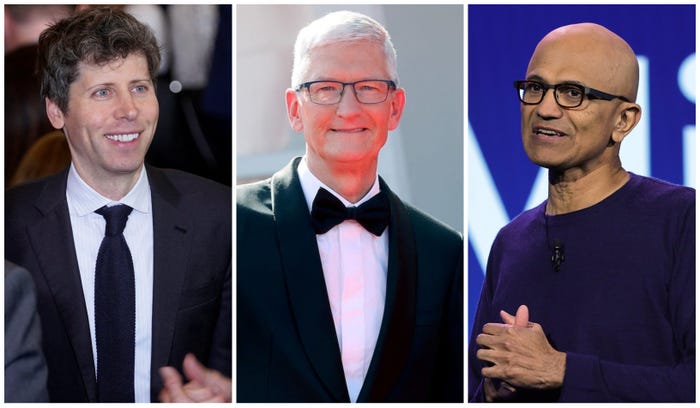
URGENT UPDATE: Major CEOs are swiftly integrating artificial intelligence (AI) into their daily operations, revolutionizing how they manage tasks and make decisions. As AI technology surges, the global market is projected to reach $4.8 trillion by 2033.
In a landscape where innovation is paramount, leaders like Nvidia’s Jensen Huang, Apple’s Tim Cook, and Microsoft’s Satya Nadella are leveraging AI for efficiency and effectiveness. This shift not only enhances their productivity but also sets a precedent for industries worldwide, underscoring the technology’s growing importance.
Nadella, who has championed AI since taking the helm in 2014, shared insights on his transformative use of AI. In a recent Bloomberg interview, he revealed that he employs Microsoft’s Copilot to summarize emails and prep for meetings. “I’m an email typist,” Nadella stated, emphasizing how AI streamlines his workflow.
Similarly, OpenAI’s Sam Altman is using AI extensively in his home life, especially after becoming a father. Altman disclosed on the “ReThinking” podcast that AI helps him manage emails and conduct research on child development. “I don’t know how I would have done that,” he remarked, highlighting the profound impact of AI on his parenting responsibilities.
Nvidia’s Huang utilizes AI as a personal tutor, stating, “I use it as a tutor every day.” At the recent Milken Institute Global Conference, he illustrated how AI helps him grasp complex subjects, further indicating the technology’s potential to bridge knowledge gaps.
Cook is also at the forefront, having launched Apple Intelligence during the 2024 Worldwide Developers Conference. He noted that AI significantly reduces time spent on lengthy emails, stating, “It’s changed my life.” The generative AI system is now a crucial tool in his daily communications.
Real estate tech leader Jeremy Wacksman of Zillow reported that AI aids in summarizing extensive meeting notes, allowing him to focus on what’s essential. “ChatGPT provides a personalized summary,” Wacksman stated, emphasizing how AI enhances the efficiency of his role.
In the cryptocurrency space, Brian Armstrong, CEO of Coinbase, is pushing boundaries with AI. He revealed a groundbreaking AI-to-AI transaction on X, stating, “What did one AI buy from another? Tokens!” Armstrong is also testing AI in decision-making processes, a move that could reshape the future of corporate governance.
LinkedIn CEO Ryan Roslansky highlighted AI as a “second brain” during a recent fireside chat. He relies on AI tools to draft high-stakes emails to industry leaders, ensuring that his communications are both effective and impactful.
In the pharmaceutical sector, David Ricks of Eli Lilly is pioneering AI integration to expedite drug discovery. He expressed enthusiasm for AI’s role in meetings, saying, “I have at least one or two AIs running every minute of every meeting I’m in.” This innovative approach signifies a shift in how healthcare can leverage technology for better outcomes.
As AI continues to embed itself into daily operations across industries, the implications are clear: CEOs are not just adopting technology; they are fundamentally reshaping their roles and responsibilities. AI’s capacity to enhance efficiency, foster innovation, and drive growth is undeniable, making it a pivotal element in today’s corporate landscape.
WHAT’S NEXT: As AI technology evolves, watch for further developments in how these leaders harness its potential to transform business practices. The next wave of AI applications may redefine industry standards, paving the way for unprecedented advancements in global markets.

Urgent Winter Weather Advisory Issued for South Central PA

ECB’s de Guindos Confirms Interest Rates Remain Steady Amidst Economic Challenges

Rolette Record Transitions Ownership to Cando Editors

Bregman Seeks Debates with Haaland Ahead of Gubernatorial Primary

University of Arizona Researchers Uncover Key to Preventing Scar Tissue

Titans Maintain Lead in 2026 NFL Draft Race as Competition Heats Up

Delta Flight Diverts to Tokyo After Hydraulic Emergency

Rolette Record Sold to Cando Men, New Ownership Takes Charge

Urgent Fire Erupts at Oklahoma City Apartments, Residents Scared

Ohio State Study Uncovers Brain Connectivity and Function Links

Hamas Chief Stresses Disarmament Tied to Occupation’s End

Megan Thee Stallion Exposes Alleged Online Attack by Bots

University of Hawaiʻi Joins $25.6M AI Project for Disaster Monitoring

Researchers Challenge 200-Year-Old Physics Principle with Atomic Engines

Paloma Elsesser Shines at LA Event with Iconic Slicked-Back Bun

FDA Unveils Plan to Cut Drug Prices and Boost Biosimilars

Federal Agents Detain Driver in Addison; Protests Erupt Immediately

Beloved Artist and Community Leader Gloria Rosencrants Passes Away
-
 Science1 month ago
Ohio State Study Uncovers Brain Connectivity and Function Links
-
 Politics1 month ago
Hamas Chief Stresses Disarmament Tied to Occupation’s End
-
 Entertainment1 month ago
Megan Thee Stallion Exposes Alleged Online Attack by Bots
-
Science4 weeks ago
University of Hawaiʻi Joins $25.6M AI Project for Disaster Monitoring
-
 Science2 months ago
Researchers Challenge 200-Year-Old Physics Principle with Atomic Engines
-
 Entertainment1 month ago
Paloma Elsesser Shines at LA Event with Iconic Slicked-Back Bun
-
 World1 month ago
FDA Unveils Plan to Cut Drug Prices and Boost Biosimilars
-
 Top Stories1 month ago
Federal Agents Detain Driver in Addison; Protests Erupt Immediately
-
 Entertainment1 month ago
Beloved Artist and Community Leader Gloria Rosencrants Passes Away
-

 Business1 month ago
Motley Fool Wealth Management Reduces Medtronic Holdings by 14.7%
-

 Politics1 month ago
NHP Foundation Secures Land for 158 Affordable Apartments in Denver
-

 Science2 weeks ago
ALMA Discovers Companion Orbiting Giant Star π 1 Gruis