
Science
Scientists Unveil 19.2-Attosecond X-Ray Pulse, Capturing Electron Motion

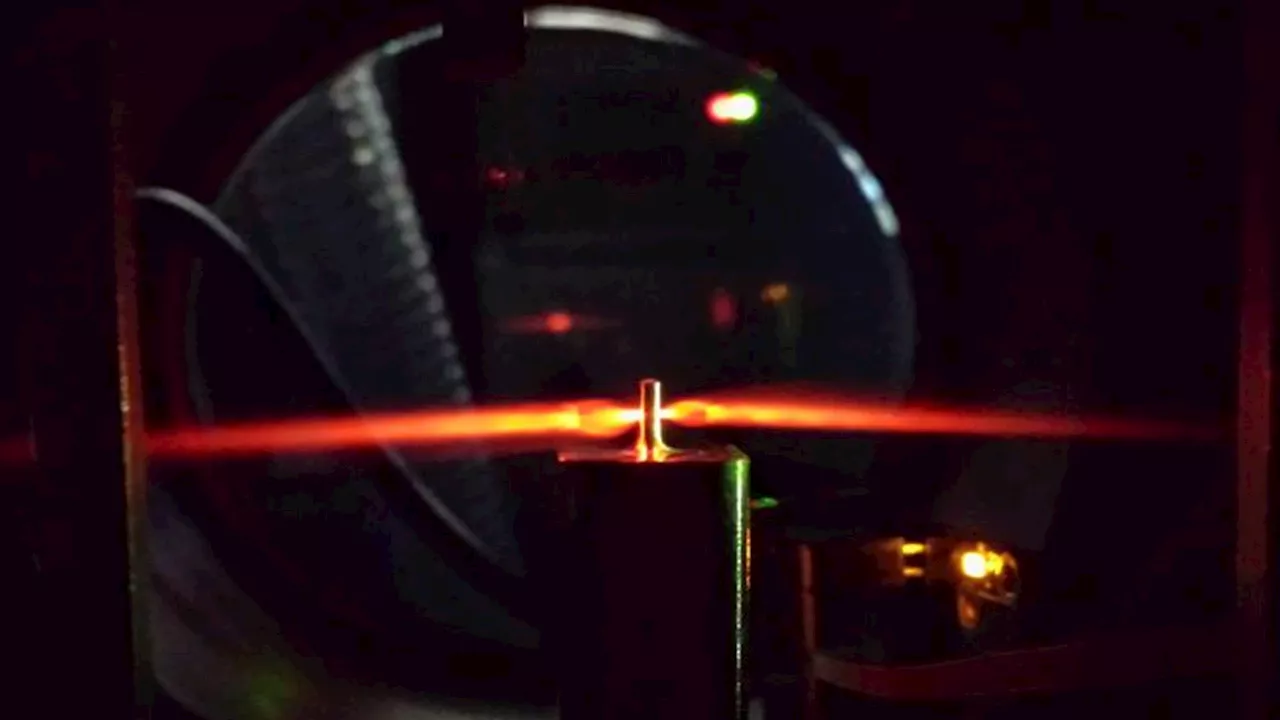
Researchers have achieved a groundbreaking milestone in the field of ultrafast science by creating a 19.2-attosecond soft X-ray pulse, enabling the real-time observation of electron motion for the first time. Developed by a team at ICFO, this achievement represents the shortest and brightest soft X-ray flash ever produced, providing unprecedented insight into electronic dynamics that dictate various physical and chemical processes.
Revolutionizing Our Understanding of Electrons
Electrons play a vital role in determining the outcomes of chemical reactions, the conductivity of materials, and the behavior of biological molecules. However, their rapid motion, occurring on attosecond timescales, has posed significant challenges for scientists attempting to observe these processes directly. Traditional instruments have struggled to capture the fleeting dynamics of electrons, leaving much to speculation and inference.
The newly developed pulse opens a direct window into previously unobservable phenomena, allowing researchers to track how electrons reorganize around atoms during reactions, phase transitions, and energy transfers. The soft X-ray light produced in these pulses is uniquely powerful, capable of identifying specific atoms and providing detailed information on material properties.
Advancements in Attosecond Metrology
Creating such a brief and isolated pulse required significant advancements in several areas, including high-harmonic generation and sophisticated laser engineering. The team, led by Prof. Jens Biegert, has been working towards this goal since 2015, when they first succeeded in isolating attosecond pulses within the soft X-ray regime. Their decade-long pursuit has culminated in this record-setting achievement.
“Finally, we can say that, to the best of our knowledge, we have confirmed the shortest pulse of light in the world!” said Dr. Fernando Ardana-Lamas, the first author of the study.
The breakthrough came with the development of a new pulse retrieval method that improved measurement precision, enabling the team to confirm the pulse duration with remarkable accuracy. This accomplishment pushes attosecond science below the atomic unit of time, a fundamental threshold in the study of ultrafast phenomena.
The implications of this discovery are vast, spanning multiple disciplines. Directly observing electron motion could significantly enhance our understanding of various fields, including photovoltaics, catalysis, and the development of next-generation quantum devices. Prof. Biegert emphasized that this capability could lead to breakthroughs in physics, chemistry, biology, and quantum science, offering a tool that aligns with the natural timescale of electron dynamics.
With this foundation in place, researchers are moving from indirect interpretations to real-time observations, paving the way for innovations in how we study and understand matter at its most fundamental level. As Prof. Biegert aptly put it, “the sky is the limit” for future research in this exciting area of science.

Urgent Rescue: Great Dane Mix Saved from Euthanasia Today

Urgent Discovery: 20,000 Dinosaur Footprints Found Near 2026 Olympics

Rev. Jesse Jackson Launches Operation PUSH: A Historic Announcement

Gradient Investments Acquires 477,013 Shares in Kinder Morgan

James Cameron’s New Avatar Film Set to Capture Box Office Glory

Study Reveals Genetic Links Between Roommates and Gut Microbes

Twinkly Awards 2025: Celebrating Central Florida’s Best Holiday Displays

FBI’s Dan Bongino Announces Departure; Oscars Move to YouTube

Research Reveals 74% of Western US Faces Wildfire Risks

Ohio State Study Uncovers Brain Connectivity and Function Links

University of Hawaiʻi Joins $25.6M AI Project for Disaster Monitoring

Hamas Chief Stresses Disarmament Tied to Occupation’s End

ALMA Discovers Companion Orbiting Giant Star π 1 Gruis

Megan Thee Stallion Exposes Alleged Online Attack by Bots

F-22 Raptor vs. Su-57 Felon: A 2025 Fighter Jet Comparison

Innovator Captures Light at 2 Billion Frames Per Second

Paloma Elsesser Shines at LA Event with Iconic Slicked-Back Bun

Researchers Challenge 200-Year-Old Physics Principle with Atomic Engines
-
 Science2 months ago
Ohio State Study Uncovers Brain Connectivity and Function Links
-
Science2 months ago
University of Hawaiʻi Joins $25.6M AI Project for Disaster Monitoring
-
 Politics2 months ago
Hamas Chief Stresses Disarmament Tied to Occupation’s End
-
 Science1 month ago
ALMA Discovers Companion Orbiting Giant Star π 1 Gruis
-
 Entertainment2 months ago
Megan Thee Stallion Exposes Alleged Online Attack by Bots
-
 World2 months ago
F-22 Raptor vs. Su-57 Felon: A 2025 Fighter Jet Comparison
-
 Science2 months ago
Innovator Captures Light at 2 Billion Frames Per Second
-
 Entertainment2 months ago
Paloma Elsesser Shines at LA Event with Iconic Slicked-Back Bun
-
 Science2 months ago
Researchers Challenge 200-Year-Old Physics Principle with Atomic Engines
-

 World2 months ago
FDA Unveils Plan to Cut Drug Prices and Boost Biosimilars
-

 Business2 months ago
Motley Fool Wealth Management Reduces Medtronic Holdings by 14.7%
-

 Top Stories2 months ago
Federal Agents Detain Driver in Addison; Protests Erupt Immediately