
Science
Michigan Farmers Harness Kestrels to Combat Crop Damage and Enhance Safety

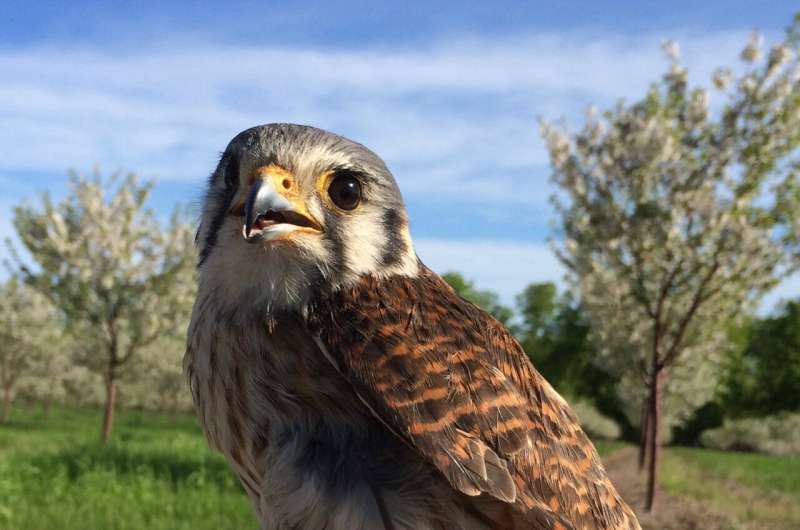
Cherry farmers in northern Michigan have discovered an unexpected ally in their quest to protect crops: the American kestrel. This small falcon not only deters fruit-eating birds but also appears to enhance food safety by reducing contamination risks. Researchers from Michigan State University published findings on November 27, 2025, in the Journal of Applied Ecology, highlighting the dual benefits of these raptors for agricultural practices.
The cherry harvest may be months behind, but growers are already looking towards the spring when kestrels return to nesting sites. These birds of prey are effective in scaring away smaller birds that are known to feast on cherries, which can lead to significant crop losses. According to lead author Olivia Smith, an assistant professor of horticulture, protecting cherry crops from avian pests is a persistent challenge. Traditional deterrents such as nets and noisemakers often fall short, with losses ranging from 5% to 30% annually for sweet cherry growers across states like Michigan, Washington, California, and Oregon.
Kestrels were introduced to eight cherry orchards in northern Michigan through specially constructed nest boxes. Observations indicated a marked decrease in the presence of common culprits like robins, starlings, and grackles when kestrels were nesting nearby. The research team found that the presence of kestrels reduced the likelihood of cherry damage by more than tenfold.
The implications of this research extend beyond crop protection. The study also revealed that kestrels contributed to a significant reduction in bird droppings on cherry trees. The presence of these falcons was associated with a three-fold decrease in droppings, which can carry pathogens. Senior author Catherine Lindell, an associate professor emerita of Integrative Biology, noted that while kestrels also produce droppings, their ability to keep fruit-eating birds at bay outweighs this issue.
DNA analysis from the study identified 10% of droppings containing Campylobacter, a bacterium linked to foodborne illnesses. Although none of the outbreaks have been traced back to cherries, this research suggests that kestrels could be a viable method for improving food safety in various crops associated with contamination risks, particularly leafy greens. Smith emphasized the potential for kestrels to minimize the risk of pathogen transmission by reducing droppings.
While kestrels may not solve all challenges related to birds in agriculture, they present a low-cost and low-maintenance option for farmers. Lindell pointed out that these falcons could serve as a valuable addition to existing bird management strategies.
The study underscores the need for innovative solutions in agriculture that consider both crop protection and food safety. As cherry growers look ahead to the next season, the role of kestrels may prove to be an essential component of sustainable farming practices in Michigan and beyond.

Englewood Church Members Unite After Thanksgiving Fire Devastation

Researchers Urge Label Changes for Low-Alcohol Drinks to Protect Pregnant Women

Community Unites to Attempt World Record in Christmas Cookie Exchange

Agree Realty and American Assets Trust: A Comprehensive Investment Comparison

UK Universities Harness AI to Enhance Research Quality Assessment

Browns’ Mistakes Lead to 23rd Losing Season Since 1999

Trump Promises Release of MRI Results Despite Uncertainty on Scans

Mayor Appoints Alan Wong as New District 4 Supervisor Amid Controversy

South Korea Launches Urgent FX Oversight Measures to Stabilize Market

Ohio State Study Uncovers Brain Connectivity and Function Links

Hamas Chief Stresses Disarmament Tied to Occupation’s End

Megan Thee Stallion Exposes Alleged Online Attack by Bots

University of Hawaiʻi Joins $25.6M AI Project for Disaster Monitoring

Researchers Challenge 200-Year-Old Physics Principle with Atomic Engines

Paloma Elsesser Shines at LA Event with Iconic Slicked-Back Bun

FDA Unveils Plan to Cut Drug Prices and Boost Biosimilars

Federal Agents Detain Driver in Addison; Protests Erupt Immediately

Motley Fool Wealth Management Reduces Medtronic Holdings by 14.7%
-
 Science1 month ago
Ohio State Study Uncovers Brain Connectivity and Function Links
-
 Politics1 month ago
Hamas Chief Stresses Disarmament Tied to Occupation’s End
-
 Entertainment1 month ago
Megan Thee Stallion Exposes Alleged Online Attack by Bots
-
Science4 weeks ago
University of Hawaiʻi Joins $25.6M AI Project for Disaster Monitoring
-
 Science2 months ago
Researchers Challenge 200-Year-Old Physics Principle with Atomic Engines
-
 Entertainment1 month ago
Paloma Elsesser Shines at LA Event with Iconic Slicked-Back Bun
-
 World1 month ago
FDA Unveils Plan to Cut Drug Prices and Boost Biosimilars
-
 Top Stories1 month ago
Federal Agents Detain Driver in Addison; Protests Erupt Immediately
-
 Business1 month ago
Motley Fool Wealth Management Reduces Medtronic Holdings by 14.7%
-

 Entertainment1 month ago
Beloved Artist and Community Leader Gloria Rosencrants Passes Away
-

 Politics1 month ago
NHP Foundation Secures Land for 158 Affordable Apartments in Denver
-

 Science2 weeks ago
ALMA Discovers Companion Orbiting Giant Star π 1 Gruis