
Politics
Utah’s Redistricting Debate: Who Should Draw the Maps?

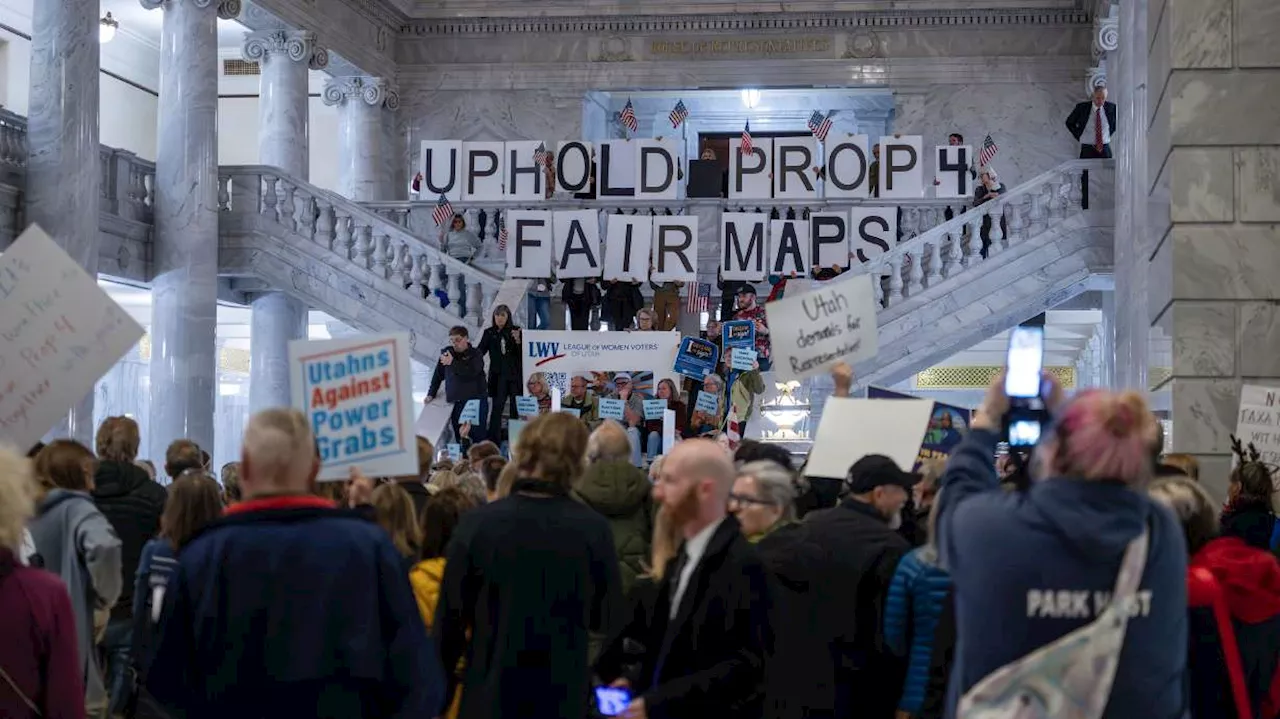
SALT LAKE CITY — The question of who should draw congressional maps in Utah remains contentious as state lawmakers, judges, and voters navigate the complexities of redistricting. The Utah Supreme Court recently ruled that lawmakers overstepped their authority when they amended Proposition 4, a 2018 initiative aimed at establishing nonpartisan guidelines for congressional districting and creating an independent commission to recommend new maps to the legislature.
The ongoing debate intensified after 3rd District Judge Dianna Gibson rejected a congressional map proposed by the legislature, which critics alleged was drawn to benefit Republican incumbents. Instead, she favored an alternative map submitted by plaintiffs challenging the legislature’s decision. This alternative would create a district in northern Salt Lake County likely to lean Democratic, contrasting sharply with the current situation where all four of Utah’s congressional seats are held by Republicans.
In response to the ruling, the state legislature convened a special session on March 15, 2024, to postpone the filing deadline for congressional candidates until March, allowing time for their appeal of Gibson’s decision to progress through the courts.
Voter Sentiment and Legislative Resistance
Despite the push for reform, leading Republicans in the legislature have resisted involving an independent commission in the redistricting process. They argue that it is not only their constitutional duty but also reflects what the voters desire. House Speaker Mike Schultz of Hooper recently shared a poll indicating that a significant majority of Utahns prefer their elected representatives to handle redistricting rather than the courts.
The poll, commissioned by the conservative Sutherland Institute, revealed that only 8% of voters believe judges should select congressional maps. However, the findings also indicated a more nuanced perspective. When asked to choose from seven options regarding who should determine district boundaries, the last three categories—county-level elected officials, state-level elected officials, and bodies elected by the public—collectively garnered 71% of the responses. None of the other options exceeded 10%.
Leah Murray, director of the Walker Institute of Politics at Weber State University, noted that the poll effectively elicited honest responses from voters without triggering partisan biases. This suggests that while the public may favor legislative control over redistricting, there is also significant support for broader involvement beyond the legislature.
The implications of the redistricting process extend beyond political maneuvering; they directly influence the representation of Utah’s diverse communities. As the legal appeals unfold, the discussions around who should wield the power to shape electoral boundaries are likely to continue. The resolution of this issue will not only affect the upcoming elections but could also reshape the political landscape in Utah for years to come.

Mrs. Claus for a Cause Returns to Montrose: Free Event Dec. 19-21

Putin Offers Security Guarantees for Ukraine in Urgent Talks

Ukraine Proposes Peace Plan to Trump as Tensions Over Territory Persist

Unemployment Claims Rise to 236,000 as Continuing Benefits Decline

Absolute Joker Takes Over Batman’s Iconic Life in Shocking Twist

Discover the Eyelash Growth Serum Transforming Beauty Routines

Time Names “Architects of AI” as 2025 Person of the Year

Homeland Security Secretary Noem Faces Intense Scrutiny Today

Absolute Joker Claims Batman’s Manor in Shocking Twist

Ohio State Study Uncovers Brain Connectivity and Function Links

Hamas Chief Stresses Disarmament Tied to Occupation’s End

University of Hawaiʻi Joins $25.6M AI Project for Disaster Monitoring

Megan Thee Stallion Exposes Alleged Online Attack by Bots

ALMA Discovers Companion Orbiting Giant Star π 1 Gruis

Researchers Challenge 200-Year-Old Physics Principle with Atomic Engines

Paloma Elsesser Shines at LA Event with Iconic Slicked-Back Bun

FDA Unveils Plan to Cut Drug Prices and Boost Biosimilars

Federal Agents Detain Driver in Addison; Protests Erupt Immediately
-
 Science1 month ago
Ohio State Study Uncovers Brain Connectivity and Function Links
-
 Politics2 months ago
Hamas Chief Stresses Disarmament Tied to Occupation’s End
-
Science1 month ago
University of Hawaiʻi Joins $25.6M AI Project for Disaster Monitoring
-
 Entertainment1 month ago
Megan Thee Stallion Exposes Alleged Online Attack by Bots
-
 Science4 weeks ago
ALMA Discovers Companion Orbiting Giant Star π 1 Gruis
-
 Science2 months ago
Researchers Challenge 200-Year-Old Physics Principle with Atomic Engines
-
 Entertainment1 month ago
Paloma Elsesser Shines at LA Event with Iconic Slicked-Back Bun
-
 World1 month ago
FDA Unveils Plan to Cut Drug Prices and Boost Biosimilars
-
 Top Stories2 months ago
Federal Agents Detain Driver in Addison; Protests Erupt Immediately
-

 Business1 month ago
Motley Fool Wealth Management Reduces Medtronic Holdings by 14.7%
-

 Entertainment1 month ago
Beloved Artist and Community Leader Gloria Rosencrants Passes Away
-

 Science2 months ago
Innovator Captures Light at 2 Billion Frames Per Second