
Politics
Trump Administration Pauses Immigration Applications from 19 Nations

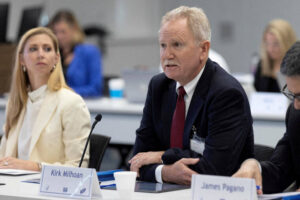
The Trump administration has announced a pause on all immigration applications from individuals hailing from 19 countries previously designated under a travel ban. This decision halts the processing of green cards and U.S. citizenship for a significant number of people, according to officials from the U.S. Citizenship and Immigration Services (USCIS). The affected nations include Iran, Sudan, Eritrea, and Haiti, among others, many of which are among the world’s poorest and most unstable.
The pause follows a recent attack in Washington, where authorities identified 29-year-old Rahmanullah Lakanwal as the suspect. Lakanwal had obtained asylum in April, prompting heightened scrutiny of immigration processes. In response to this incident, the administration is tightening controls on immigration, further complicating an already challenged system. Matthew Tragesser, a spokesperson for USCIS, emphasized the administration’s commitment to ensuring that those who achieve citizenship are “the best of the best,” asserting that citizenship is a privilege rather than a right.
Immigration lawyers have reported widespread cancellations of naturalization ceremonies and interviews for status adjustments without clear explanations. According to attorney Sara Schwartz, the pause exacerbates existing backlogs, comparing the situation to a worsening “traffic jam.” The implications of this decision extend beyond individual applicants, affecting the broader immigration framework in the United States.
Proposed Changes to Fuel Economy Standards
In a related development, the Trump administration is expected to propose significant changes to automobile fuel efficiency standards initially set under the Biden administration. Scheduled for announcement on December 4, 2023, this proposal aims to weaken the Corporate Average Fuel Economy (CAFE) standards established to reduce the country’s reliance on foreign oil and mitigate greenhouse gas emissions.
The CAFE standards, enacted by Congress in 1975, have been progressively tightened over the years to push automakers toward enhancing fuel efficiency. Under the Biden administration’s finalized rule from June 2024, manufacturers were required to achieve an average fuel efficiency of approximately 50 miles per gallon for new vehicles by the model year 2031. This regulation was projected to significantly reduce fuel costs and prevent over 710 million metric tons of carbon dioxide from entering the atmosphere by 2050.
Automakers, including representatives from Ford Motor and General Motors, have been invited to the announcement at the White House. Following the proposal, the Department of Transportation is expected to seek public feedback before finalizing any changes next year. Meanwhile, the Environmental Protection Agency (EPA) is anticipated to introduce its own revised limits on greenhouse gas emissions for vehicles in the upcoming months.
Court Blocks Planned Parenthood Funding Cuts
In another significant political development, U.S. District Judge Indira Talwani issued a ruling blocking the Trump administration from enforcing a provision in a tax and domestic policy bill that would deny Planned Parenthood and its affiliates in 22 states access to Medicaid funding. The provision aimed to cut funding for organizations that provide reproductive health services, including abortions.
Judge Talwani determined that the Democratic state attorneys general challenging the provision were likely to succeed in proving that it imposes an unconstitutional retroactive condition on Medicaid participation. This ruling follows a prior decision that temporarily blocked the implementation of this law on different grounds, which had been put on hold by a federal appeals court in September.
Following the ruling, a spokesperson for Planned Parenthood hailed the decision as a recognition of the law’s unconstitutional nature. As the White House and the Department of Health and Human Services have not responded to requests for comment, the implications of this ruling may affect funding for reproductive services across the affected states.
The ongoing developments reflect the complex interplay between immigration policies, environmental regulations, and healthcare funding under the current administration, shaping the landscape for millions of Americans and residents seeking to enter the country.

**One Dead, Three Injured in Urgent I-57 Crash on Chicago’s South Side**

Techman Robot Unveils AI Innovations to Transform Manufacturing at iREX 2025

Na Makua Invitational Christmas Gift Fair Launches This Weekend

Obamacare Subsidies Set to Expire, Republicans Quietly Unconcerned

Volcano Art Center Launches 26th Annual Wreath Exhibition

Trump Administration Pauses Immigration Applications from 19 Nations

Study Reveals Human Gene Maps Favor European Ancestry

Man Arrested for Violent Attack on NYU Student in Greenwich Village

Young Brands Surge to Prominence, Captivating Fans Fast

Ohio State Study Uncovers Brain Connectivity and Function Links

Hamas Chief Stresses Disarmament Tied to Occupation’s End

Megan Thee Stallion Exposes Alleged Online Attack by Bots

University of Hawaiʻi Joins $25.6M AI Project for Disaster Monitoring

Researchers Challenge 200-Year-Old Physics Principle with Atomic Engines

Paloma Elsesser Shines at LA Event with Iconic Slicked-Back Bun

FDA Unveils Plan to Cut Drug Prices and Boost Biosimilars

Federal Agents Detain Driver in Addison; Protests Erupt Immediately

Motley Fool Wealth Management Reduces Medtronic Holdings by 14.7%
-
 Science1 month ago
Ohio State Study Uncovers Brain Connectivity and Function Links
-
 Politics1 month ago
Hamas Chief Stresses Disarmament Tied to Occupation’s End
-
 Entertainment1 month ago
Megan Thee Stallion Exposes Alleged Online Attack by Bots
-
Science1 month ago
University of Hawaiʻi Joins $25.6M AI Project for Disaster Monitoring
-
 Science2 months ago
Researchers Challenge 200-Year-Old Physics Principle with Atomic Engines
-
 Entertainment1 month ago
Paloma Elsesser Shines at LA Event with Iconic Slicked-Back Bun
-
 World1 month ago
FDA Unveils Plan to Cut Drug Prices and Boost Biosimilars
-
 Top Stories1 month ago
Federal Agents Detain Driver in Addison; Protests Erupt Immediately
-
 Business1 month ago
Motley Fool Wealth Management Reduces Medtronic Holdings by 14.7%
-

 Entertainment1 month ago
Beloved Artist and Community Leader Gloria Rosencrants Passes Away
-

 Science3 weeks ago
ALMA Discovers Companion Orbiting Giant Star π 1 Gruis
-

 Politics2 months ago
NHP Foundation Secures Land for 158 Affordable Apartments in Denver