
Politics
Orbán and Putin Discuss Energy Ties Amid EU Isolation Efforts

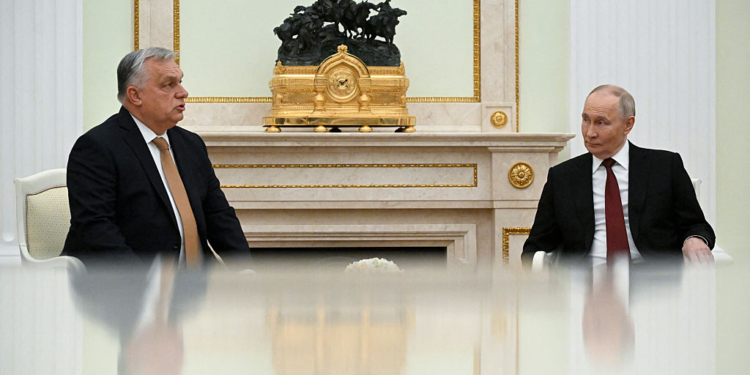
Hungarian Prime Minister Viktor Orbán met with Russian President Vladimir Putin in Moscow on March 15, 2024, reaffirming Hungary’s commitment to maintaining strong energy ties with Russia. This visit comes as Hungary defies the European Union (EU) amidst ongoing efforts to isolate Russia due to its invasion of Ukraine.
During the nearly four-hour meeting, Orbán emphasized the importance of Russian energy to Hungary’s supply, stating, “We have important areas of cooperation, and we haven’t given up on any area of that cooperation, no matter the external pressure.” He further remarked, “Russian energy forms the basis of Hungary’s energy supply, now and in the future.” This statement underscores Hungary’s position as one of Russia’s closest allies within the EU.
While European nations have largely sought to reduce reliance on Russian oil and gas, Hungary has consistently defended its energy relationship with Moscow. Critics argue that Hungary could explore alternative energy sources, but Orbán has resisted EU initiatives aimed at phasing out Russian fossil fuels by 2027. His administration warns that cutting imports could lead to severe economic repercussions.
In addition to his discussions with Putin, Orbán earlier this month met with former President Donald Trump in Washington, securing an exemption from U.S. sanctions imposed on Russian energy firms, Lukoil and Rosneft. He announced that this waiver would help ensure Hungary’s access to affordable Russian oil and gas through the winter and into the following year, stating, “Now all we need is oil and gas, which we can buy from the Russians. I am going there to ensure Hungary’s energy supply at an affordable price both this winter and next year.”
The meeting in Moscow occurs amidst a backdrop of escalating conflict in Ukraine. Ukrainian officials reported ongoing strikes on Russian oil refineries and military installations, while Russia claimed to have intercepted over 130 Ukrainian drones in a single night. Ukrainian forces also detected multiple missile launches toward the Khmelnytskyi region, including at least one Kinzhal missile, further intensifying the situation.
EU and NATO officials have criticized Hungary’s stance, indicating that it undermines collective efforts to confront Russian aggression. In contrast, Putin praised Orbán’s “balanced position” regarding the ongoing conflict in Ukraine, reflecting the solidarity between the two nations.
As the geopolitical landscape evolves, Hungary’s decision to maintain close ties with Russia raises significant questions about the future of EU unity in addressing international crises. The ongoing energy discussions between Hungary and Russia may have lasting implications for the region’s energy security and economic stability.

Boise State Battles UNLV Tonight for MWC Championship Glory

Millville Woman Arrested for Threatening U-Haul Worker with Baton

Japan’s PM Takaichi Commits to Fiscal Management Amid Rising Rates

Bitcoin Plummets to $87K Amid Tether Concerns – Urgent Update

Tottenville Falls to Erasmus Hall in PSAL 4A Championship, 34-27

Stanford Study Reveals Shark Teeth Clues to Prevent Extinction

Englewood Church Members Unite After Thanksgiving Fire Devastation

Researchers Urge Label Changes for Low-Alcohol Drinks to Protect Pregnant Women

Community Unites to Attempt World Record in Christmas Cookie Exchange

Ohio State Study Uncovers Brain Connectivity and Function Links

Hamas Chief Stresses Disarmament Tied to Occupation’s End

Megan Thee Stallion Exposes Alleged Online Attack by Bots

University of Hawaiʻi Joins $25.6M AI Project for Disaster Monitoring

Researchers Challenge 200-Year-Old Physics Principle with Atomic Engines

Paloma Elsesser Shines at LA Event with Iconic Slicked-Back Bun

FDA Unveils Plan to Cut Drug Prices and Boost Biosimilars

Federal Agents Detain Driver in Addison; Protests Erupt Immediately

Motley Fool Wealth Management Reduces Medtronic Holdings by 14.7%
-
 Science1 month ago
Ohio State Study Uncovers Brain Connectivity and Function Links
-
 Politics1 month ago
Hamas Chief Stresses Disarmament Tied to Occupation’s End
-
 Entertainment1 month ago
Megan Thee Stallion Exposes Alleged Online Attack by Bots
-
Science4 weeks ago
University of Hawaiʻi Joins $25.6M AI Project for Disaster Monitoring
-
 Science2 months ago
Researchers Challenge 200-Year-Old Physics Principle with Atomic Engines
-
 Entertainment1 month ago
Paloma Elsesser Shines at LA Event with Iconic Slicked-Back Bun
-
 World1 month ago
FDA Unveils Plan to Cut Drug Prices and Boost Biosimilars
-
 Top Stories1 month ago
Federal Agents Detain Driver in Addison; Protests Erupt Immediately
-
 Business1 month ago
Motley Fool Wealth Management Reduces Medtronic Holdings by 14.7%
-

 Entertainment1 month ago
Beloved Artist and Community Leader Gloria Rosencrants Passes Away
-

 Politics1 month ago
NHP Foundation Secures Land for 158 Affordable Apartments in Denver
-

 Science2 weeks ago
ALMA Discovers Companion Orbiting Giant Star π 1 Gruis