
Politics
North Dakota Governor Calls for Vigilance Against Sabotage

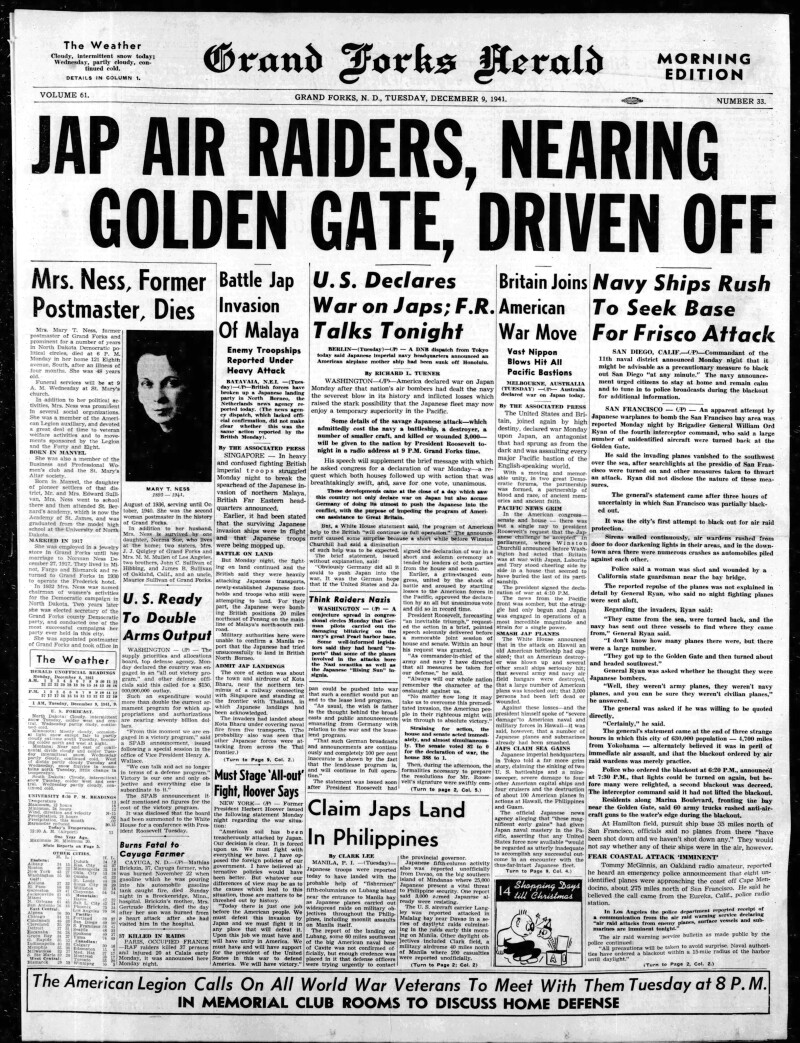
On December 9, 1941, North Dakota Governor John Moses urged citizens to remain vigilant against potential sabotage following Japan’s declaration of war against the United States. This call for heightened security came shortly after the attack on Pearl Harbor, marking a pivotal moment in U.S. history and the onset of direct involvement in World War II.
In a statement to the public, Governor Moses emphasized the importance of unity and preparedness. He stated, “Unity is not only essential, but it is a foredrawn conclusion that the American people stand behind our government in the crisis created by the indefensible unprovoked attack by Japan on the U.S.” He urged citizens to take precautions against potential sabotage targeting transportation facilities, highways, and industries, highlighting the need for immediate action to protect critical infrastructure.
To bolster security measures, Governor Moses coordinated with Thomas Moodie, the North Dakota administrator for the Works Progress Administration (WPA), to station WPA employees at the Bismarck airport. This facility housed approximately $60,000 in materials earmarked for an improvement program. Additionally, members of the highway patrol were assigned to guard the bridge connecting Bismarck and Mandan, further illustrating the urgency of the situation.
Organizing for Defense
Recognizing the potential for sabotage, Governor Moses planned to meet with Adjutant General Heber L. Edwards to discuss the formation of a home guard. North Dakota had not had such a unit since the National Guard was called into service, and the governor believed that a voluntary home guard could provide essential support during this critical time.
Moses also mentioned the possibility of convening a meeting with the state defense council chairmen to assess the need for further action. This proactive stance was underscored by a communication from Secretary of War Henry L. Stimson, who advised the governor to prepare state forces for cooperation with federal troops to protect key structures and facilities vital to national defense.
Community Response and Future Plans
The plan to establish a home guard was met with support from various organizations, including the Veterans of Foreign Wars. Among those engaged in discussions about the guard’s organization were C. E. Dresser, state commander of the Veterans of Foreign Wars, and Brigadier General L. R. Baird, executive officer of the state defense council.
The necessity of securing the Bismarck airport and the bridge indicated the immediate need for defense measures. Adjutant General Edwards noted that the state intended to organize a guard promptly, explaining that enlistment would be voluntary and aimed at addressing the emergency situation.
As the war escalated, the actions taken by Governor Moses and local leaders reflected a broader commitment to national security and the protection of the home front. The events of December 9, 1941, served as a stark reminder of the challenges that lay ahead for North Dakota and the nation as a whole.

Bulgaria’s Government Resigns Amid Mass Protests Before Eurozone Entry

Mrs. Claus for a Cause Returns to Montrose: Free Event Dec. 19-21

Putin Offers Security Guarantees for Ukraine in Urgent Talks

Ukraine Proposes Peace Plan to Trump as Tensions Over Territory Persist

Unemployment Claims Rise to 236,000 as Continuing Benefits Decline

Absolute Joker Takes Over Batman’s Iconic Life in Shocking Twist

Discover the Eyelash Growth Serum Transforming Beauty Routines

Time Names “Architects of AI” as 2025 Person of the Year

Homeland Security Secretary Noem Faces Intense Scrutiny Today

Ohio State Study Uncovers Brain Connectivity and Function Links

Hamas Chief Stresses Disarmament Tied to Occupation’s End

University of Hawaiʻi Joins $25.6M AI Project for Disaster Monitoring

Megan Thee Stallion Exposes Alleged Online Attack by Bots

ALMA Discovers Companion Orbiting Giant Star π 1 Gruis

Researchers Challenge 200-Year-Old Physics Principle with Atomic Engines

Paloma Elsesser Shines at LA Event with Iconic Slicked-Back Bun

FDA Unveils Plan to Cut Drug Prices and Boost Biosimilars

Federal Agents Detain Driver in Addison; Protests Erupt Immediately
-
 Science1 month ago
Ohio State Study Uncovers Brain Connectivity and Function Links
-
 Politics2 months ago
Hamas Chief Stresses Disarmament Tied to Occupation’s End
-
Science1 month ago
University of Hawaiʻi Joins $25.6M AI Project for Disaster Monitoring
-
 Entertainment1 month ago
Megan Thee Stallion Exposes Alleged Online Attack by Bots
-
 Science4 weeks ago
ALMA Discovers Companion Orbiting Giant Star π 1 Gruis
-
 Science2 months ago
Researchers Challenge 200-Year-Old Physics Principle with Atomic Engines
-
 Entertainment1 month ago
Paloma Elsesser Shines at LA Event with Iconic Slicked-Back Bun
-
 World1 month ago
FDA Unveils Plan to Cut Drug Prices and Boost Biosimilars
-
 Top Stories2 months ago
Federal Agents Detain Driver in Addison; Protests Erupt Immediately
-

 Business1 month ago
Motley Fool Wealth Management Reduces Medtronic Holdings by 14.7%
-

 Entertainment1 month ago
Beloved Artist and Community Leader Gloria Rosencrants Passes Away
-

 Science2 months ago
Innovator Captures Light at 2 Billion Frames Per Second