
Health
Texas A&M Researchers Use Nanoflowers to Energize Aging Cells

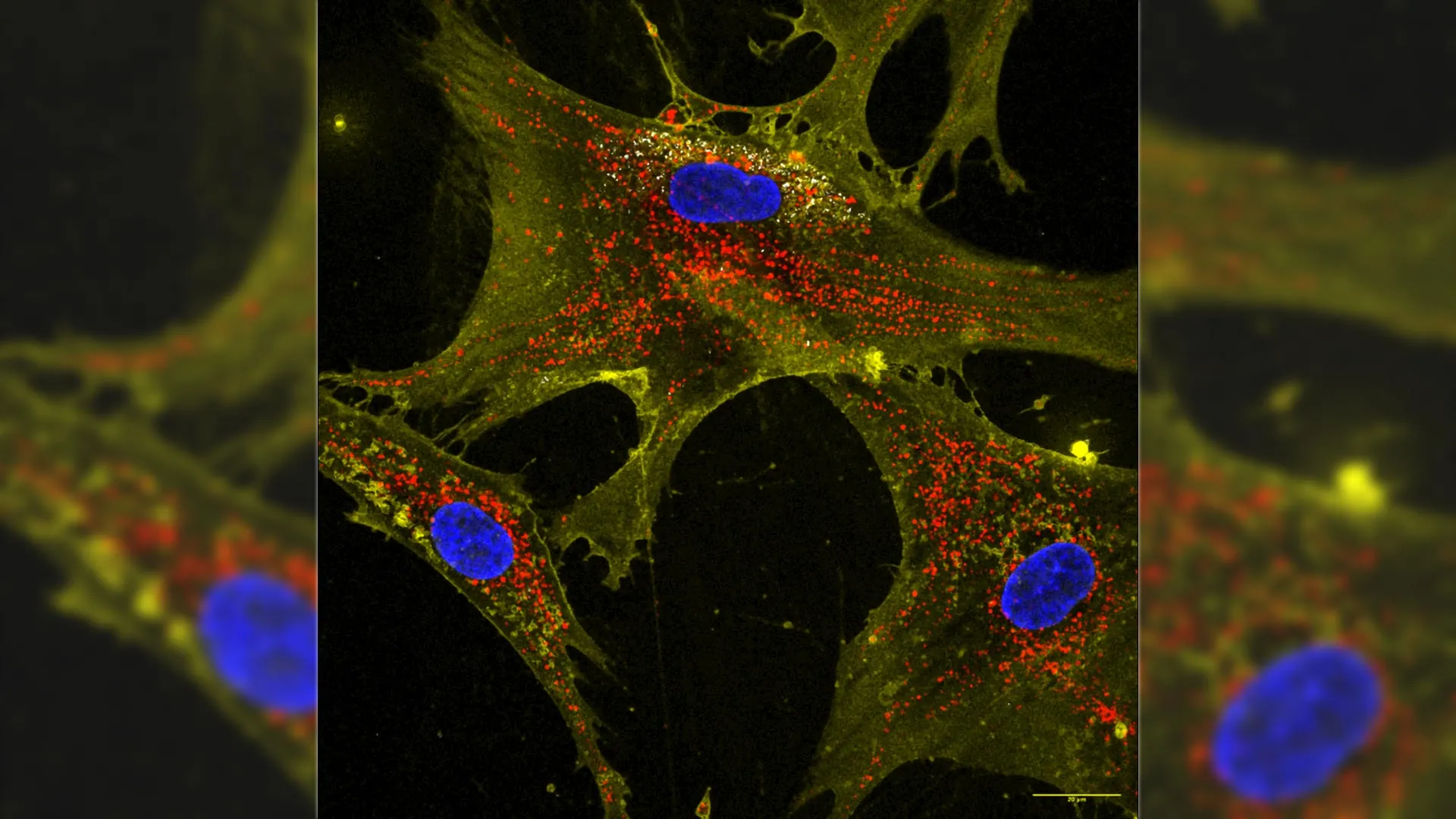
Researchers at Texas A&M University have developed a revolutionary method to enhance the performance of stem cells, potentially transforming the treatment of aging tissues and degenerative diseases. By using microscopic particles known as nanoflowers, the team successfully doubled the number of mitochondria produced by stem cells. This breakthrough could offer long-term solutions for conditions linked to cellular energy decline, such as heart disease and neurodegenerative disorders.
The findings, published on November 27, 2025, in the Proceedings of the National Academy of Sciences, were led by Dr. Akhilesh K. Gaharwar and Ph.D. student John Soukar, along with their colleagues in the Department of Biomedical Engineering. The researchers demonstrated how energized stem cells could effectively transfer excess mitochondria to damaged or aging cells, revitalizing their energy production and enhancing overall cell health.
Innovative Approach to Cellular Energy Loss
As human cells age or suffer damage from conditions like Alzheimer’s disease or exposure to chemotherapy, their ability to generate energy diminishes. This decline is largely due to the reduction in mitochondria, the organelles responsible for providing energy. The new technique developed by the Texas A&M team addresses this issue by enhancing the natural capacity of stem cells to rejuvenate other cells.
When the stem cells were treated with nanoflowers, they became “mitochondrial biofactories,” producing two to four times more mitochondria than untreated cells. Once enriched, these stem cells shared their surplus mitochondria with neighboring damaged cells, restoring their vitality and resistance to cell death. “We have trained healthy cells to share their spare batteries with weaker ones,” explained Gaharwar. “By increasing the number of mitochondria inside donor cells, we can help aging or damaged cells regain their vitality—without any genetic modification or drugs.”
Long-Lasting Therapeutic Potential
Current methods to boost mitochondrial levels often involve short-lived drug treatments that require frequent administration. In contrast, the nanoflower technology, composed of molybdenum disulfide, is designed to remain within cells for extended periods, providing a more sustainable solution. This could mean that therapies based on this approach might only need to be administered once a month.
“This is an early but exciting step toward recharging aging tissues using their own biological machinery,” Gaharwar noted. If further studies validate these results, the implications for treating various degenerative conditions could be significant.
The versatility of this technique is another promising aspect. While still in its infancy, it has the potential to address a wide range of ailments by injecting stem cells directly into affected tissues. “You could put the cells anywhere in the patient,” Soukar stated. “So for cardiomyopathy, you can treat cardiac cells directly—putting the stem cells in or near the heart.”
The project has received substantial funding from reputable sources, including the National Institutes of Health, the Cancer Prevention and Research Institute of Texas, and the Department of Defense. Collaborative support from Texas A&M researchers such as Dr. Irtisha Singh, Dr. Vishal Gohil, and Dr. Feng Zhao has also been crucial in advancing this research.
As the team continues its work, they hope to explore new applications for this technology, potentially paving the way for innovative treatments that could significantly enhance the quality of life for those suffering from age-related diseases.

Stanford Study Reveals Shark Teeth Clues to Prevent Extinction

Englewood Church Members Unite After Thanksgiving Fire Devastation

Researchers Urge Label Changes for Low-Alcohol Drinks to Protect Pregnant Women

Community Unites to Attempt World Record in Christmas Cookie Exchange

Agree Realty and American Assets Trust: A Comprehensive Investment Comparison

UK Universities Harness AI to Enhance Research Quality Assessment

Browns’ Mistakes Lead to 23rd Losing Season Since 1999

Trump Promises Release of MRI Results Despite Uncertainty on Scans

Mayor Appoints Alan Wong as New District 4 Supervisor Amid Controversy

Ohio State Study Uncovers Brain Connectivity and Function Links

Hamas Chief Stresses Disarmament Tied to Occupation’s End

Megan Thee Stallion Exposes Alleged Online Attack by Bots

University of Hawaiʻi Joins $25.6M AI Project for Disaster Monitoring

Researchers Challenge 200-Year-Old Physics Principle with Atomic Engines

Paloma Elsesser Shines at LA Event with Iconic Slicked-Back Bun

FDA Unveils Plan to Cut Drug Prices and Boost Biosimilars

Federal Agents Detain Driver in Addison; Protests Erupt Immediately

Motley Fool Wealth Management Reduces Medtronic Holdings by 14.7%
-
 Science1 month ago
Ohio State Study Uncovers Brain Connectivity and Function Links
-
 Politics1 month ago
Hamas Chief Stresses Disarmament Tied to Occupation’s End
-
 Entertainment1 month ago
Megan Thee Stallion Exposes Alleged Online Attack by Bots
-
Science4 weeks ago
University of Hawaiʻi Joins $25.6M AI Project for Disaster Monitoring
-
 Science2 months ago
Researchers Challenge 200-Year-Old Physics Principle with Atomic Engines
-
 Entertainment1 month ago
Paloma Elsesser Shines at LA Event with Iconic Slicked-Back Bun
-
 World1 month ago
FDA Unveils Plan to Cut Drug Prices and Boost Biosimilars
-
 Top Stories1 month ago
Federal Agents Detain Driver in Addison; Protests Erupt Immediately
-
 Business1 month ago
Motley Fool Wealth Management Reduces Medtronic Holdings by 14.7%
-

 Entertainment1 month ago
Beloved Artist and Community Leader Gloria Rosencrants Passes Away
-

 Politics1 month ago
NHP Foundation Secures Land for 158 Affordable Apartments in Denver
-

 Science2 weeks ago
ALMA Discovers Companion Orbiting Giant Star π 1 Gruis