
World
Woman Fights DMV Revocation of Personalized License Plate

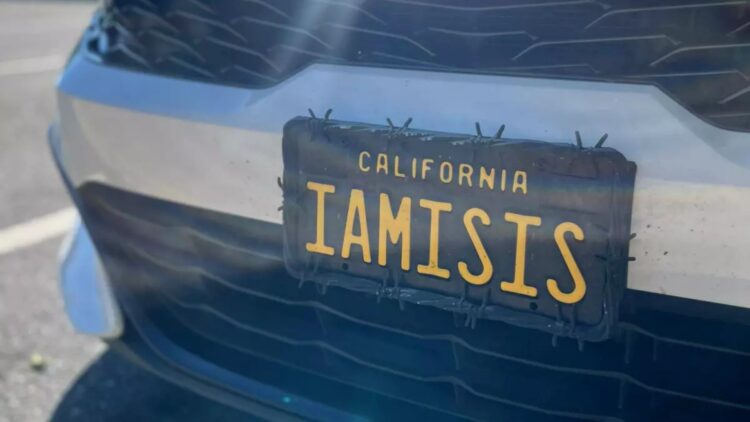
A woman in Sacramento, California, is challenging the decision of the California Department of Motor Vehicles (DMV) to revoke her personalized license plate reading “IAMISIS.” The DMV deemed the plate offensive and a potential incitement to violence. Isis Wharton, who has paid annual fees of $50 since 2022 for the plate, asserts that it represents her name, derived from the ancient Egyptian goddess associated with healing and maternal love.
Wharton received a letter from the DMV stating that her plate could be interpreted as a reference to the terrorist organization known as ISIS. In her response, she expressed surprise and hurt, stating, “I felt hurt and offended by them, which implies that my name was something that would incite violence.” Wharton insists that her name should not be linked to a group known for its violent actions.
DMV’s Policy on Personalized Plates
The California DMV has established guidelines for personalized license plates to ensure they do not contain content that could be deemed offensive or inappropriate. This includes phrases that may be sexual in nature, profane, or that convey negative messages about specific groups based on race, religion, or other characteristics. The DMV maintains that it must evaluate the context in which language and symbols are used, recognizing that meanings can vary greatly across different cultures.
“The DMV understands that language and symbols can have different meanings across cultures and communities,” the agency stated. Its policy outlines several grounds for rejecting a plate, including those that could incite violence, misrepresent government affiliation, or contain slang that resembles offensive terms.
Wharton’s case is not isolated. In 2020, the DMV faced complaints from residents regarding the rejection of their personalized plates. Five individuals, including the director of the DMV, Steve Gordon, raised concerns that the DMV’s actions infringed upon their First Amendment rights. A court ultimately ruled in favor of these drivers, stating that their plates were protected forms of private speech.
Other Controversial License Plate Rejections
The DMV has rejected numerous personalized plates that sparked similar controversies. Examples include “OGWOOLF,” which was said to reference a band; “SLAAYRR,” which the DMV claimed could be interpreted as hostile; and “QUEER,” deemed potentially offensive. Other rejected plates included “DUKNA,” which was considered to sound like a vulgar term, and “BO11LUX,” which the DMV stated had a sexual connotation.
These cases reflect ongoing tensions between personal expression and regulatory standards set by the DMV. Wharton’s determination to reclaim her personalized plate highlights the broader implications of how language and identity are navigated in public spaces.
“I choose to fight because I believe this could be a great example of bringing back the powerful and peaceful name Isis and not giving all the negative power to the terrorist group,” she stated, emphasizing her commitment to reclaiming her identity.
As her appeal continues, the outcome may have significant implications not only for Wharton but also for other individuals facing similar challenges regarding personalized license plates and free speech.

Urgent Swatting Incident Ties Up Emergency Resources in Alabama

Urgent Tax Alert: Claim Your Deductions Before April 15!

Scientists Investigate Cosmic Defects: Where Are They Now?

Spring Bocce Leagues Open Registration in Rapid City

CALV Offers Essential Communication Class for Real Estate Pros

Samsung Galaxy Watch 9 Set for Larger 435mAh Battery Upgrade

Healthy Choice Wellness Reports Earnings, Stock Sees Uptick

Prince Harry Claims to Be ‘Antidote to Andrew’ Amid Royal Crisis

Pet Owners Weigh Kibble Against Fresh Dog Food Options

ALMA Discovers Companion Orbiting Giant Star π 1 Gruis

U.S. Visa Rescheduling Hits H‐1B Applicants as New Vetting Rules Take Effect

University of Hawaiʻi Joins $25.6M AI Project for Disaster Monitoring

F-22 Raptor vs. Su-57 Felon: A 2025 Fighter Jet Comparison

Recent Divorce Judgments from Iberia Parish Court Records

Ohio State Study Uncovers Brain Connectivity and Function Links

Prince Andrew Faces Fallout from Scandals and Allegations

Urgent: Flight Cancellations Loom at Texas Airports Amid Shutdown

Frank Dunn, Esteemed Builder and Community Leader, Passes Away at 89
-
 Science8 months ago
ALMA Discovers Companion Orbiting Giant Star π 1 Gruis
-
 Politics6 months ago
U.S. Visa Rescheduling Hits H‐1B Applicants as New Vetting Rules Take Effect
-
Science8 months ago
University of Hawaiʻi Joins $25.6M AI Project for Disaster Monitoring
-
 World8 months ago
F-22 Raptor vs. Su-57 Felon: A 2025 Fighter Jet Comparison
-
 Politics8 months ago
Recent Divorce Judgments from Iberia Parish Court Records
-
 Science9 months ago
Ohio State Study Uncovers Brain Connectivity and Function Links
-
 World8 months ago
Prince Andrew Faces Fallout from Scandals and Allegations
-
 Top Stories8 months ago
Urgent: Flight Cancellations Loom at Texas Airports Amid Shutdown
-
 Lifestyle8 months ago
Frank Dunn, Esteemed Builder and Community Leader, Passes Away at 89
-

 Business8 months ago
Appian Recognizes 2025 Partner Award Winners for Enterprise Innovation
-

 Entertainment7 months ago
Malachi Barton Tops Google Searches as Disney’s Rising Star of 2025
-

 Science9 months ago
Innovator Captures Light at 2 Billion Frames Per Second