
Science
Apple TV+ Unveils ‘Prehistoric Planet: Ice Age’ with Advanced Tech

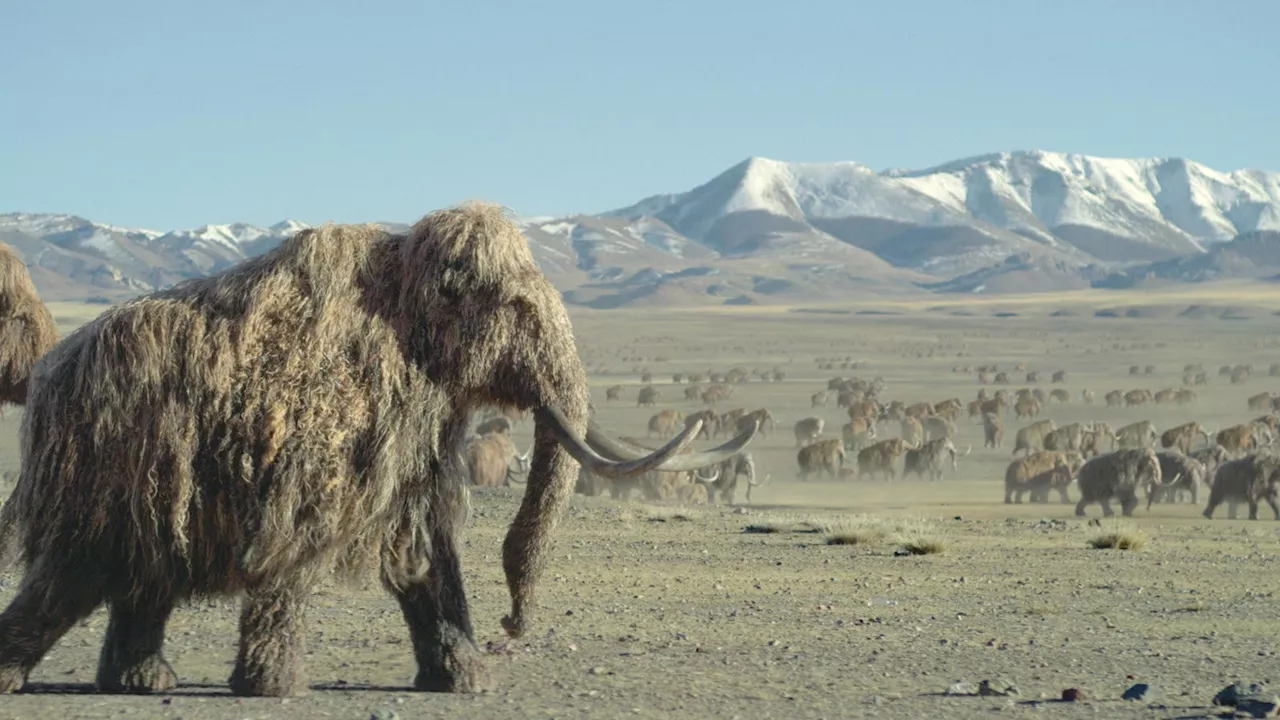
Apple TV+ has launched a groundbreaking new series, Prehistoric Planet: Ice Age, which brings the Pleistocene epoch to life using cutting-edge technology. The five-part series, available for streaming from November 26, 2023, features captivating visuals that depict a dynamic world inhabited by woolly mammoths, dire wolves, and other Ice Age creatures.
Exploring the Pleistocene with Innovative Techniques
Unlike traditional depictions of the Ice Age that often reduce it to a simplistic postcard of endless snow and a few iconic animals, this series offers a more intricate view. It showcases a period marked by climate volatility, significant migrations, and diverse megafauna, providing a realistic portrayal of an era that was as complex as it was fascinating.
According to Mike Gunton, the executive producer, the decision to focus on the Pleistocene was driven by its status as one of the most tumultuous periods in Earth’s history. Gunton described this era as one where “nature was having to respond in remarkable ways” to dramatic environmental changes. This focus allows the series to resonate with contemporary audiences facing similar climate challenges.
The narrative centers around the behaviors of these prehistoric animals rather than just their biology. Viewers witness the struggles and social dynamics of creatures like giant sloths and massive ground armadillos, as they navigate their surroundings in search of food and shelter. Gunton emphasized that the series aims to make viewers feel as though they are witnessing real animals in their natural habitat, rather than observing them through the lens of a digital museum exhibit.
A Fusion of Science and Artistry
To achieve this level of realism, the production team employed a range of advanced technologies. The backbone of the visual storytelling is built on high-quality visual effects, but the process involves much more than just rendering images. The team used high-resolution photogrammetry to scan landscapes across 15 countries, ensuring that the backdrops were as accurate as possible.
Drones played a pivotal role in choreographing animal interactions, while full-scale puppets provided animators with physical references, allowing for more lifelike movements. Gunton pointed out that the collaboration between artists and scientists resulted in new insights that enhanced the storytelling. For instance, when animators needed to portray the movement of a giant kangaroo, they consulted researchers to understand its locomotion accurately.
This innovative approach illustrates how emerging technologies, including biome modeling and AI-assisted movement studies, are transforming natural history storytelling. The result is a captivating narrative that draws viewers into an authentic world shaped by climate shifts and the struggle for survival.
As the series progresses, it explores the adaptability of species in the face of environmental changes. Viewers encounter scenarios where woolly rhinos confront scimitar-toothed cats and learn how ecosystems evolved over time. The seamless integration of real footage with CGI not only enhances the viewing experience but also keeps audiences engaged and grounded in reality.
Gunton noted the subtle parallels between the challenges faced by Ice Age creatures and the environmental issues confronting modern society. The series does not preach but instead encourages viewers to draw their own conclusions through its immersive storytelling.
Ultimately, Prehistoric Planet: Ice Age serves as both entertainment and a reminder of the lessons that the past holds for us today. By utilizing every available tool—from advanced visual effects to genomic studies of permafrost carcasses—the series effectively illustrates the impact of climate change on life throughout history. It is an engaging exploration of how ecosystems respond to shifts in their environment, making the Ice Age feel not just a distant memory, but a poignant reflection of our current reality.

Urgent Swatting Incident Ties Up Emergency Resources in Alabama

Urgent Tax Alert: Claim Your Deductions Before April 15!

Scientists Investigate Cosmic Defects: Where Are They Now?

Spring Bocce Leagues Open Registration in Rapid City

CALV Offers Essential Communication Class for Real Estate Pros

Samsung Galaxy Watch 9 Set for Larger 435mAh Battery Upgrade

Healthy Choice Wellness Reports Earnings, Stock Sees Uptick

Prince Harry Claims to Be ‘Antidote to Andrew’ Amid Royal Crisis

Pet Owners Weigh Kibble Against Fresh Dog Food Options

ALMA Discovers Companion Orbiting Giant Star π 1 Gruis

U.S. Visa Rescheduling Hits H‐1B Applicants as New Vetting Rules Take Effect

University of Hawaiʻi Joins $25.6M AI Project for Disaster Monitoring

F-22 Raptor vs. Su-57 Felon: A 2025 Fighter Jet Comparison

Ohio State Study Uncovers Brain Connectivity and Function Links

Recent Divorce Judgments from Iberia Parish Court Records

Prince Andrew Faces Fallout from Scandals and Allegations

Urgent: Flight Cancellations Loom at Texas Airports Amid Shutdown

Frank Dunn, Esteemed Builder and Community Leader, Passes Away at 89
-
 Science8 months ago
ALMA Discovers Companion Orbiting Giant Star π 1 Gruis
-
 Politics6 months ago
U.S. Visa Rescheduling Hits H‐1B Applicants as New Vetting Rules Take Effect
-
Science8 months ago
University of Hawaiʻi Joins $25.6M AI Project for Disaster Monitoring
-
 World8 months ago
F-22 Raptor vs. Su-57 Felon: A 2025 Fighter Jet Comparison
-
 Science9 months ago
Ohio State Study Uncovers Brain Connectivity and Function Links
-
 Politics8 months ago
Recent Divorce Judgments from Iberia Parish Court Records
-
 World8 months ago
Prince Andrew Faces Fallout from Scandals and Allegations
-
 Top Stories8 months ago
Urgent: Flight Cancellations Loom at Texas Airports Amid Shutdown
-
 Lifestyle8 months ago
Frank Dunn, Esteemed Builder and Community Leader, Passes Away at 89
-

 Business8 months ago
Appian Recognizes 2025 Partner Award Winners for Enterprise Innovation
-

 Entertainment6 months ago
Malachi Barton Tops Google Searches as Disney’s Rising Star of 2025
-

 Science9 months ago
Innovator Captures Light at 2 Billion Frames Per Second