
World
US Navy and Marines: A Detailed Comparison of Aircraft Fleets

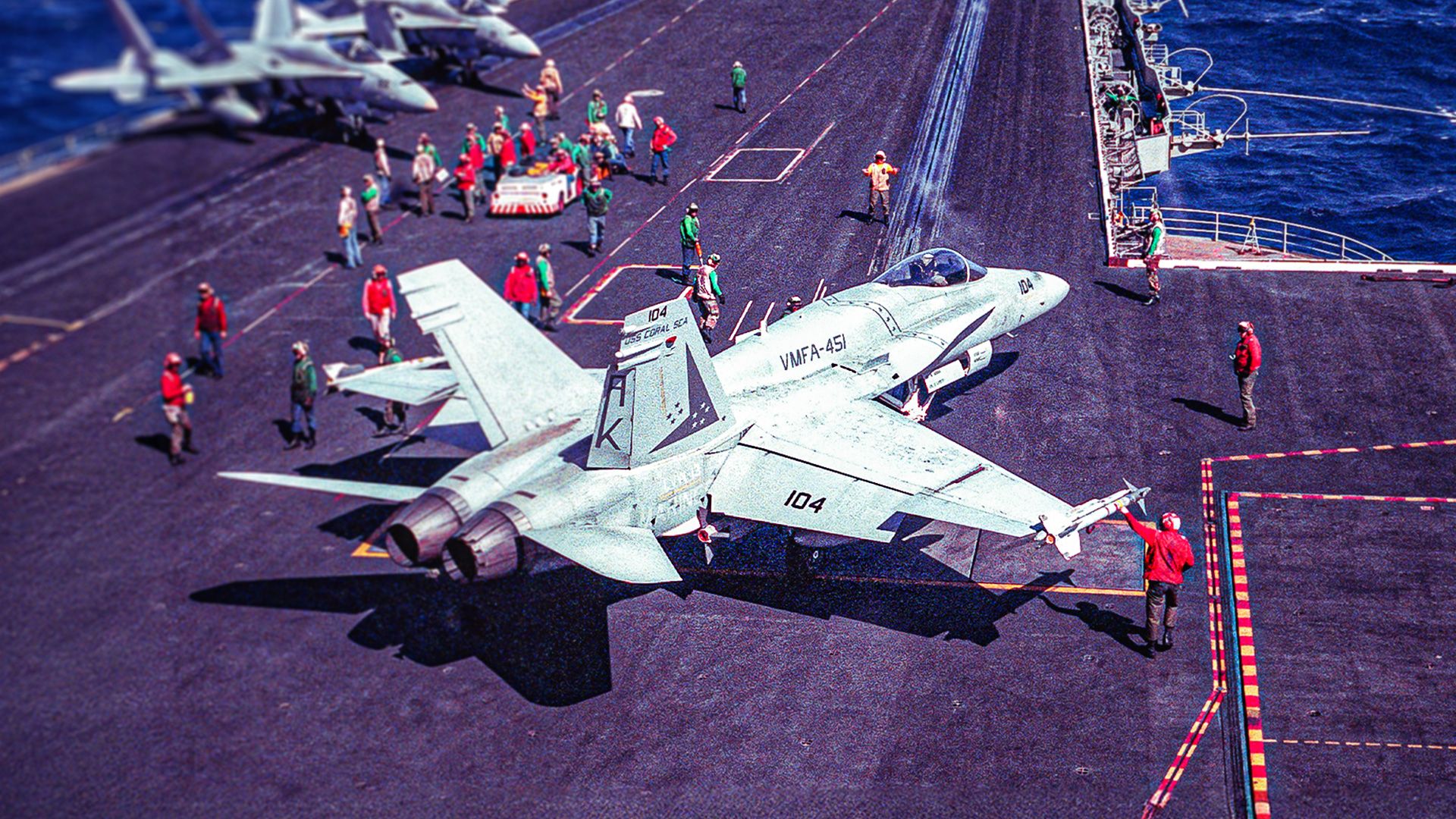
The United States Navy and the Marine Corps operate extensive fleets of aircraft tailored to their distinct missions. While both branches launch operations from the same aircraft carriers, their aircraft serve different roles in military strategy. The Navy focuses on maritime warfare with unique platforms, while the Marine Corps emphasizes support for ground troops through specialized aircraft. Together, they maintain a combined inventory of around 4,000 aircraft, showcasing both overlap and distinction in capabilities.
Comparative Fleet Overview
The Navy’s aircraft fleet is built to ensure sea control, power projection from carriers, and maritime awareness. It includes approximately 4,000 aircraft, featuring the F/A-18E/F Super Hornet as the backbone of carrier aviation, with nearly 600 units in active service. The Navy is introducing the F-35C Lightning II, a carrier variant of the fifth-generation fighter, with around 50 currently operational and over 200 on order. The planned F/A-XX fighter aims to replace the aging Super Hornet fleet, expected to serve until the 2040s. This new aircraft will incorporate advanced stealth technology, artificial intelligence, and a projected operational range that exceeds the F-35C by 25%.
Notably, the E-2D Advanced Hawkeye serves as the airborne early warning and control aircraft for carrier strike groups, with approximately 83 units in service. The P-8A Poseidon operates as the primary anti-submarine warfare and maritime patrol aircraft, numbering around 118. The Navy also utilizes the E-6B Mercury for strategic command and communications, as well as the MQ-4C Triton unmanned aerial vehicle (UAV) for maritime reconnaissance. Future plans include acquiring 76 MQ-25A Stingray UAVs, which will serve as the Navy’s first carrier-based unmanned aerial refueler.
In contrast, the Marine Corps maintains a fleet of around 1,262 crewed aircraft designed primarily to support ground operations. The F-35B Lightning II, a short takeoff/vertical landing (STOVL) variant, operates on amphibious ships and austere forward bases, with about 145 units active and a further 13 planned for fiscal year 2025. The F/A-18 Hornet remains in service with approximately 186 units but is gradually being phased out in favor of the F-35C. The Marine Corps is set to expand its F-35 fleet to a total of 420 aircraft, while also increasing squadron sizes.
Helicopter Operations and Interoperability
The helicopter fleets of the Navy and Marine Corps differ significantly, each optimized for their respective missions. Marine Corps helicopters are integral to the Marine Air-Ground Task Force (MAGTF), providing close air support, armed escort, and heavy lift capabilities. The Navy, meanwhile, relies on the MH-60 Seahawk, a modified version of the Army’s Black Hawk, which specializes in anti-submarine and anti-surface warfare.
The Navy’s helicopter inventory includes 454 SH-60H/R/S Seahawks, while the Marine Corps operates a total of approximately 277 MV-22B Ospreys and 230 AH-1Z Vipers. The MV-22 Osprey is a tiltrotor aircraft crucial for medium-lift assault transport, whereas the CH-53K King Stallion is the primary heavy-lift helicopter, capable of transporting up to 36,000 pounds, crucial for amphibious assault logistics.
Despite their differences, both branches emphasize interoperability. Marine squadrons often augment Navy carrier air wings, and the Navy supports Marine operations as needed. The integration of communication systems, such as Link 16, ensures seamless data sharing and command and control across both branches. Furthermore, the ongoing digital interoperability initiative aims to enhance situational awareness and accelerate operational effectiveness.
Both branches ensure that their pilots undergo rigorous training that fosters a shared understanding of their respective missions. Marine aviators, for instance, complete basic infantry training before flight school, reinforcing their commitment to ground operations. Despite their distinct missions, all Navy and Marine Corps pilots are designated as Naval Aviators, reflecting a common foundation and high standards.
The cooperation between the Navy and Marine Corps exemplifies a unified approach to maritime and ground operations, with each branch leveraging its unique assets to achieve common objectives in the ever-evolving landscape of military aviation.

Stanford Study Reveals Shark Teeth Clues to Prevent Extinction

Englewood Church Members Unite After Thanksgiving Fire Devastation

Researchers Urge Label Changes for Low-Alcohol Drinks to Protect Pregnant Women

Community Unites to Attempt World Record in Christmas Cookie Exchange

Agree Realty and American Assets Trust: A Comprehensive Investment Comparison

UK Universities Harness AI to Enhance Research Quality Assessment

Browns’ Mistakes Lead to 23rd Losing Season Since 1999

Trump Promises Release of MRI Results Despite Uncertainty on Scans

Mayor Appoints Alan Wong as New District 4 Supervisor Amid Controversy

Ohio State Study Uncovers Brain Connectivity and Function Links

Hamas Chief Stresses Disarmament Tied to Occupation’s End

Megan Thee Stallion Exposes Alleged Online Attack by Bots

University of Hawaiʻi Joins $25.6M AI Project for Disaster Monitoring

Researchers Challenge 200-Year-Old Physics Principle with Atomic Engines

Paloma Elsesser Shines at LA Event with Iconic Slicked-Back Bun

FDA Unveils Plan to Cut Drug Prices and Boost Biosimilars

Federal Agents Detain Driver in Addison; Protests Erupt Immediately

Motley Fool Wealth Management Reduces Medtronic Holdings by 14.7%
-
 Science1 month ago
Ohio State Study Uncovers Brain Connectivity and Function Links
-
 Politics1 month ago
Hamas Chief Stresses Disarmament Tied to Occupation’s End
-
 Entertainment1 month ago
Megan Thee Stallion Exposes Alleged Online Attack by Bots
-
Science4 weeks ago
University of Hawaiʻi Joins $25.6M AI Project for Disaster Monitoring
-
 Science2 months ago
Researchers Challenge 200-Year-Old Physics Principle with Atomic Engines
-
 Entertainment1 month ago
Paloma Elsesser Shines at LA Event with Iconic Slicked-Back Bun
-
 World1 month ago
FDA Unveils Plan to Cut Drug Prices and Boost Biosimilars
-
 Top Stories1 month ago
Federal Agents Detain Driver in Addison; Protests Erupt Immediately
-
 Business1 month ago
Motley Fool Wealth Management Reduces Medtronic Holdings by 14.7%
-

 Entertainment1 month ago
Beloved Artist and Community Leader Gloria Rosencrants Passes Away
-

 Politics1 month ago
NHP Foundation Secures Land for 158 Affordable Apartments in Denver
-

 Science2 weeks ago
ALMA Discovers Companion Orbiting Giant Star π 1 Gruis