
Science
Researchers Uncover Mechanism Behind Cell Communication

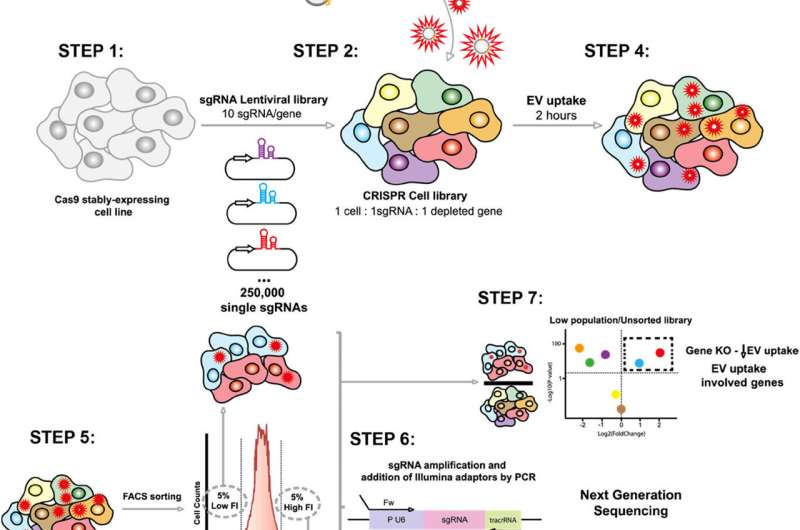
A recent study has identified a crucial molecular mechanism that explains how cells communicate through extracellular vesicles (EVs), small particles with significant therapeutic potential. The findings, published in the Journal of Extracellular Vesicles on November 28, 2025, detail the role of the Commander protein complex in regulating the entry and internal destination of these vesicles within cells.
This research, led by Professor Albert Lu from the Faculty of Medicine and Health Sciences at the University of Barcelona and the CELLEX Biomedical Research Center, alongside María Yañez-Mó from the Severo Ochoa Center for Molecular Biology, opens new avenues for understanding intercellular communication. The study co-author, Carles Enrich, emphasizes the significance of these findings for the development of new therapies and diagnostic tools.
Understanding how receptor cells capture and process EVs is fundamental for grasping the molecular interactions that govern bodily communication. Professor Lu stated, “This knowledge is key to harnessing the therapeutic and diagnostic potential of these vesicles, since their effectiveness depends on being able to direct them and have them captured by the appropriate target cells.”
Innovative Methodology Using CRISPR Technology
Extracellular vesicles serve as biological messengers, transporting proteins, lipids, and nucleic acids between cells. To decode the molecular mechanisms that guide their uptake, researchers employed an innovative approach utilizing CRISPR-Cas9 technology. This method enabled the team to deactivate each of the more than 20,000 human genes individually to assess their role in the uptake of EVs.
The researchers genetically modified cells to deactivate specific genes, exposing them to EVs labeled with a fluorescent dye. Utilizing flow cytometry, they measured the cells’ capacity to capture these vesicles. Subsequently, fluorescence-activated cell sorting (FACS) was used to isolate cells with varying uptake levels, allowing for mass sequencing to identify the deactivated genes.
“This systematic and unbiased approach allows us to discover new regulators without relying on prior hypotheses,” Professor Lu explained. The results highlighted that the Commander endosomal recycling complex, composed of various proteins, is a fundamental regulator of vesicle uptake. This suggests that the mechanism may be conserved across different human cell lines, although its activity could vary depending on the cell type or physiological context.
Implications for Future Therapies
The implications of this research extend to various therapeutic applications. The ability of EVs to traverse membranes and reach specific tissues positions them as natural carriers for drug delivery. Professor Lu noted, “Understanding how their entry, intracellular trafficking, and delivery of their molecular cargo are regulated opens the door to designing EVs with controlled directionality.”
This could significantly enhance the efficacy of therapies for regenerative medicine, oncology, or anti-inflammatory conditions. Current efforts focus on gaining deeper insights into the Commander complex’s role in vesicle uptake and whether this mechanism applies to other cell types or tissues. Additionally, researchers aim to explore how alterations in this complex may affect cell communication in pathological contexts, such as in cancer or neurodegenerative disorders.
Ultimately, the goal is to manipulate this pathway to enhance communication between cells and improve the use of EVs as therapeutic and diagnostic tools, paving the way for innovative treatment strategies in the future.
For more detailed information, refer to the work of Miguel Palma-Cobo et al., titled “Genome-Wide CRISPR/Cas9 Screening Identifies the COMMANDER Recycling Complex as a Key Player in EV Uptake,” published in the Journal of Extracellular Vesicles (2025). DOI: 10.1002/jev2.70166.

ECB’s de Guindos Confirms Interest Rates Remain Steady Amidst Economic Challenges

Rolette Record Transitions Ownership to Cando Editors

Bregman Seeks Debates with Haaland Ahead of Gubernatorial Primary

University of Arizona Researchers Uncover Key to Preventing Scar Tissue

Titans Maintain Lead in 2026 NFL Draft Race as Competition Heats Up

Delta Flight Diverts to Tokyo After Hydraulic Emergency

Rolette Record Sold to Cando Men, New Ownership Takes Charge

Urgent Fire Erupts at Oklahoma City Apartments, Residents Scared

Urgent: Arlene Hartman Passes Away at 87 in Telford

Ohio State Study Uncovers Brain Connectivity and Function Links

Hamas Chief Stresses Disarmament Tied to Occupation’s End

Megan Thee Stallion Exposes Alleged Online Attack by Bots

University of Hawaiʻi Joins $25.6M AI Project for Disaster Monitoring

Researchers Challenge 200-Year-Old Physics Principle with Atomic Engines

Paloma Elsesser Shines at LA Event with Iconic Slicked-Back Bun

FDA Unveils Plan to Cut Drug Prices and Boost Biosimilars

Federal Agents Detain Driver in Addison; Protests Erupt Immediately

Beloved Artist and Community Leader Gloria Rosencrants Passes Away
-
 Science1 month ago
Ohio State Study Uncovers Brain Connectivity and Function Links
-
 Politics1 month ago
Hamas Chief Stresses Disarmament Tied to Occupation’s End
-
 Entertainment1 month ago
Megan Thee Stallion Exposes Alleged Online Attack by Bots
-
Science4 weeks ago
University of Hawaiʻi Joins $25.6M AI Project for Disaster Monitoring
-
 Science2 months ago
Researchers Challenge 200-Year-Old Physics Principle with Atomic Engines
-
 Entertainment1 month ago
Paloma Elsesser Shines at LA Event with Iconic Slicked-Back Bun
-
 World1 month ago
FDA Unveils Plan to Cut Drug Prices and Boost Biosimilars
-
 Top Stories1 month ago
Federal Agents Detain Driver in Addison; Protests Erupt Immediately
-
 Entertainment1 month ago
Beloved Artist and Community Leader Gloria Rosencrants Passes Away
-

 Business1 month ago
Motley Fool Wealth Management Reduces Medtronic Holdings by 14.7%
-
 Politics1 month ago
NHP Foundation Secures Land for 158 Affordable Apartments in Denver
-

 Science2 weeks ago
ALMA Discovers Companion Orbiting Giant Star π 1 Gruis