
Science
Groundbreaking Simulation Reveals Milky Way’s Secrets in Detail

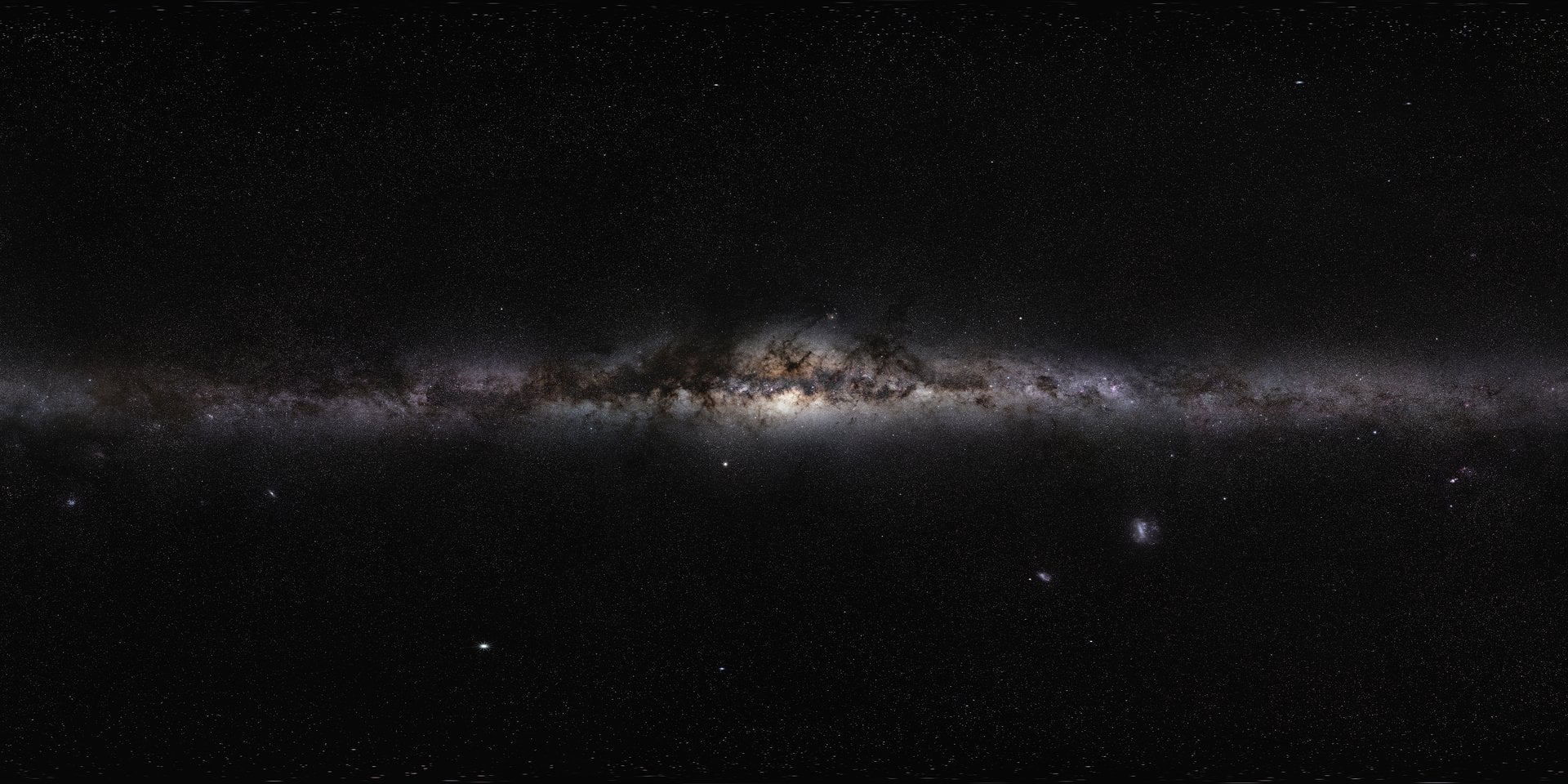
Researchers at the RIKEN Center for Interdisciplinary Theoretical and Mathematical Sciences (iTHEMS) in Japan have achieved a remarkable milestone by creating the first-ever simulation of the Milky Way that accurately models over 100 billion stars over a timespan of 10,000 years. This breakthrough, which was developed in collaboration with colleagues from the University of Tokyo and the Universitat de Barcelona, significantly surpasses previous models, representing 100 times more individual stars and completing simulations at a speed 100 times faster.
This innovative simulation was realized through a combination of 7 million CPU cores, machine learning algorithms, and advanced numerical simulations. The results, published in a research paper titled “The First Star-by-star N-body/Hydrodynamics Simulation of Our Galaxy Coupling with a Surrogate Model,” will appear in the Proceedings of the International Conference for High Performance Computing, Networking, Storage and Analysis (SC ’25).
New Insights into Galactic Dynamics
The ability to simulate the Milky Way at this unprecedented level of detail allows astronomers to test theories regarding galactic formation, structure, and evolution. For decades, scientists have sought to create increasingly complex simulations that accurately capture the myriad forces influencing galaxies, including gravity, fluid dynamics, supernovae, and the effects of supermassive black holes (SMBHs).
Traditionally, the computing power required to model galaxies in such detail has been a limiting factor. Current systems can only handle about one billion solar masses, which accounts for less than 1% of the Milky Way’s total star count. A typical supercomputer takes approximately 315 hours—over 13 days—to simulate just 1 million years of galactic evolution, representing a minuscule fraction of the Milky Way’s total age of approximately 13.61 billion years.
Innovative Use of AI Models
To overcome these challenges, the research team led by Hirashima utilized an AI-driven surrogate model that operates independently of the main computational resources. By training this model on high-resolution supernova simulations, they were able to predict the impact of these stellar explosions on surrounding gas and dust for up to 100,000 years post-explosion. This integration of machine learning with physical simulations enabled the team to simultaneously model both large-scale galactic dynamics and small-scale stellar phenomena.
The effectiveness of this innovative approach was validated through extensive testing on the Fugaku and Miyabi Supercomputer Systems. The results were striking: the new method can now simulate the evolution of a galaxy with over 100 billion stars and model 1 million years of evolution in just 2.78 hours. This efficiency means that a simulation covering 1 billion years of galactic history could be completed in approximately 115 days.
This advancement not only provides astronomers with a powerful tool for exploring galactic evolution but also highlights the potential of AI-enhanced simulations to reduce both time and energy requirements in complex modeling tasks. Beyond astrophysics, the methodologies developed in this research could be applied to other fields requiring intricate simulations, such as meteorology, ocean dynamics, and climate science.
The implications of this work extend far beyond the confines of astrophysics, offering a glimpse into the future of computational science and the role of artificial intelligence in advancing our understanding of the universe.

Rolette Record Transitions Ownership to Cando Editors

Bregman Seeks Debates with Haaland Ahead of Gubernatorial Primary

University of Arizona Researchers Uncover Key to Preventing Scar Tissue

Titans Maintain Lead in 2026 NFL Draft Race as Competition Heats Up

Delta Flight Diverts to Tokyo After Hydraulic Emergency

Rolette Record Sold to Cando Men, New Ownership Takes Charge

Urgent Fire Erupts at Oklahoma City Apartments, Residents Scared

Urgent: Arlene Hartman Passes Away at 87 in Telford

Urgent: Vehicle Fire Closes Lanes on I-215 in Salt Lake City

Ohio State Study Uncovers Brain Connectivity and Function Links

Hamas Chief Stresses Disarmament Tied to Occupation’s End

Megan Thee Stallion Exposes Alleged Online Attack by Bots

University of Hawaiʻi Joins $25.6M AI Project for Disaster Monitoring

Researchers Challenge 200-Year-Old Physics Principle with Atomic Engines

Paloma Elsesser Shines at LA Event with Iconic Slicked-Back Bun

FDA Unveils Plan to Cut Drug Prices and Boost Biosimilars

Federal Agents Detain Driver in Addison; Protests Erupt Immediately

Beloved Artist and Community Leader Gloria Rosencrants Passes Away
-
 Science1 month ago
Ohio State Study Uncovers Brain Connectivity and Function Links
-
 Politics1 month ago
Hamas Chief Stresses Disarmament Tied to Occupation’s End
-
 Entertainment1 month ago
Megan Thee Stallion Exposes Alleged Online Attack by Bots
-
Science4 weeks ago
University of Hawaiʻi Joins $25.6M AI Project for Disaster Monitoring
-
 Science2 months ago
Researchers Challenge 200-Year-Old Physics Principle with Atomic Engines
-
 Entertainment1 month ago
Paloma Elsesser Shines at LA Event with Iconic Slicked-Back Bun
-
 World1 month ago
FDA Unveils Plan to Cut Drug Prices and Boost Biosimilars
-
 Top Stories1 month ago
Federal Agents Detain Driver in Addison; Protests Erupt Immediately
-
 Entertainment1 month ago
Beloved Artist and Community Leader Gloria Rosencrants Passes Away
-

 Business1 month ago
Motley Fool Wealth Management Reduces Medtronic Holdings by 14.7%
-

 Politics1 month ago
NHP Foundation Secures Land for 158 Affordable Apartments in Denver
-

 Science2 weeks ago
ALMA Discovers Companion Orbiting Giant Star π 1 Gruis