
Business
Swedish Metal Discovery Challenges Iron Age Understanding

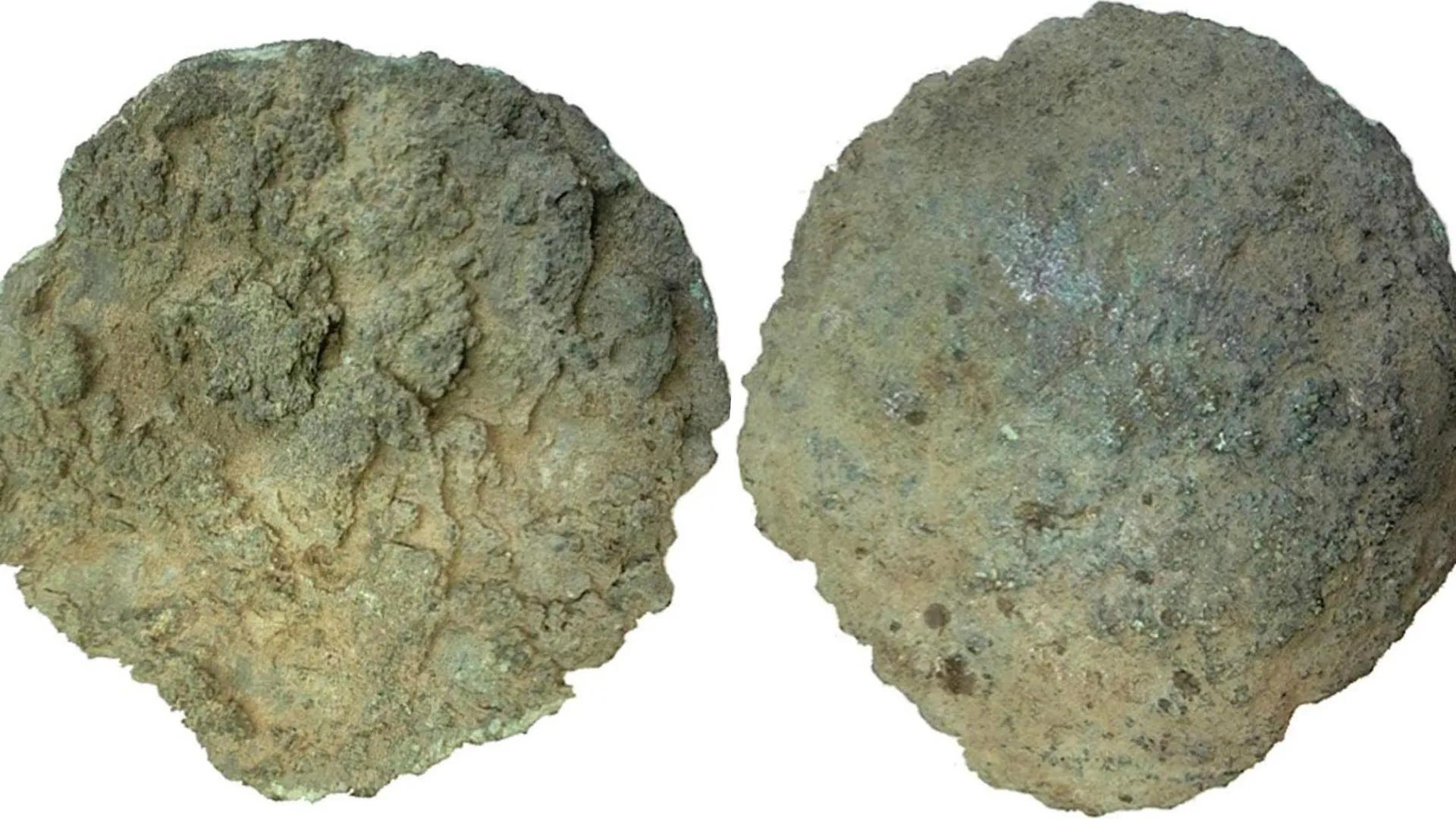
A significant archaeological discovery in Sweden is reshaping the understanding of Iron Age history. Researchers at the University of Gothenburg have determined that a plano-convex ingot, initially thought to date back to the Bronze Age, actually belongs to the Iron Age. This finding, announced on November 23, 2025, highlights the extensive trade networks and connections that existed across the Baltic region during ancient times.
The ingot, a unique artifact recovered from the Särdal site, underwent comprehensive chemical and isotopic analysis. According to Serena Sabatini, a researcher involved in the study, the initial assumption was based on its shape and size. “Due, in particular, to its shape and size, it seemed to us a Bronze Age artifact, but the ingot turned out to be made of a copper-zinc-tin-lead alloy, typical of the Iron Age and later periods,” she explained.
Revisiting the Särdal Find
The Särdal ingot was discovered without any accompanying artifacts to help date it, prompting the research team to apply scientific methods. The analysis revealed that the ingot’s composition matched alloys characteristic of the Iron Age. Plano-convex ingots, typically made from copper, have been found in various regions, including the Mediterranean and across continental Europe. These rounded ingots served as a practical means for transporting metal during both the Bronze Age and Iron Age.
Sabatini noted that the collaboration with Polish scholars was pivotal. “Thanks to the collaborative climate of the archaeometallurgy research world, we teamed up with a group of Polish scholars, who were working with some Iron Age finds which have the almost exact composition of our ingot,” she stated. This partnership suggests that even isolated artifacts can contribute to a broader historical narrative when subjected to rigorous study.
Scientific Techniques Unveil Historical Context
The research team employed established archaeometallurgical techniques, including lead isotope and trace element analyses, which have been used since the 1980s. These methods allow researchers to identify the likely geological sources of metals and enhance understanding of historical trade routes. “What is new in this study is that we went a step further, and by combining the obtained data with known historical and archaeological information, we managed to propose a historical context for both the unique Särdal plano-convex ingot and the rod ingots from the Iława Lakeland area in northeastern Poland,” Sabatini explained.
The remarkable similarity in metal composition among these artifacts strengthens earlier hypotheses regarding interactions and networking in the Baltic region during the Nordic pre-Roman Iron Age. The findings emphasize the importance of international collaboration in archaeological research, suggesting that without these partnerships, significant insights into ancient trade and cultural exchanges might remain undiscovered.
The study is detailed in the Journal of Archaeological Science, and it underscores how scientific inquiry can transform isolated findings into valuable contributions to our understanding of historical connections across Europe.

Holiday Spirit Shines at Festival of Trees 2025 in Utah

Jon Sumrall Named Florida’s New Football Coach Following Kiffin’s Exit

Tensions Rise as Belichick’s Daughter-in-Law Critiques His Girlfriend

Ancient Shell Trumpets Revealed as Key Communication Tools

Bet $5, Get $200 Bonus for Giants vs. Patriots MNF Showdown

Pope Leo XIV Visits Turkey and Lebanon, Emphasizes Faith and Respect

Seagate Unveils 6.9TB Platters, Paving Way for 69TB Hard Drives

Shark Sightings Trigger Urgent Safety Measures at Nanakuli Beach

Urgent: Chevy Brightdrop Lease Deal Hits $699 – Act Now!

Ohio State Study Uncovers Brain Connectivity and Function Links

Hamas Chief Stresses Disarmament Tied to Occupation’s End

Megan Thee Stallion Exposes Alleged Online Attack by Bots

University of Hawaiʻi Joins $25.6M AI Project for Disaster Monitoring

Researchers Challenge 200-Year-Old Physics Principle with Atomic Engines

Paloma Elsesser Shines at LA Event with Iconic Slicked-Back Bun

FDA Unveils Plan to Cut Drug Prices and Boost Biosimilars

Federal Agents Detain Driver in Addison; Protests Erupt Immediately

Motley Fool Wealth Management Reduces Medtronic Holdings by 14.7%
-
 Science1 month ago
Ohio State Study Uncovers Brain Connectivity and Function Links
-
 Politics1 month ago
Hamas Chief Stresses Disarmament Tied to Occupation’s End
-
 Entertainment1 month ago
Megan Thee Stallion Exposes Alleged Online Attack by Bots
-
Science4 weeks ago
University of Hawaiʻi Joins $25.6M AI Project for Disaster Monitoring
-
 Science2 months ago
Researchers Challenge 200-Year-Old Physics Principle with Atomic Engines
-
 Entertainment1 month ago
Paloma Elsesser Shines at LA Event with Iconic Slicked-Back Bun
-
 World1 month ago
FDA Unveils Plan to Cut Drug Prices and Boost Biosimilars
-
 Top Stories1 month ago
Federal Agents Detain Driver in Addison; Protests Erupt Immediately
-
 Business1 month ago
Motley Fool Wealth Management Reduces Medtronic Holdings by 14.7%
-

 Entertainment1 month ago
Beloved Artist and Community Leader Gloria Rosencrants Passes Away
-

 Science2 weeks ago
ALMA Discovers Companion Orbiting Giant Star π 1 Gruis
-

 Politics2 months ago
NHP Foundation Secures Land for 158 Affordable Apartments in Denver