
World
U.S. Labels Maduro’s Alleged Cartel as Terror Organization

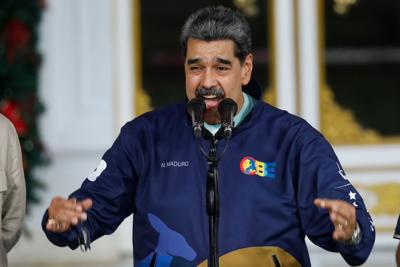
The United States has officially designated the Cartel de los Soles as a foreign terrorist organization, heightening tensions with the Venezuelan government led by President Nicolás Maduro. This designation, published on March 15, 2024, is part of the Trump administration’s ongoing efforts to combat drug trafficking and curb violence in the Western Hemisphere.
The U.S. Secretary of State, Marco Rubio, speaking in advance of the announcement, described the Cartel de los Soles, or Cartel of the Suns, as a group responsible for “terrorist violence” in the region. This move coincides with discussions regarding potential military action against Venezuela, a possibility that Trump has not dismissed. The U.S. has recently increased its military presence in the Caribbean, targeting vessels linked to drug trafficking, which has reportedly resulted in over 80 fatalities.
The term Cartel de los Soles emerged in the 1990s, initially used to refer to high-ranking Venezuelan military officials who profited from drug-related activities. Over the years, as corruption permeated various levels of government, the term expanded to include police and political figures involved in illegal activities, such as mining and fuel trafficking. The “suns” in the name refer to the insignia worn by high-ranking military officers.
In 2020, the U.S. Department of Justice issued an indictment against Maduro and several of his associates, accusing them of narcoterrorism and other serious charges. Adam Isaacson, director for defense oversight at the Washington Office on Latin America, clarified that the Cartel de los Soles is not an organized group in the conventional sense, lacking defined membership and hierarchy.
Maduro’s administration has rejected the terrorist designation, labeling it a “ridiculous fabrication” aimed at justifying foreign intervention in Venezuela. Traditionally, the label of foreign terrorist organization has been reserved for groups such as the Islamic State or al-Qaida. However, the Trump administration has recently expanded its application to include several Latin American criminal organizations involved in drug trafficking and migration smuggling.
U.S. Defense Secretary Pete Hegseth indicated that the designation of the Cartel de los Soles could provide “new options” for U.S. engagement with Venezuela, although he did not elaborate on what those options might entail. This ambiguity raises questions about the U.S. military’s next steps, particularly regarding potential strikes against targets within Venezuela.
The Trump administration has made it clear that it does not recognize Maduro’s legitimacy as Venezuela’s leader, following allegations of electoral fraud in last year’s presidential election. Maduro’s government has faced widespread criticism for human rights violations against political opponents, particularly following the contentious elections of July 2024.
The administration’s military actions, initially framed as counter-drug operations, have led to speculation that they may also aim to destabilize Maduro’s regime, which has been in power for over two decades. The Venezuelan political opposition, backed by the U.S., has reignited its calls for Maduro’s removal, adding to the uncertainty surrounding the situation.
The U.S. indictment accuses Maduro, along with Interior Minister Diosdado Cabello and Defense Minister Vladimir Padrino López, of collaborating with Colombian guerrillas to inundate the United States with cocaine, using the drug trade as a weapon against the nation. Colombia remains the world’s leading cocaine producer, and prior to a peace agreement in 2016, members of the Revolutionary Armed Forces of Colombia (FARC) utilized the porous border with Venezuela for drug trafficking, often with the tacit support of Venezuelan security forces.
Maduro has consistently denied these allegations, arguing that the U.S. is constructing a false narrative to destabilize his government. He cites a United Nations report suggesting that only a small fraction—approximately 5%—of Colombian cocaine passes through Venezuela.
In response to these ongoing tensions, the U.S. Treasury Department imposed sanctions on the Cartel de los Soles in July, asserting that Maduro and his associates have exploited the Venezuelan government and military to facilitate drug trafficking operations. The administration has also linked Maduro’s cartel to notorious criminal organizations, including the Tren de Aragua and the Sinaloa cartel, both designated as foreign terrorist organizations in February.
As the U.S. continues to evaluate its strategy, including potential covert operations, the administration remains firm in its belief that Maduro’s hold on power is untenable. Observers note that there is increasing anxiety among Venezuelan officials, as evidenced by ongoing military operations. Despite appeals from Maduro for dialogue, the Trump administration has yet to authorize any communication channels.
The complexities surrounding this situation highlight the intricate interplay between international relations, drug trafficking, and internal political dynamics in Venezuela. The implications of these developments will likely reverberate throughout the region as the U.S. pursues its objectives in the coming months.

Urgent Update: Mesa Road Rage Arrest; Murder Charges in Phoenix

St. Scholastica Women’s Hockey Falls 3-1 at Eau Claire

Women in HVACR and Carrier Offer $55,000 in Scholarships

Defense Tech Funding Surges to Record $7.7 Billion in 2025

49ers Dominate Browns 26-8 with Strong Air Attack in Cleveland

FDA Issues Warning on Lead-Contaminated Cookware, Urges Discarding

Riyadh to Host Global Labor Market Conference on January 26-27

Exciting New Movie Trailers: Anticipation Builds for 2024 Releases

UWS Hockey and Basketball Teams Face Tough Losses in Recent Games

Ohio State Study Uncovers Brain Connectivity and Function Links

Hamas Chief Stresses Disarmament Tied to Occupation’s End

Megan Thee Stallion Exposes Alleged Online Attack by Bots

University of Hawaiʻi Joins $25.6M AI Project for Disaster Monitoring

Researchers Challenge 200-Year-Old Physics Principle with Atomic Engines

Paloma Elsesser Shines at LA Event with Iconic Slicked-Back Bun

FDA Unveils Plan to Cut Drug Prices and Boost Biosimilars

Federal Agents Detain Driver in Addison; Protests Erupt Immediately

Motley Fool Wealth Management Reduces Medtronic Holdings by 14.7%
-
 Science1 month ago
Ohio State Study Uncovers Brain Connectivity and Function Links
-
 Politics1 month ago
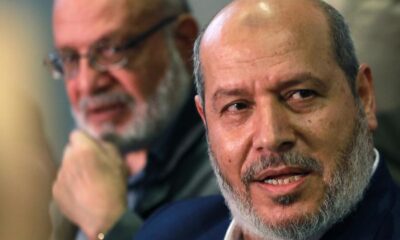
Hamas Chief Stresses Disarmament Tied to Occupation’s End
-
 Entertainment1 month ago
Megan Thee Stallion Exposes Alleged Online Attack by Bots
-
Science4 weeks ago
University of Hawaiʻi Joins $25.6M AI Project for Disaster Monitoring
-
 Science2 months ago
Researchers Challenge 200-Year-Old Physics Principle with Atomic Engines
-
 Entertainment1 month ago
Paloma Elsesser Shines at LA Event with Iconic Slicked-Back Bun
-
 World1 month ago
FDA Unveils Plan to Cut Drug Prices and Boost Biosimilars
-
 Top Stories1 month ago
Federal Agents Detain Driver in Addison; Protests Erupt Immediately
-
 Business1 month ago
Motley Fool Wealth Management Reduces Medtronic Holdings by 14.7%
-

 Entertainment1 month ago
Beloved Artist and Community Leader Gloria Rosencrants Passes Away
-

 Science2 weeks ago
ALMA Discovers Companion Orbiting Giant Star π 1 Gruis
-

 Politics2 months ago
NHP Foundation Secures Land for 158 Affordable Apartments in Denver