
Top Stories
Urgent Discovery in Sweden Rewrites Iron Age History Today

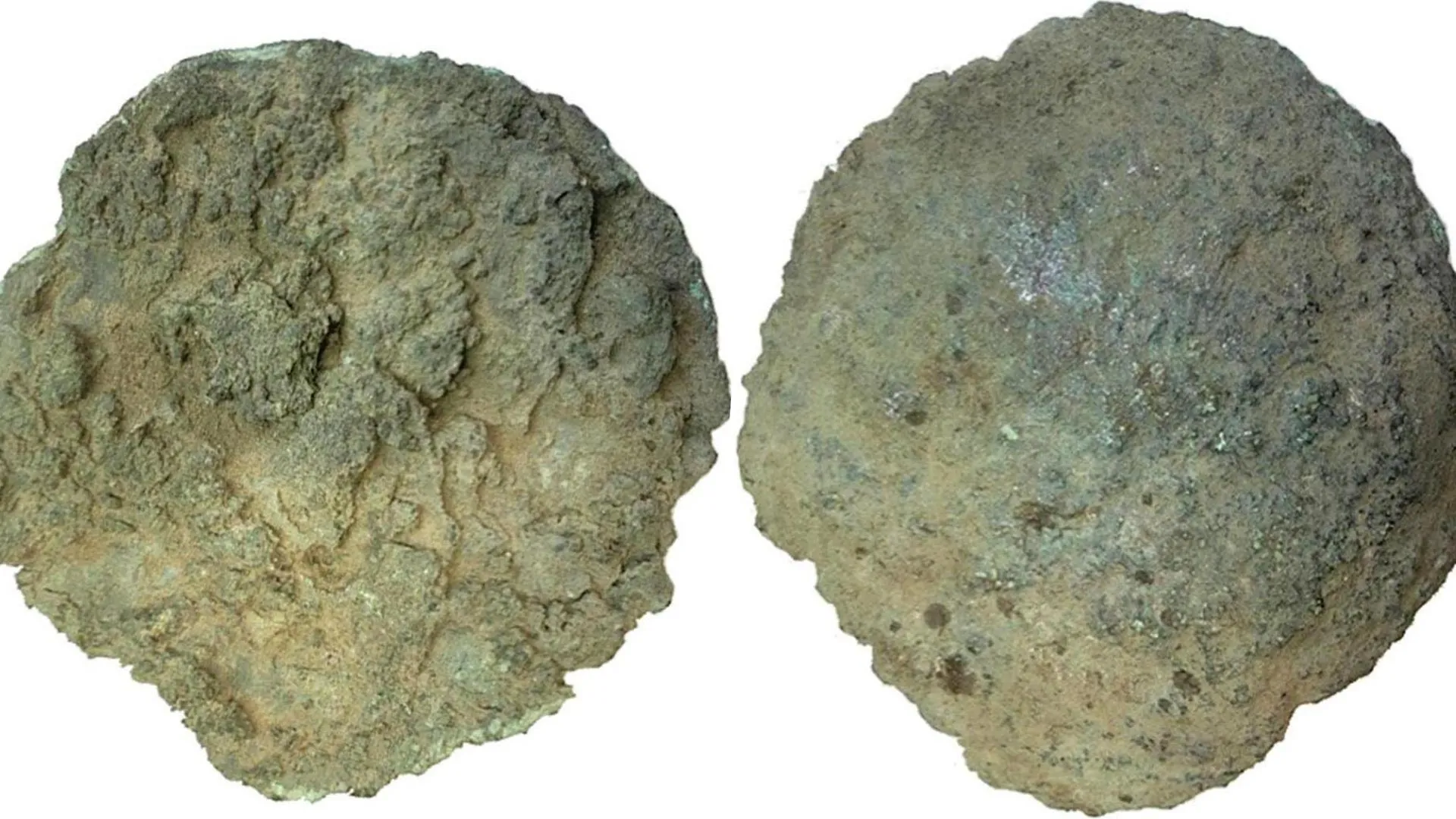
UPDATE: A groundbreaking discovery in Sweden is shaking up our understanding of the Iron Age. Researchers from the University of Gothenburg have revealed that a previously classified Bronze Age plano-convex ingot is actually from the Iron Age, transforming the historical narrative surrounding ancient trade routes.
This unexpected finding, announced on November 23, 2025, could redefine our understanding of long-distance connections across the Baltic. The ingot’s composition closely mirrors Iron Age artifacts found in Poland, suggesting extensive trade networks that have remained largely undocumented until now.
The Särdal ingot, discovered alone and lacking dating materials, was initially thought to belong to the Bronze Age. However, chemical and isotopic testing revealed it is composed of a copper-zinc-tin-lead alloy typical of the Iron Age. According to lead researcher Serena Sabatini, “This ingot’s characteristics led us to believe it was Bronze Age. Its actual composition has shocked us.”
Plano-convex ingots, commonly made of copper, are historically significant for transporting metal in both the Bronze and Iron Ages. Traditionally found in Mediterranean and European regions, the Särdal find now illustrates the complex interactions that occurred in ancient times.
This study marks a significant collaboration in the field of archaeometallurgy, reflecting the power of international teamwork in uncovering historical truths. Sabatini highlighted the importance of partnerships, stating, “Without our Polish colleagues, we would not have achieved such remarkable results!”
The analysis combined traditional archaeological methods with advanced scientific approaches, allowing researchers to propose a historical context for the Särdal ingot alongside similar finds from northeastern Poland. By applying lead isotope and trace element analysis, the team identified geological sources for the metal, reinforcing earlier hypotheses about pre-Roman Iron Age connections in the Baltic region.
This urgent discovery not only reshapes historical timelines but also emphasizes the value of interdisciplinary collaboration in archaeology. As researchers continue to analyze artifacts, we can expect to uncover even more about ancient trade routes and cultural exchanges.
The full study is published in the Journal of Archaeological Science, marking a significant contribution to our understanding of ancient societies. As new findings emerge, the historical narrative of the Iron Age could be rewritten yet again, making it a crucial moment for historians and archaeologists alike.
Stay tuned for more updates on this developing story as researchers delve deeper into the implications of this extraordinary find.

Uber Driver Shot in Head Released from Hospital, Police Confirm

Smash Burger Favorite ‘With Love, Always’ Moves to Red Rock Resort

Holiday Spirit Shines at Festival of Trees 2025 in Utah

Jon Sumrall Named Florida’s New Football Coach Following Kiffin’s Exit

Tensions Rise as Belichick’s Daughter-in-Law Critiques His Girlfriend

Ancient Shell Trumpets Revealed as Key Communication Tools

Bet $5, Get $200 Bonus for Giants vs. Patriots MNF Showdown

Pope Leo XIV Visits Turkey and Lebanon, Emphasizes Faith and Respect

Seagate Unveils 6.9TB Platters, Paving Way for 69TB Hard Drives

Ohio State Study Uncovers Brain Connectivity and Function Links

Hamas Chief Stresses Disarmament Tied to Occupation’s End

Megan Thee Stallion Exposes Alleged Online Attack by Bots

University of Hawaiʻi Joins $25.6M AI Project for Disaster Monitoring

Researchers Challenge 200-Year-Old Physics Principle with Atomic Engines

Paloma Elsesser Shines at LA Event with Iconic Slicked-Back Bun

FDA Unveils Plan to Cut Drug Prices and Boost Biosimilars

Federal Agents Detain Driver in Addison; Protests Erupt Immediately

Motley Fool Wealth Management Reduces Medtronic Holdings by 14.7%
-
 Science1 month ago
Ohio State Study Uncovers Brain Connectivity and Function Links
-
 Politics1 month ago
Hamas Chief Stresses Disarmament Tied to Occupation’s End
-
 Entertainment1 month ago
Megan Thee Stallion Exposes Alleged Online Attack by Bots
-
Science4 weeks ago
University of Hawaiʻi Joins $25.6M AI Project for Disaster Monitoring
-
 Science2 months ago
Researchers Challenge 200-Year-Old Physics Principle with Atomic Engines
-
 Entertainment1 month ago
Paloma Elsesser Shines at LA Event with Iconic Slicked-Back Bun
-
 World1 month ago
FDA Unveils Plan to Cut Drug Prices and Boost Biosimilars
-
 Top Stories1 month ago
Federal Agents Detain Driver in Addison; Protests Erupt Immediately
-
 Business1 month ago
Motley Fool Wealth Management Reduces Medtronic Holdings by 14.7%
-

 Entertainment1 month ago
Beloved Artist and Community Leader Gloria Rosencrants Passes Away
-

 Science2 weeks ago
ALMA Discovers Companion Orbiting Giant Star π 1 Gruis
-

 Politics2 months ago
NHP Foundation Secures Land for 158 Affordable Apartments in Denver