
Science
Deep Fission Proposes Revolutionary Underground Nuclear Reactor

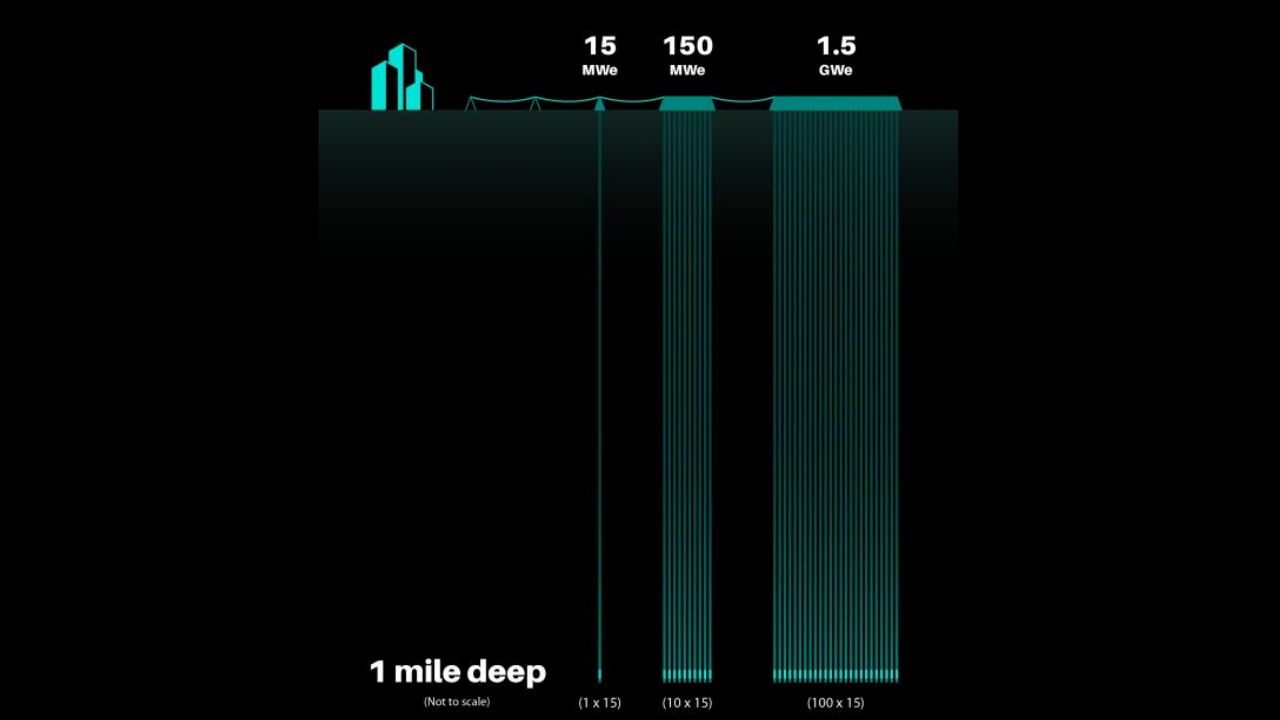
Deep Fission has unveiled an ambitious plan to enhance nuclear reactor safety by proposing the installation of pressurized water reactors (PWRs) in deep underground boreholes. Their innovative design, known as the Deep Fission Borehole Reactor 1 (DFBR-1), aims to place these reactors approximately 1 mile (1.6 km) beneath the surface, where they could operate under significant pressure and be surrounded by a protective column of water.
The company’s proposal is currently under review by the Nuclear Regulatory Commission (NRC). In their regulatory whitepaper, Deep Fission outlines a vision that could revolutionize the commercial power sector by drastically improving the safety of nuclear energy production. The DFBR-1 microreactors, each with a thermal output of 45 MWt, will be installed in 30-inch (76.2 cm) boreholes, with much of their primary systems housed within the reactor module itself.
Innovative Design and Safety Features
Deep Fission argues that locating the reactors at such depths provides safety advantages, as the pressures at that depth would equal those found within conventional PWRs. This design negates the requirement for extensive concrete containment structures, traditionally associated with nuclear reactors. The steam generator is situated at the bottom of the borehole, allowing for the generation of approximately 15 MWe via a steam turbine, although it requires transporting steam to the surface.
Additionally, the design includes sampling tubes that extend to the primary loop, facilitating maintenance and monitoring. Ropes will also be employed to retrieve components for the replacement of standard low-enriched uranium (LEU) fuel rods. The unique concept has sparked discussions in the energy community about whether it represents a groundbreaking innovation or an impractical idea.
Industry Context and Competition
As Deep Fission moves forward, it is targeting the operational launch of its first reactor by 2026. The company is navigating through the Department of Energy’s (DoE) advanced reactor program, where it faces competition from other projects like TerraPower’s Natrium. Notably, Natrium is already under construction and offers a higher power output per reactor, along with integrated grid-level energy storage capabilities.
The emergence of Deep Fission and other innovative reactor designs signals a shifting landscape in the nuclear energy sector. As the United States seeks to reduce its carbon footprint, the commercial power sector is becoming increasingly dynamic, moving away from traditional models to explore novel and potentially safer energy solutions.
Overall, Deep Fission’s proposal represents a significant step in reimagining how nuclear energy can be harnessed, with the potential to reshape public perceptions of safety in this critical industry.

Urgent Swatting Incident Ties Up Emergency Resources in Alabama

Urgent Tax Alert: Claim Your Deductions Before April 15!

Scientists Investigate Cosmic Defects: Where Are They Now?

Spring Bocce Leagues Open Registration in Rapid City

CALV Offers Essential Communication Class for Real Estate Pros

Samsung Galaxy Watch 9 Set for Larger 435mAh Battery Upgrade

Healthy Choice Wellness Reports Earnings, Stock Sees Uptick

Prince Harry Claims to Be ‘Antidote to Andrew’ Amid Royal Crisis

Pet Owners Weigh Kibble Against Fresh Dog Food Options

ALMA Discovers Companion Orbiting Giant Star π 1 Gruis

U.S. Visa Rescheduling Hits H‐1B Applicants as New Vetting Rules Take Effect

University of Hawaiʻi Joins $25.6M AI Project for Disaster Monitoring

F-22 Raptor vs. Su-57 Felon: A 2025 Fighter Jet Comparison

Recent Divorce Judgments from Iberia Parish Court Records

Ohio State Study Uncovers Brain Connectivity and Function Links

Urgent: Flight Cancellations Loom at Texas Airports Amid Shutdown

Frank Dunn, Esteemed Builder and Community Leader, Passes Away at 89

Appian Recognizes 2025 Partner Award Winners for Enterprise Innovation
-
 Science10 months ago
ALMA Discovers Companion Orbiting Giant Star π 1 Gruis
-
 Politics8 months ago
U.S. Visa Rescheduling Hits H‐1B Applicants as New Vetting Rules Take Effect
-
Science10 months ago
University of Hawaiʻi Joins $25.6M AI Project for Disaster Monitoring
-
 World10 months ago
F-22 Raptor vs. Su-57 Felon: A 2025 Fighter Jet Comparison
-
 Politics9 months ago
Recent Divorce Judgments from Iberia Parish Court Records
-
 Science10 months ago
Ohio State Study Uncovers Brain Connectivity and Function Links
-
 Top Stories10 months ago
Urgent: Flight Cancellations Loom at Texas Airports Amid Shutdown
-
 Lifestyle10 months ago
Frank Dunn, Esteemed Builder and Community Leader, Passes Away at 89
-
 Business10 months ago
Appian Recognizes 2025 Partner Award Winners for Enterprise Innovation
-

 World10 months ago
Prince Andrew Faces Fallout from Scandals and Allegations
-

 Entertainment8 months ago
Malachi Barton Tops Google Searches as Disney’s Rising Star of 2025
-

 Top Stories9 months ago
Republican Matt Van Epps Wins Tennessee Special Election